 Back
BackThe Chemical Context of Life: Elements, Atoms, and Chemical Bonds
Study Guide - Smart Notes
 Tailored notes based on your materials, expanded with key definitions, examples, and context.
Chemistry of Life
Elements, Atoms, Compounds, and Molecules
The study of biology begins with understanding the chemical basis of life. Matter is composed of elements in pure form and in combinations called compounds.
Element: A substance that cannot be broken down to other substances by chemical means (e.g., carbon, hydrogen).
Atom: The smallest unit of an element that retains its properties.
Compound: A substance consisting of two or more elements in a fixed ratio (e.g., H2O, NaCl).
Molecule: Two or more atoms held together by covalent bonds (e.g., O2, H2O).
When elements combine to form compounds, they often exhibit emergent properties—characteristics different from those of the individual elements.
Essential Elements of Life
Living organisms are primarily composed of a few key elements:
Four elements make up about 96% of living matter: Oxygen (O), Carbon (C), Hydrogen (H), and Nitrogen (N).
The remaining 4% includes elements such as Calcium (Ca), Phosphorus (P), Potassium (K), and Sulfur (S).
Trace elements are required in minute quantities (e.g., Iron (Fe) for oxygen transport in blood, Iodine (I) for thyroid function).
Atomic Structure and Subatomic Particles
Structure of the Atom
An atom consists of a dense nucleus containing protons and neutrons, surrounded by a cloud of electrons.
Proton: Positively charged particle found in the nucleus.
Neutron: Electrically neutral particle found in the nucleus.
Electron: Negatively charged particle orbiting the nucleus.
The mass of protons and neutrons is nearly identical, and their mass is measured in daltons (atomic mass units).
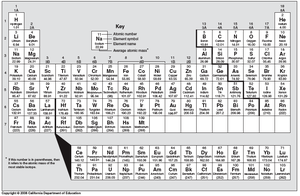
Atomic Number, Atomic Mass, and Isotopes
Atomic Number: Number of protons in the nucleus; defines the element.
Atomic Mass: Total number of protons and neutrons in the nucleus.
Isotopes: Atoms of the same element with different numbers of neutrons.
Radioactive Isotope: An isotope that decays spontaneously, releasing particles and energy.
Example: Carbon-12 and Carbon-14 are isotopes of carbon, differing in neutron number.
Electron Configuration and Chemical Behavior
Energy Levels and Electron Shells
The chemical behavior of an atom is determined by the distribution of electrons in its electron shells.
Electrons occupy energy levels called shells.
The first shell holds up to 2 electrons; the second shell holds up to 8 electrons.
Valence electrons are those in the outermost shell and determine chemical reactivity.
Atoms with incomplete valence shells are chemically reactive.
Electron Orbitals
Electrons occupy complex three-dimensional spaces called orbitals. The arrangement of electrons in these orbitals influences molecular shape and reactivity.
Chemical Bonds and Interactions
Types of Chemical Bonds
Atoms interact by sharing or transferring valence electrons, forming chemical bonds:
Covalent Bonds: Atoms share pairs of electrons. Can be single, double, or triple bonds.
Ionic Bonds: One atom transfers electrons to another, resulting in oppositely charged ions that attract each other.
Hydrogen Bonds: Weak attractions between a hydrogen atom covalently bonded to an electronegative atom and another electronegative atom.
Van der Waals Interactions: Weak attractions due to transient local partial charges.
Polar and Nonpolar Covalent Bonds
Electronegativity: The tendency of an atom to attract electrons in a covalent bond.
Nonpolar Covalent Bond: Electrons are shared equally (e.g., H2, O2).
Polar Covalent Bond: Electrons are shared unequally, creating partial charges (e.g., H2O).
Ions and Ionic Compounds
Cation: Positively charged ion (lost electrons).
Anion: Negatively charged ion (gained electrons).
Ionic Compound: Compound formed by ionic bonds (e.g., NaCl).
Weak Chemical Bonds in Biology
Weak bonds, such as hydrogen bonds and van der Waals interactions, are crucial for the structure and function of biological molecules. Their reversibility allows for dynamic interactions in cells.
Molecular Shape and Function
Orbital Interactions and Hybridization
The shape of a molecule is determined by the positions of its electron orbitals. For example:
Water (H2O) has a bent shape due to two shared and two unshared pairs of electrons on oxygen, with a bond angle of about 104.5°.
Methane (CH4) has a tetrahedral shape with bond angles of 109.5°.
Molecular shape is critical for biological function, including molecular mimicry, where similar shapes can produce similar biological effects.
Chemical Reactions
Making and Breaking Bonds
Chemical reactions involve the making and breaking of chemical bonds, resulting in new arrangements of atoms. All chemical reactions are reversible.
Reactants: Starting materials in a reaction.
Products: Substances formed by the reaction.
Example: Photosynthesis is a key chemical reaction in biology.
Summary Table: Types of Chemical Bonds
Bond Type | Description | Relative Strength | Example |
|---|---|---|---|
Covalent | Sharing of electron pairs between atoms | Strongest | H2O, CH4 |
Ionic | Transfer of electrons from one atom to another | Strong (in dry conditions) | NaCl |
Hydrogen | Attraction between H and electronegative atom | Weak | Between water molecules |
Van der Waals | Transient attractions due to partial charges | Weakest | Gecko feet adhesion |
Key Equations
Atomic mass:
Electron shell capacity: First shell = 2 electrons, Second shell = 8 electrons
Additional info: This guide expands on the provided outline with definitions, examples, and academic context to ensure a comprehensive understanding of the chemical foundations of life.
