 Back
The Chemical Context of Life: Elements, Bonds, and Biological Relevance
Study Guide - Smart Notes
 Tailored notes based on your materials, expanded with key definitions, examples, and context.
The Chemical Context of Life
Introduction to Matter, Elements, and Compounds
The foundation of biological systems is built upon the principles of chemistry. Understanding matter, elements, and compounds is essential for grasping how life operates at the molecular level.
Matter: Anything that takes up space and has mass. Examples include rocks, metals, oils, gases, and organisms.
Element: A substance that cannot be broken down into other substances by chemical reactions. There are 92 naturally occurring elements, many of which are essential for life.
Compound: A substance consisting of two or more different elements combined in a fixed ratio. Examples: H2O (water), NaCl (salt).
Essential elements: About 20-25% of the 92 elements are essential for survival and reproduction. The elements CHOPN (Carbon, Hydrogen, Oxygen, Phosphorus, Nitrogen) make up 96% of living matter.
Trace elements: Required by organisms in very small quantities, but crucial for proper function. Examples include iron (Fe), iodine (I), and zinc (Zn).
Atomic Structure and the Periodic Table
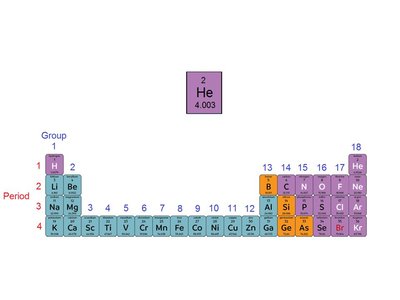
Atoms are the basic units of elements, and their structure determines chemical properties. The periodic table organizes elements based on atomic number and electron configuration.
Atomic number: Number of protons in the nucleus of an atom.
Atomic mass: Number of protons plus neutrons, averaged over all isotopes.
Elements in the same vertical column (group) have the same number of valence electrons.
Elements in the same horizontal row (period) have the same number of electron shells.
Chemical Bonds and Stability
Atoms form chemical bonds to achieve stability, often by completing their valence shell according to the octet rule. The type of bond formed depends on the elements involved and their electronegativity.
Octet rule: Atoms gain, lose, or share electrons to complete their valence shell (usually 8 electrons).
Valence shell: The outermost electron shell of an atom.
Types of Chemical Bonds
Chemical bonds are attractions between atoms resulting from the sharing or transferring of valence electrons. The main types are covalent, ionic, and hydrogen bonds.
Electronegativity: The measure of an atom’s ability to attract electrons to itself. Electronegativity increases across a period and decreases down a group.
Covalent Bonds
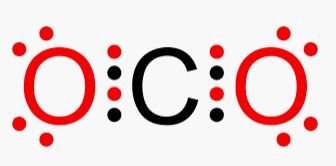
Covalent bonds occur when two or more atoms share electrons, typically between nonmetals. These bonds form molecules and compounds.
Single bond: One pair of shared electrons.
Double bond: Two pairs of shared electrons.
Triple bond: Three pairs of shared electrons.
Two types: Nonpolar covalent (equal sharing) and Polar covalent (unequal sharing).
Nonpolar Covalent Bonds
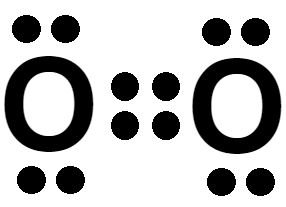
Electrons are shared equally between two atoms, resulting in no partial charges. Example: O2 (oxygen gas).
Polar Covalent Bonds
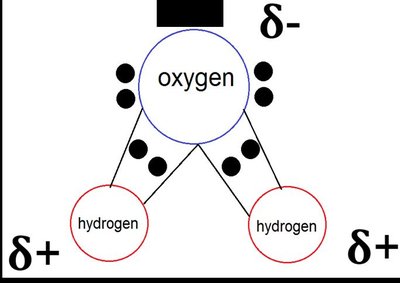
Electrons are not shared equally, resulting in partial charges on the atoms. Example: H2O (water), where oxygen is more electronegative than hydrogen.
Unequal sharing leads to a partial negative charge on oxygen and partial positive charges on hydrogen.
Ionic Bonds
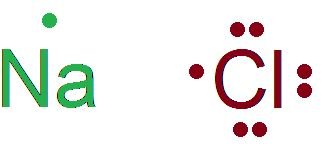
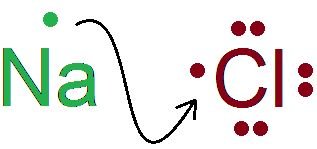
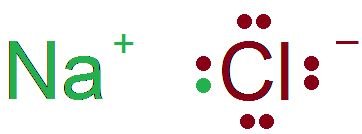
Ionic bonds are formed by the attraction between oppositely charged ions, usually between a metal and a nonmetal. One atom transfers electrons to another, forming cations (positive) and anions (negative).
Example: NaCl (sodium chloride), where sodium donates an electron to chlorine.
Hydrogen Bonds
Hydrogen bonds are weak attractions between the partially positive hydrogen atom in one polar covalent molecule and an electronegative atom (usually O, N, or F) in another molecule. These are important for the structure and properties of water and biological macromolecules.
Intermolecular bond: Forms between molecules, not within them.
Hydrogen bonds make water more structured than most liquids, but they are constantly forming, breaking, and reforming.
Summary Table: Types of Chemical Bonds
Bond Type | Mechanism | Example | Strength |
|---|---|---|---|
Covalent (Nonpolar) | Equal sharing of electrons | O2, N2 | Strong |
Covalent (Polar) | Unequal sharing of electrons | H2O | Strong |
Ionic | Transfer of electrons | NaCl | Moderate (strong in solid, weaker in water) |
Hydrogen | Attraction between partial charges | Between water molecules | Weak |
Key Equations and Concepts
Atomic mass calculation:
Electronegativity trend: Increases across a period, decreases down a group.
Additional info: Essential elements play roles such as forming biomolecules (proteins, nucleic acids), maintaining osmotic balance, and enabling enzymatic reactions. Trace elements like iron are crucial for oxygen transport (hemoglobin), and iodine is necessary for thyroid hormone production.
