 Back
BackThe Chemical Context of Life: Elements, Atoms, and Chemical Bonds
Study Guide - Smart Notes
 Tailored notes based on your materials, expanded with key definitions, examples, and context.
The Chemical Context of Life
Introduction to Matter, Elements, and Compounds
Understanding the chemical basis of life is essential for studying biology. All living and nonliving things are composed of matter, which is organized into elements and compounds.
Matter: Anything that takes up space and has mass. Examples include rocks, metals, oils, gases, and living organisms.
Element: A substance that cannot be broken down into other substances by chemical reactions. There are 92 naturally occurring elements, each represented on the periodic table.
Compound: A substance consisting of two or more different elements combined in a fixed ratio (e.g., H2O, NaCl).
Essential and Trace Elements
Of the 92 naturally occurring elements, only a subset is essential for life. These elements are required for organisms to survive and reproduce.
Essential elements: 20-25% of elements are essential for life. The elements Carbon, Hydrogen, Oxygen, Phosphorus, and Nitrogen (CHOPN) make up about 96% of living matter.
Trace elements: Required in very small quantities but are vital for proper physiological function (e.g., iron, iodine, zinc).
Additional info: Essential elements are involved in forming biomolecules, maintaining osmotic balance, and enabling enzymatic reactions. Trace elements often serve as cofactors for enzymes.
Atomic Structure and the Periodic Table
Atomic Number, Mass, and Structure
Atoms are the smallest units of elements, consisting of protons, neutrons, and electrons.
Atomic number: The number of protons in an atom, which defines the element.
Atomic mass: The sum of protons and neutrons, averaged over all isotopes of the element.
The Periodic Table: Organization and Trends
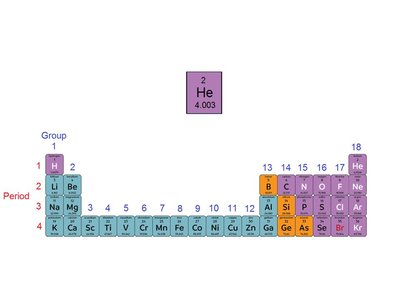
The periodic table arranges elements by increasing atomic number and reveals recurring chemical properties.
Groups (columns): Elements in the same group have the same number of valence electrons, leading to similar chemical behavior.
Periods (rows): Elements in the same period have the same number of electron shells.
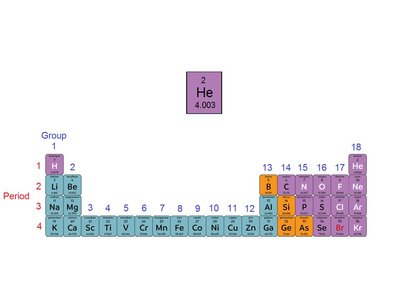
Additional info: The periodic table helps predict how elements will interact in chemical reactions based on their position.
Chemical Bonds and Molecular Interactions
The Octet Rule and Valence Shells
Atoms form chemical bonds to achieve stability, often by filling their outermost electron shell (valence shell) to resemble the electron configuration of noble gases.
Octet rule: Atoms tend to gain, lose, or share electrons to complete their valence shell (usually 8 electrons).
Valence shell: The outermost electron shell of an atom, which determines its chemical reactivity.
Types of Chemical Bonds
Chemical bonds are attractions between atoms that enable the formation of molecules and compounds. The main types of bonds are covalent, ionic, and hydrogen bonds.
Covalent Bonds
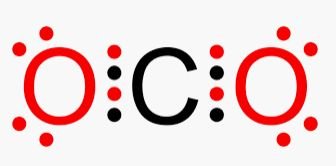
Covalent bonds involve the sharing of electrons between atoms, typically nonmetals. These bonds can be single, double, or triple, depending on the number of shared electron pairs.
Single bond: One pair of shared electrons.
Double bond: Two pairs of shared electrons.
Triple bond: Three pairs of shared electrons.
There are two main types of covalent bonds:
Nonpolar covalent bond: Electrons are shared equally between atoms (e.g., O2).
Polar covalent bond: Electrons are shared unequally, resulting in partial charges (e.g., H2O).
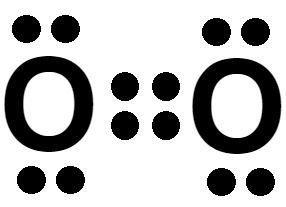
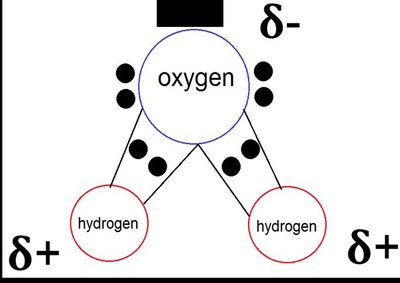
Electronegativity: The ability of an atom to attract electrons in a bond. Differences in electronegativity determine bond polarity.
Ionic Bonds
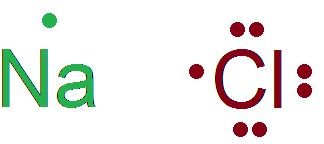
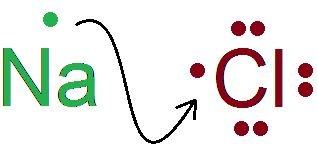
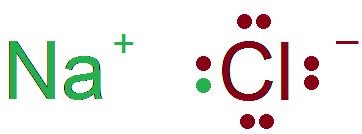
Ionic bonds form when electrons are transferred from one atom to another, creating oppositely charged ions that attract each other. This typically occurs between metals and nonmetals.
Cation: Positively charged ion (loses electrons).
Anion: Negatively charged ion (gains electrons).
Example: Sodium chloride (NaCl) forms when sodium donates an electron to chlorine.
Hydrogen Bonds
Hydrogen bonds are weak attractions between the partially positive hydrogen atom of one polar molecule and an electronegative atom (usually oxygen, nitrogen, or fluorine) of another molecule. These are important in stabilizing the structures of proteins and nucleic acids, and in giving water its unique properties.
Intermolecular bond: Hydrogen bonds form between molecules, not within them.
Example: Hydrogen bonding between water molecules leads to high cohesion and surface tension.
Additional info: Hydrogen bonds are responsible for the high boiling point of water and the structure of DNA.
Summary Table: Types of Chemical Bonds
Bond Type | How Formed | Example | Relative Strength |
|---|---|---|---|
Covalent (Nonpolar) | Equal sharing of electrons | O2 | Strong |
Covalent (Polar) | Unequal sharing of electrons | H2O | Strong |
Ionic | Transfer of electrons | NaCl | Strong (in dry conditions) |
Hydrogen | Attraction between partial charges | Between H2O molecules | Weak (individually) |
