 Back
The Chemical Context of Life: Elements, Atoms, and Bonds
Study Guide - Smart Notes
 Tailored notes based on your materials, expanded with key definitions, examples, and context.
The Chemical Context of Life
Introduction
All living organisms are composed of matter, which is anything that takes up space and has mass. Understanding the chemical basis of life is essential for studying biology, as it explains how elements and compounds interact to form the molecules necessary for life.
Fundamental Chemical Organization of Life
Elements and Compounds
Element: A substance that cannot be broken down to other substances by chemical reactions. There are 92 naturally occurring elements.
Compound: A substance consisting of two or more elements in a fixed ratio, with characteristics different from those of its elements.
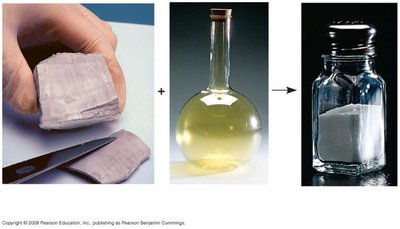
Essential Elements
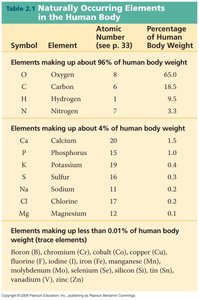
About 25 elements are essential to life.
Major elements: Carbon (C), Hydrogen (H), Oxygen (O), and Nitrogen (N) make up 96% of living matter.
Other important elements: Calcium (Ca), Phosphorus (P), Potassium (K), Sulfur (S), Sodium (Na), Chlorine (Cl), and Magnesium (Mg).
Trace elements: Required in minute quantities (e.g., iron, zinc).
Element | Symbol | Atomic Number | Percentage of Human Body Weight |
|---|---|---|---|
Oxygen | O | 8 | 65.0 |
Carbon | C | 6 | 18.5 |
Hydrogen | H | 1 | 9.5 |
Nitrogen | N | 7 | 3.3 |
Calcium | Ca | 20 | 1.5 |
Phosphorus | P | 15 | 1.0 |
Potassium | K | 19 | 0.4 |
Sulfur | S | 16 | 0.3 |
Sodium | Na | 11 | 0.2 |
Chlorine | Cl | 17 | 0.2 |
Magnesium | Mg | 12 | 0.1 |
Structure of Atoms
Atomic Structure
Atoms are the smallest units of matter that retain the properties of an element.
Composed of subatomic particles: protons (positive), neutrons (neutral), and electrons (negative).
Atomic number: Number of protons in the nucleus.
Mass number: Number of protons plus neutrons.
Isotopes: Atoms of the same element with different numbers of neutrons; some are radioactive and used as tracers.
Potential Energy and Electron Shells
Energy: The capacity to cause change.
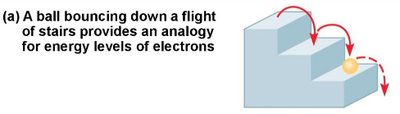
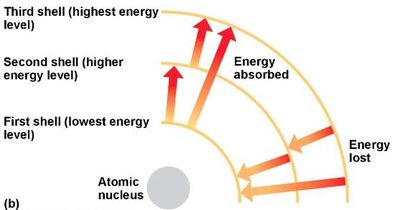
Potential energy: Energy due to location or structure.
Electrons have different amounts of potential energy depending on their electron shell.

Valence Electrons and Chemical Bonds
Valence Electrons
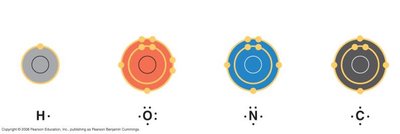
Valence electrons are in the outermost shell and determine chemical behavior.
Atoms with incomplete valence shells tend to share or transfer electrons, forming chemical bonds.
Covalent Bonds
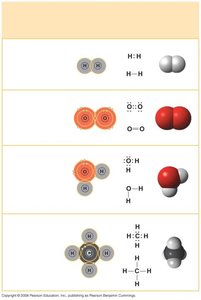
Strongest chemical bond; involves sharing pairs of valence electrons.
Nonpolar covalent bond: Electrons shared equally.
Polar covalent bond: Electrons shared unequally, creating partial charges.
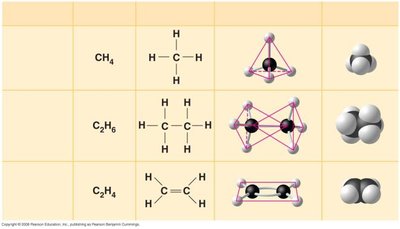
Molecules can be represented by structural formulas, Lewis dot structures, and space-filling models.
Ionic Bonds
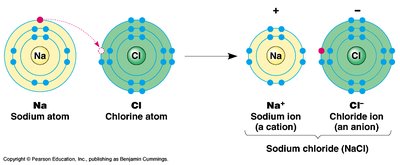
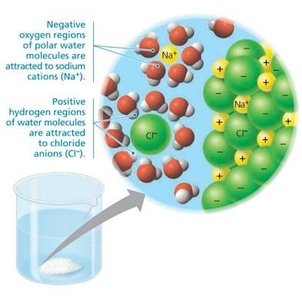
Formed when electrons are transferred from one atom to another, creating ions (cations and anions).
Example: Sodium (Na) transfers an electron to chlorine (Cl) to form sodium chloride (NaCl).
Hydrogen Bonds
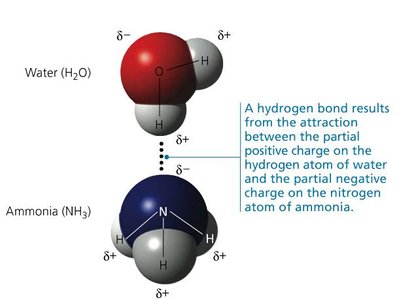
Weak bonds between a hydrogen atom covalently bonded to an electronegative atom (usually O or N) and another electronegative atom.
Important in stabilizing the structures of proteins and DNA.
Van der Waals Interactions
Weak attractions due to transient local partial charges.
Collectively, these interactions can be significant, such as in the adhesion of gecko feet to surfaces.

Molecular Shape and Biological Function
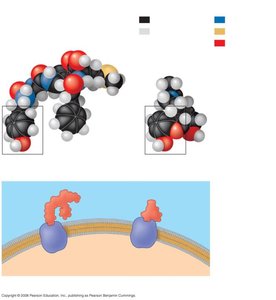
Weak chemical bonds help reinforce the shapes of large molecules and enable specific interactions.
Molecules with similar shapes can have similar biological effects (e.g., morphine and endorphins).
Chemical Reactions
Chemical reactions involve the making and breaking of chemical bonds, reorganizing matter.
Example: Photosynthesis
Water and Life
Importance of Water
Water is the biological medium on Earth and is essential for all living organisms.
Exists in three states: liquid, solid (ice), and gas (vapor).
Cells are 70–95% water, and most biochemical reactions occur in aqueous solutions.

Polarity and Hydrogen Bonding
Water is a polar molecule, with opposite ends having opposite charges.
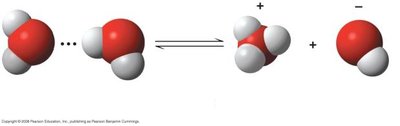
Water molecules form hydrogen bonds with each other, leading to unique properties.
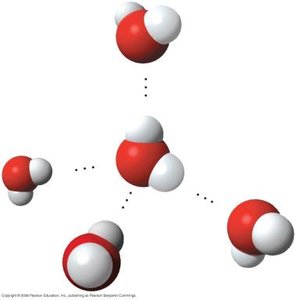
Emergent Properties of Water
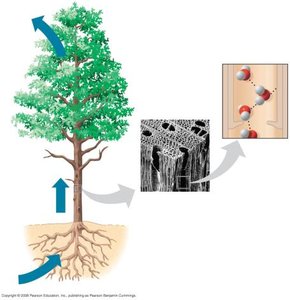
Cohesive behavior: Hydrogen bonds hold water molecules together (cohesion), aiding water transport in plants and creating surface tension.
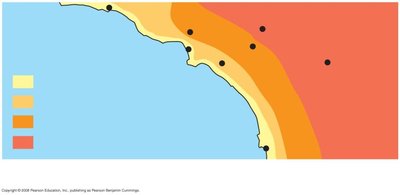
Ability to moderate temperature: High specific heat allows water to absorb or release large amounts of heat with little temperature change, stabilizing environments.
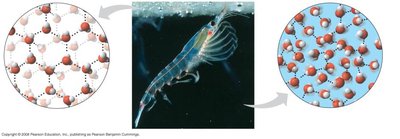
Expansion upon freezing: Ice is less dense than liquid water, allowing it to float and insulate aquatic life.
Versatility as a solvent: Water dissolves many substances due to its polarity, making it the fundamental solvent of life.
Acids, Bases, and Buffers
Water can dissociate into hydronium (H3O+) and hydroxide (OH–) ions.
pH measures the concentration of H+ ions; buffers help maintain stable pH in biological systems.
Carbon and Molecular Diversity of Life
Importance of Carbon
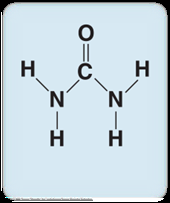
Carbon forms the backbone of organic molecules due to its tetravalence (four valence electrons).
Can form large, complex, and diverse molecules, including proteins, DNA, and carbohydrates.
Carbon Skeleton Variation
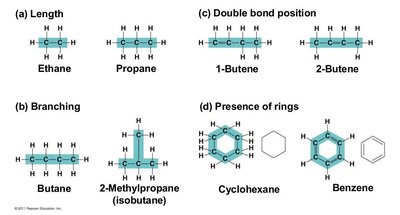
Carbon chains vary in length, branching, double bond position, and ring structure, contributing to molecular diversity.
Hydrocarbons
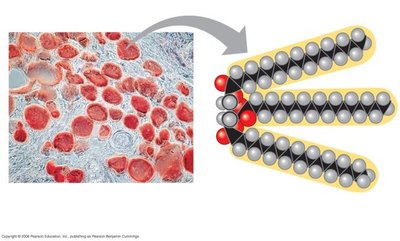
Composed only of carbon and hydrogen; hydrophobic and energy-rich.
Isomers
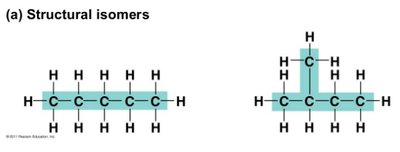
Structural isomers: Different covalent arrangements of atoms.
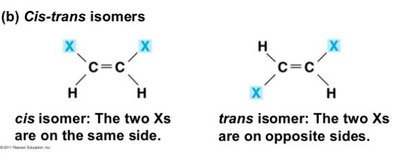
Cis-trans isomers: Same covalent bonds, different spatial arrangements.
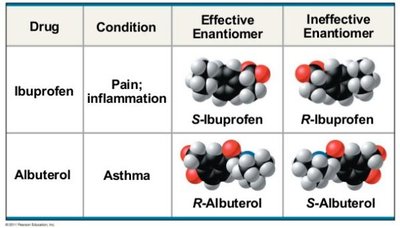
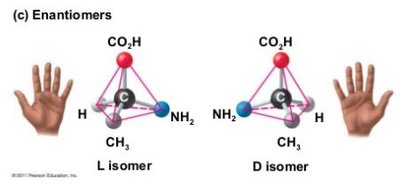
Enantiomers: Mirror images; important in pharmaceuticals.
Functional Groups
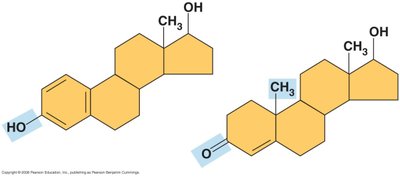
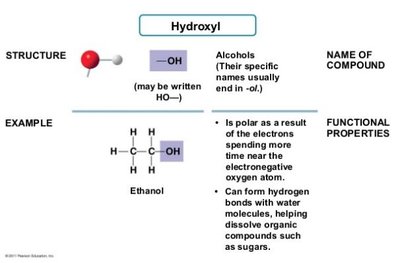
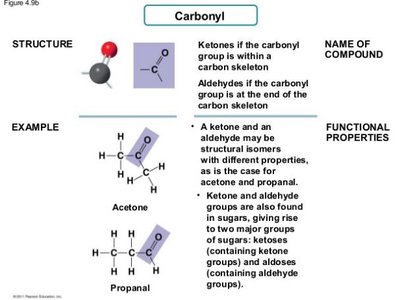
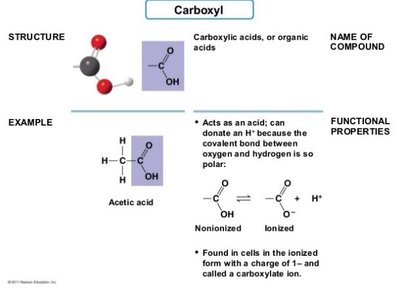
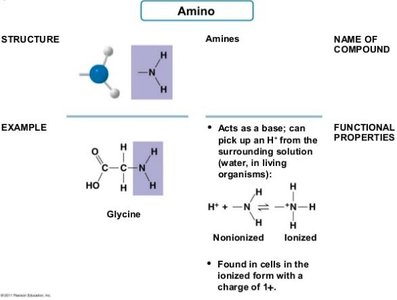
Functional groups are specific groups of atoms attached to carbon skeletons that determine the properties of organic molecules.
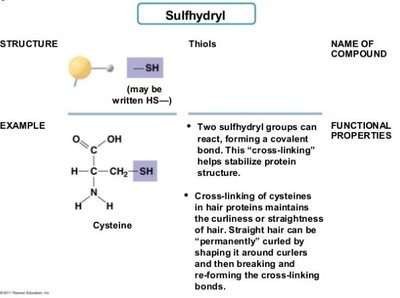
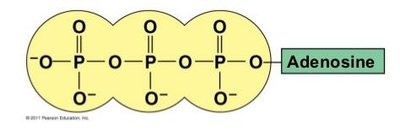
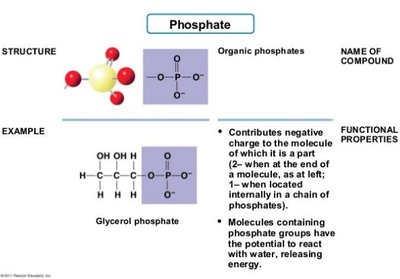
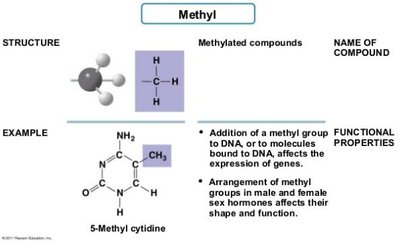
Seven key functional groups: hydroxyl, carbonyl, carboxyl, amino, sulfhydryl, phosphate, methyl.
Summary Table: Major Functional Groups
Group | Structure | Properties | Example |
|---|---|---|---|
Hydroxyl | –OH | Polar, forms hydrogen bonds | Ethanol |
Carbonyl | –C=O | Polar, found in sugars | Acetone |
Carboxyl | –COOH | Acts as acid | Acetic acid |
Amino | –NH2 | Acts as base | Glycine |
Sulfhydryl | –SH | Forms disulfide bonds | Cysteine |
Phosphate | –OPO32– | Contributes negative charge | ATP |
Methyl | –CH3 | Affects gene expression | 5-Methyl cytidine |
Additional info: This summary covers the chemical foundations of biology, including atomic structure, chemical bonds, water properties, carbon chemistry, and functional groups, providing a basis for understanding biomolecules and cellular processes.
