 Back
The Chemical Context of Life: Elements, Atoms, and Chemical Bonds
Study Guide - Smart Notes
 Tailored notes based on your materials, expanded with key definitions, examples, and context.
The Chemical Context of Life
Introduction
The study of biology begins with understanding the chemical foundation of life. All living organisms are composed of matter, which is made up of elements and atoms. The arrangement and interactions of these atoms determine the structure and function of biological molecules. 
Matter, Elements, and Atoms
Definitions and Properties
Matter is anything that occupies space and has mass. Elements are pure substances consisting of only one type of atom and cannot be broken down by chemical reactions. Atoms are the smallest units of elements, composed of protons, neutrons, and electrons. - Matter: Anything that takes up space and has mass. - Element: A substance that cannot be broken down into other substances by chemical reactions. - Atom: The smallest unit of an element, consisting of a nucleus (protons and neutrons) and electrons. 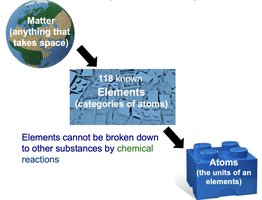
Physical Forces and Atom Structure
Atoms can be manipulated or split using high-energy physical forces, such as those in particle accelerators. This process helps scientists study atomic structure and fundamental particles. 
The Periodic Table of Elements
The periodic table organizes all known elements based on their atomic number and properties. It is a fundamental tool for understanding chemical behavior. 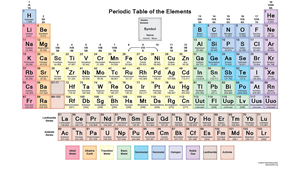
Atomic Number, Atomic Mass, and Isotopes
Atomic Number and Mass
- Atomic number: The number of protons in an atom's nucleus, which defines the element. - Mass number: The sum of protons and neutrons in the nucleus.
Isotopes
Isotopes are atoms of the same element with different numbers of neutrons. Some isotopes are radioactive and decay spontaneously, releasing energy and particles. - Isotope: Atoms of the same element with different neutron counts. - Radioactive isotope: An isotope that decays, emitting radiation.
Radiometric Dating
Radiometric dating uses the predictable decay of radioactive isotopes to estimate the age of materials. The half-life is the time required for half of the isotope to decay. 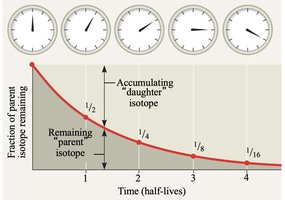
Applications of Carbon Dating
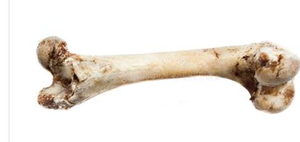
Carbon-14 dating is used to determine the age of biological samples up to about 60,000 years. Living organisms incorporate carbon-14, which decays after death. - Half-life of 14C: 5,700 years. - Example: Dating ancient bones or artifacts. 

Modern Applications
Carbon dating can also be used to detect fraud, such as identifying the true age of whisky. 
Elements in the Human Body
Major Elements
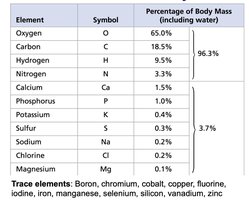
The human body is composed primarily of a few elements, with oxygen, carbon, hydrogen, and nitrogen making up the majority. - Major elements: Oxygen (O), Carbon (C), Hydrogen (H), Nitrogen (N), Calcium (Ca), Phosphorus (P), Potassium (K), Sulfur (S), Sodium (Na), Chlorine (Cl), Magnesium (Mg). 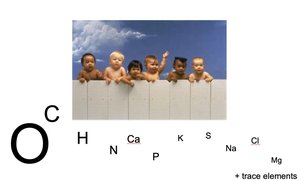
Elemental Composition Table
Element | Symbol | Percentage of Body Mass |
|---|---|---|
Oxygen | O | 65.0% |
Carbon | C | 18.5% |
Hydrogen | H | 9.5% |
Nitrogen | N | 3.3% |
Calcium | Ca | 1.5% |
Phosphorus | P | 1.0% |
Potassium | K | 0.4% |
Sulfur | S | 0.3% |
Sodium | Na | 0.2% |
Chlorine | Cl | 0.2% |
Magnesium | Mg | 0.1% |
Electron Configuration and Chemical Behavior
Valence Electrons
The chemical behavior of an element is determined by the electrons in its outermost shell, known as valence electrons. Elements with a full valence shell are chemically inert (noble gases). - Valence electrons: Electrons in the outermost shell. - Chemically inert: Elements with full valence shells (e.g., noble gases). 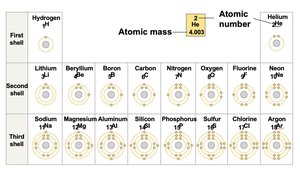
Electron Energy Levels
Electrons can absorb or lose energy, moving between energy levels (shells). 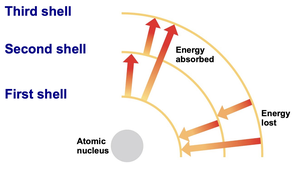
Electron Orbitals
Orbitals are regions around the nucleus where electrons are likely to be found. The arrangement of orbitals affects bonding and molecular shape. 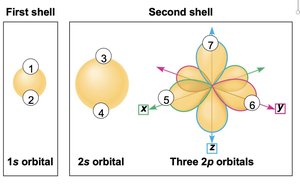
Chemical Bonding
Types of Chemical Bonds
Atoms with incomplete valence shells form bonds to achieve stability. The main types of bonds important for life are covalent, ionic, and weak bonds. - Covalent bonds: Atoms share valence electrons. - Ionic bonds: Atoms transfer electrons, forming charged ions. - Weak bonds: Include hydrogen bonds and van der Waals interactions. 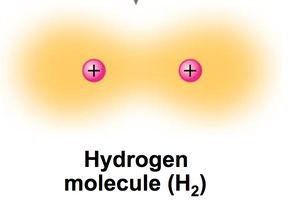
Covalent Bonds: Polar and Non-Polar
Covalent bonds can be polar (unequal sharing of electrons) or non-polar (equal sharing). - Polar covalent bond: Electrons are shared unequally, creating partial charges. - Non-polar covalent bond: Electrons are shared equally. 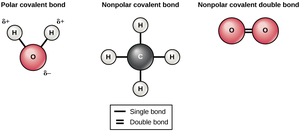
Electronegativity
Electronegativity is the tendency of an atom to attract electrons. Highly electronegative elements (e.g., oxygen, fluorine) pull electrons toward themselves, affecting bond polarity. 

Bond Polarity Examples
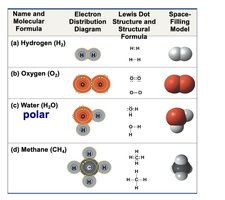
Ionic Bonds
Formation and Properties
Ionic bonds form when atoms transfer electrons, resulting in positive (cation) and negative (anion) ions. Oppositely charged ions attract each other. - Cation: Positively charged ion. - Anion: Negatively charged ion. - Ionic bond: Attraction between cation and anion. 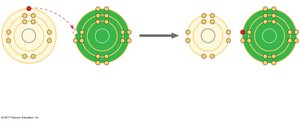
Weak Chemical Interactions
Importance in Biology
Weak bonds, such as hydrogen bonds and van der Waals interactions, are crucial for maintaining the structure and function of biological molecules. Their reversibility allows for dynamic changes, such as protein conformational changes and DNA strand separation. 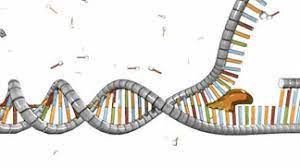
Hydrogen Bonds
Hydrogen bonds form when a hydrogen atom is attracted to an electronegative atom (such as oxygen or nitrogen) in another molecule. These bonds are essential for the properties of water and the structure of DNA and proteins. 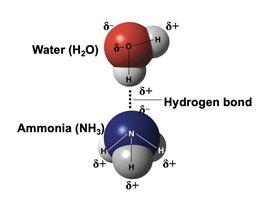
Summary Table: Types of Chemical Bonds
Bond Type | Definition | Example |
|---|---|---|
Covalent | Atoms share electrons | H2, O2, CH4 |
Polar Covalent | Unequal sharing of electrons | H2O |
Ionic | Transfer of electrons, forming ions | NaCl |
Hydrogen Bond | Attraction between H and electronegative atom | Between water molecules |
Additional info: The notes expand on the original content by providing definitions, examples, and context for each concept, ensuring completeness and academic quality.
