 Back
The Chemical Context of Life: Elements, Atoms, and Chemical Bonds
Study Guide - Smart Notes
 Tailored notes based on your materials, expanded with key definitions, examples, and context.
The Chemical Context of Life
Overview: Chemistry and Biology
Biology is deeply connected to chemistry, as all living organisms are composed of matter and are subject to the laws of physics and chemistry. Understanding the chemical basis of life is essential for studying biological processes.
Matter is anything that takes up space and has mass.
Elements are pure substances that cannot be broken down by chemical reactions.
Compounds are substances consisting of two or more elements in a fixed ratio, often with properties different from their constituent elements.
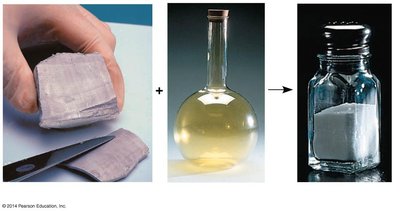
Elements and Compounds
The Elements of Life
Of the 92 naturally occurring elements, about 20–25% are essential for life. These essential elements are required for an organism to live, grow, and reproduce. Some elements are needed only in trace amounts.
Trace elements are required in minute quantities (e.g., iodine for thyroid function in vertebrates).
Deficiency in essential elements can lead to health problems (e.g., iodine deficiency causes goiter).
Some organisms have evolved tolerance to toxic elements (e.g., sunflowers can absorb heavy metals from contaminated soils).
Atoms and Their Structure
Atomic Structure and Subatomic Particles
Each element consists of a unique type of atom, which is the smallest unit of matter that retains the properties of the element. Atoms are composed of subatomic particles:
Protons: Positively charged, found in the nucleus.
Neutrons: No charge, found in the nucleus.
Electrons: Negatively charged, orbit the nucleus in electron shells.
The number of protons determines the atomic number and identity of the element.
Atomic Number, Mass Number, and Isotopes
Atomic number: Number of protons in the nucleus.
Mass number: Sum of protons and neutrons.
Atomic mass: Approximate total mass of an atom (measured in daltons).
Isotopes: Atoms of the same element with different numbers of neutrons.
Radioactive isotopes: Unstable isotopes that decay, emitting particles and energy; used in dating fossils, tracing metabolic pathways, and medical diagnostics.
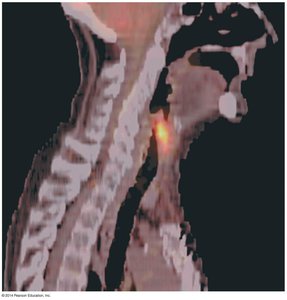
Electron Configuration and Chemical Properties
Energy Levels and Electron Shells
Electrons occupy specific energy levels, or shells, around the nucleus. The chemical behavior of an atom is largely determined by the arrangement of electrons in these shells.
Electrons in higher shells have more potential energy.
Electrons can move between shells by absorbing or releasing energy.
Electron Distribution and the Periodic Table
The periodic table arranges elements by atomic number and electron configuration, which determines their chemical properties.
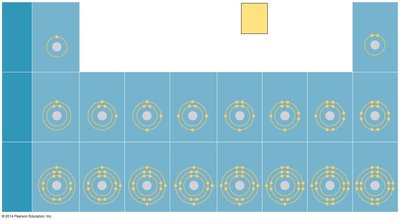
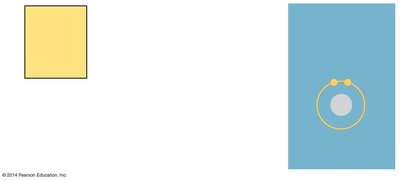
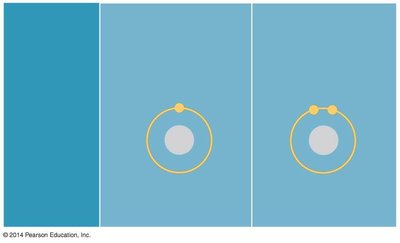
Valence electrons: Electrons in the outermost shell; determine an atom's reactivity.
Atoms with full valence shells are chemically inert (unreactive).
Chemical Bonds and Molecular Structure
Covalent Bonds
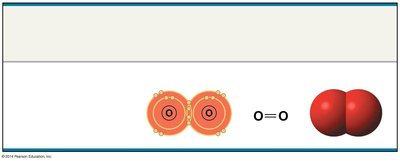
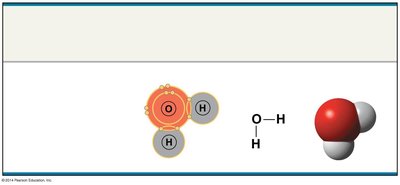
Covalent bonds involve the sharing of pairs of valence electrons between atoms. Molecules are formed when two or more atoms are held together by covalent bonds.
Single bond: Sharing of one pair of electrons (e.g., H—H).
Double bond: Sharing of two pairs of electrons (e.g., O=O).
Bonding capacity (valence): Number of bonds an atom can form, usually equal to the number of electrons needed to fill the valence shell.
Electronegativity and Polarity
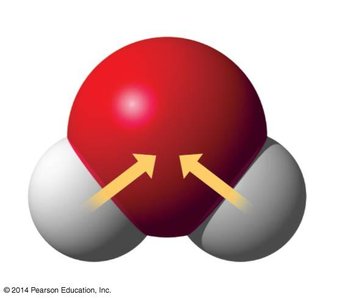
Electronegativity is an atom's attraction for electrons in a covalent bond. Differences in electronegativity lead to:
Nonpolar covalent bonds: Electrons are shared equally.
Polar covalent bonds: Electrons are shared unequally, resulting in partial charges (e.g., water molecules).
Ionic Bonds
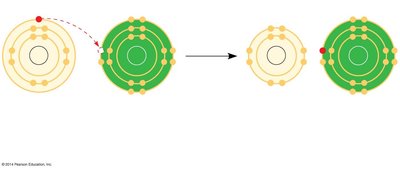
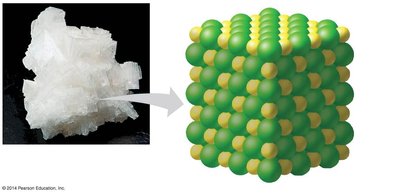
Ionic bonds form when electrons are transferred from one atom to another, creating charged ions. The resulting attraction between oppositely charged ions forms an ionic compound (salt).
Cation: Positively charged ion (lost electrons).
Anion: Negatively charged ion (gained electrons).
Weak Chemical Bonds
Weak bonds, such as hydrogen bonds and van der Waals interactions, are crucial for the structure and function of large biological molecules.
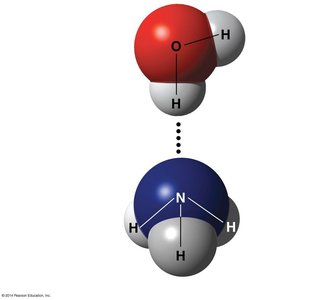
Hydrogen bonds: Form between a hydrogen atom covalently bonded to an electronegative atom (like O or N) and another electronegative atom.
Van der Waals interactions: Weak attractions due to transient local charges; important in large molecules and biological surfaces (e.g., gecko feet).

Molecular Shape and Function
Shape Determines Function
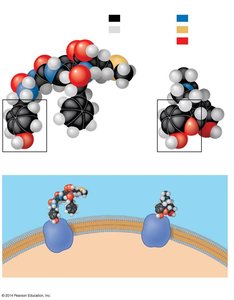
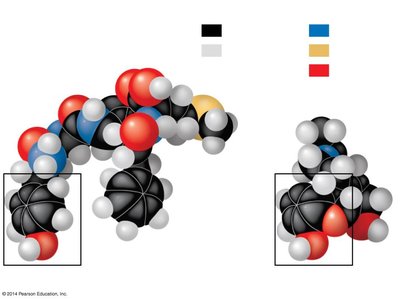
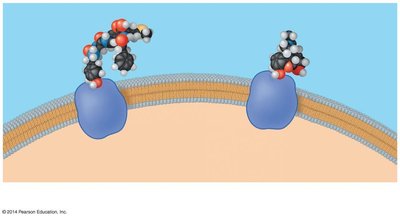
The three-dimensional shape of a molecule is critical for its biological function. Molecular shape determines how molecules recognize and interact with each other, such as in enzyme-substrate binding or hormone-receptor interactions.
Molecules with similar shapes can have similar biological effects (e.g., morphine and endorphins).
Chemical Reactions
Making and Breaking Bonds
Chemical reactions involve the making and breaking of chemical bonds. The substances at the start of a reaction are called reactants, and those at the end are products.
All chemical reactions are reversible.
Chemical equilibrium is reached when the rates of the forward and reverse reactions are equal.
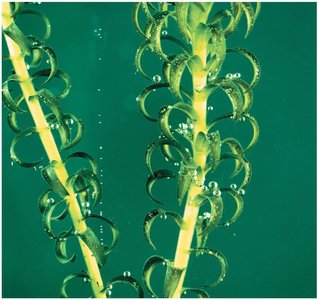
Photosynthesis is a key biological chemical reaction:
Additional info: Understanding the chemical context of life provides the foundation for studying more complex biological processes, including metabolism, genetics, and cellular structure.
