 Back
BackThe Chemical Context of Life: Functional Groups and Biological Macromolecules
Study Guide - Smart Notes
 Tailored notes based on your materials, expanded with key definitions, examples, and context.
The Chemical Context of Life
Biologically Important Chemical Groups
Biological molecules often contain specific groups of atoms known as functional groups. These groups confer distinct chemical properties and reactivity to the molecules they are part of, playing critical roles in the structure and function of macromolecules.
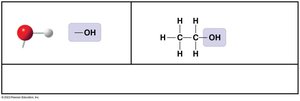
Hydroxyl group (—OH): Found in alcohols; polar and forms hydrogen bonds with water, aiding solubility.
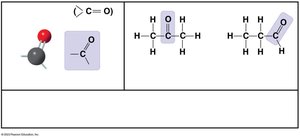
Carbonyl group (C=O): Found in ketones and aldehydes; increases molecule reactivity and polarity.
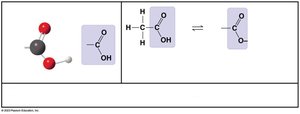
Carboxyl group (—COOH): Acts as an acid; can donate H+ ions, found in amino acids and fatty acids.
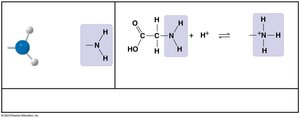
Amino group (—NH2): Acts as a base; can accept H+ ions, found in amino acids.
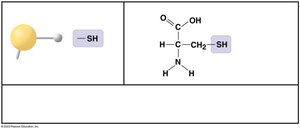
Sulfhydryl group (—SH): Found in thiols; can form disulfide bonds, stabilizing protein structure.
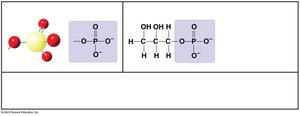
Phosphate group (—OPO32–): Contributes negative charge; involved in energy transfer (e.g., ATP).
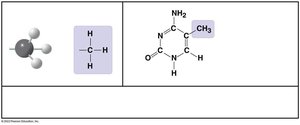
Methyl group (—CH3): Affects gene expression and molecular shape; found in DNA and hormones.
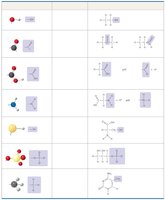
Examples of Functional Groups in Biological Molecules
Below are examples of each functional group, their molecular structure, and their occurrence in biological molecules:
Functional Group | Example Compound | Structure |
|---|---|---|
Hydroxyl (—OH) | Ethanol |
|
Carbonyl (C=O) | Acetone, Propanal |
|
Carboxyl (—COOH) | Acetic acid |
|
Amino (—NH2) | Glycine |
|
Sulfhydryl (—SH) | Cysteine |
|
Phosphate (—OPO32–) | Glycerol phosphate |
|
Methyl (—CH3) | 5-Methylcytosine |
|
Classification of Carbohydrates
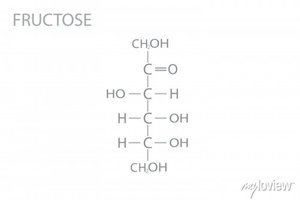
Carbohydrates are organic molecules with the general formula (CH2O)n. They serve as energy sources and structural materials. Carbohydrates contain both carbonyl and hydroxyl groups, making them polar and water-soluble.
Monosaccharides: Simple sugars (e.g., glucose, fructose).
Disaccharides: Two monosaccharides joined by a glycosidic bond.
Polysaccharides: Long chains of monosaccharides (e.g., starch, cellulose).
Types of Lipids
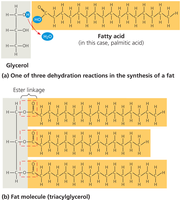
Lipids are hydrophobic molecules, including fats, phospholipids, and steroids. They are important for energy storage, membrane structure, and signaling.
Fats (triglycerides): Composed of glycerol and three fatty acids. Used for long-term energy storage.
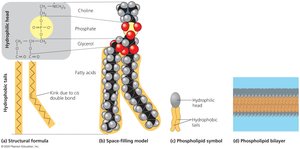
Phospholipids: Major components of cell membranes; contain a hydrophilic head and hydrophobic tails.
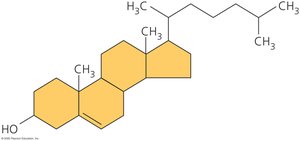
Steroids: Characterized by a four-ring structure; include cholesterol and hormones.
The Structure of Amino Acids and Proteins
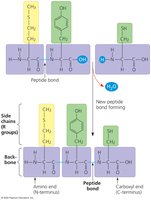
Amino acids are the building blocks of proteins. Each amino acid contains an amino group, a carboxyl group, a hydrogen atom, and a variable R group attached to a central carbon.
Polypeptides: Chains of amino acids linked by peptide bonds.
Proteins: Folded polypeptides with specific functions.
Nucleic Acids
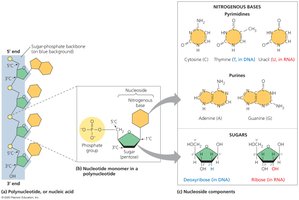
Nucleic acids (DNA and RNA) are polymers of nucleotides. Each nucleotide consists of a phosphate group, a sugar, and a nitrogenous base.
DNA: Stores genetic information; double helix structure.
RNA: Involved in protein synthesis and gene regulation.
Polymer Synthesis and Breakdown
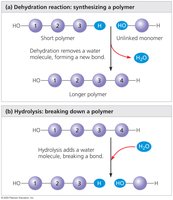
Macromolecules are assembled and disassembled by specific chemical reactions:
Dehydration (condensation) reaction: Joins monomers by removing a water molecule, forming a covalent bond.
Hydrolysis: Breaks polymers into monomers by adding water.
Summary Table: Functional Groups in Biological Molecules
Functional Group | Structure | Compound Example | Properties |
|---|---|---|---|
Hydroxyl | —OH | Ethanol | Polar, forms hydrogen bonds, increases solubility |
Carbonyl | C=O | Acetone, Propanal | Increases reactivity, polarity |
Carboxyl | —COOH | Acetic acid | Acts as acid, donates H+ |
Amino | —NH2 | Glycine | Acts as base, accepts H+ |
Sulfhydryl | —SH | Cysteine | Forms disulfide bonds |
Phosphate | —OPO32– | Glycerol phosphate | Negative charge, energy transfer |
Methyl | —CH3 | 5-Methylcytosine | Affects gene expression, shape |
