 Back
BackThe Chemical Context of Life: Matter, Elements, and Atomic Structure
Study Guide - Smart Notes
 Tailored notes based on your materials, expanded with key definitions, examples, and context.
The Chemical Context of Life
Introduction to Matter, Elements, and Compounds
Understanding the chemical basis of life is essential for biology. All living and nonliving things are composed of matter, which is organized into elements and compounds. The properties and interactions of these substances underpin biological structure and function.
Matter: Anything that takes up space and has mass. Examples include rocks, metals, oils, and organisms.
Element: A substance that cannot be broken down into other substances by chemical means. There are 92 naturally occurring elements, each with a unique symbol (e.g., C for carbon, Fe for iron).
Compound: A substance consisting of two or more elements combined in a fixed ratio, with characteristics different from its constituent elements (e.g., NaCl, H2O).
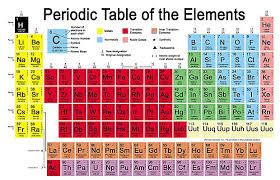
Elements Essential for Life
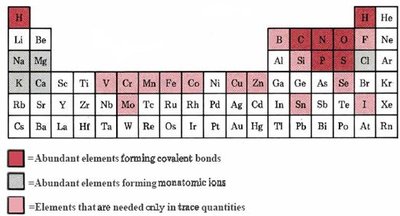
Life depends on a small subset of elements, with six elements making up the majority of living matter. These are often remembered by the acronym SPONCH.
SPONCH: Sulfur (S), Phosphorus (P), Oxygen (O), Nitrogen (N), Carbon (C), Hydrogen (H)
These elements are the main building blocks of biological molecules.
Trace Elements
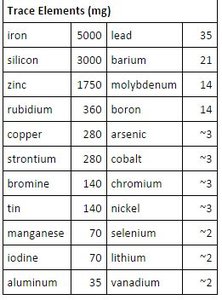
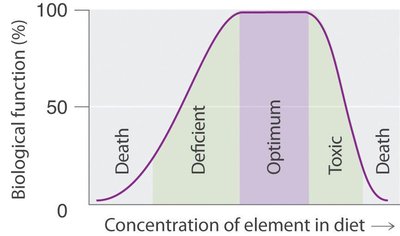
Trace elements are required by organisms in minute quantities but are essential for proper physiological function. For example, iodine is necessary for thyroid function.
Example: Iodine (I) is required at 0.15 mg/day for humans.
Compounds: Properties and Examples
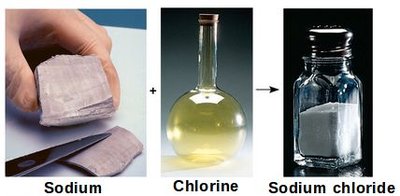
Compounds have properties distinct from their constituent elements. For example, sodium (a reactive metal) and chlorine (a poisonous gas) combine to form sodium chloride (table salt), which is edible and essential for life.
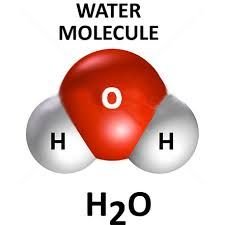
Water (H2O): Composed of two hydrogen atoms and one oxygen atom in a 2:1 ratio.
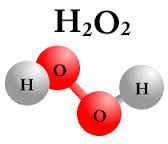
Hydrogen Peroxide (H2O2): Composed of two hydrogen and two oxygen atoms in a 2:2 ratio, with very different properties from water.
Atomic Structure and Function
Atoms and Subatomic Particles
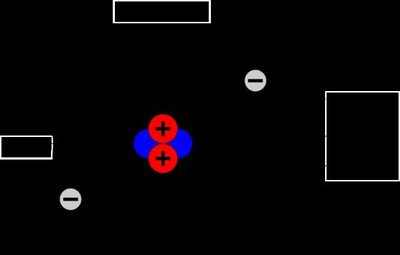
Atoms are the smallest units of matter that retain the properties of an element. They are composed of subatomic particles: protons, neutrons, and electrons.
Proton: Positively charged particle (+)
Neutron: Electrically neutral particle
Electron: Negatively charged particle (-)
Protons and neutrons are found in the atomic nucleus; electrons form a cloud around the nucleus.
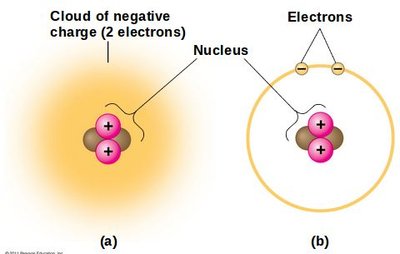
Atomic Number, Mass Number, and Isotopes
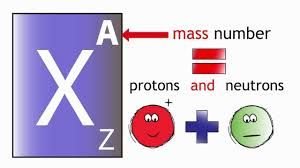
The atomic number is the number of protons in an atom and defines the element. The mass number is the sum of protons and neutrons. Isotopes are atoms of the same element with different numbers of neutrons.
Atomic Number (Z): Number of protons; determines the element.
Mass Number (A): Number of protons plus neutrons.
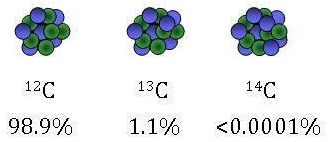
Isotopes: Atoms with the same number of protons but different numbers of neutrons (e.g., Carbon-12, Carbon-13, Carbon-14).
Atomic Mass vs. Mass Number
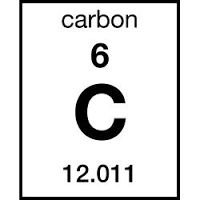
Atomic mass is the weighted average of all isotopes of an element, while mass number is always a whole number for a specific isotope.
Atomic Mass: Weighted average based on isotope abundance (e.g., carbon's atomic mass is 12.01 due to the presence of C-12 and C-13).
Mass Number: Always a whole number (e.g., 12 for C-12).
Radioactive Isotopes and Their Uses
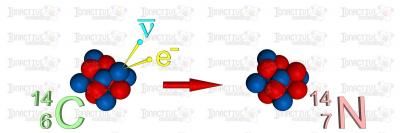
Some isotopes are unstable and radioactive, meaning they decay over time, emitting particles and energy. These isotopes are useful in biology for radiometric dating and as tracers in medical imaging.
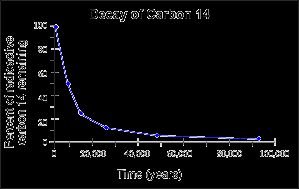
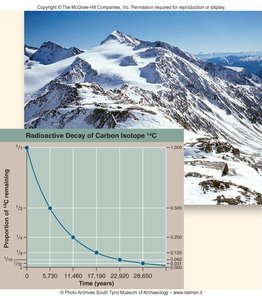
Half-life: The time required for half of a radioactive isotope to decay.
Radiometric Dating: Used to determine the age of fossils and archaeological samples (e.g., Carbon-14 dating).
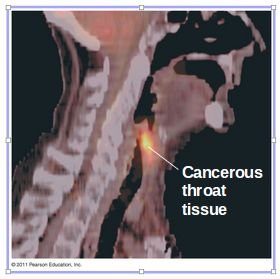
Radioactive Tracers: Used in PET scans to detect cancer or Alzheimer's disease.
Electron Arrangement and Chemical Properties
Electron Orbitals and Shells
Electrons occupy orbitals, regions of space where they are likely to be found. Orbitals are organized into shells, each with a characteristic energy level. The arrangement of electrons determines an atom's chemical behavior.
Electron Shells: Energy levels where electrons reside; the first shell is lowest in energy, outer shells are higher.
Valence Shell: The outermost shell; electrons here are involved in chemical bonding.
Valence Electrons: Electrons in the valence shell; determine reactivity.
Ions and Ionic Compounds
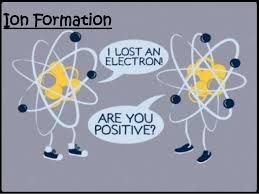
Atoms can gain or lose electrons to form ions. Cations are positively charged (loss of electrons), and anions are negatively charged (gain of electrons). Ionic compounds are formed from the attraction between oppositely charged ions.
Cation: Positively charged ion (e.g., Na+).
Anion: Negatively charged ion (e.g., Cl-).
Ionic Compound: A compound formed by ionic bonds (e.g., NaCl).
Chemical Bonding
Covalent Bonds
Covalent bonds involve the sharing of valence electrons between atoms. These bonds can be single, double, or triple, depending on the number of shared electron pairs.
Nonpolar Covalent Bond: Electrons are shared equally (e.g., H2).
Polar Covalent Bond: Electrons are shared unequally, creating partial charges (e.g., H2O).
Electronegativity: The tendency of an atom to attract electrons in a covalent bond.
Ionic Bonds
Ionic bonds result from the transfer of electrons from one atom to another, creating ions that are held together by electrostatic attraction.
Example: Sodium donates an electron to chlorine, forming Na+ and Cl-, which combine to form NaCl.
Weak Chemical Bonds
Weak bonds, such as hydrogen bonds and van der Waals interactions, play crucial roles in the structure and function of biological molecules.
Hydrogen Bond: Attraction between a partially positive hydrogen atom and a partially negative atom (usually O or N).
Van der Waals Interactions: Weak attractions due to transient local partial charges, important in molecular shape and interactions.
Chemical Reactions
Making and Breaking Bonds
Chemical reactions involve the making and breaking of chemical bonds, resulting in the rearrangement of atoms. Atoms are neither created nor destroyed in chemical reactions; only their arrangements change.
Reactants: Starting substances in a chemical reaction.
Products: Substances formed as a result of a chemical reaction.
Balancing Equations: Ensures the same number of each type of atom on both sides of the equation.
Summary Table: Key Terms and Concepts
Term | Definition | Example |
|---|---|---|
Matter | Anything with mass and volume | Water, air, rocks |
Element | Substance that cannot be broken down further | Oxygen (O), Carbon (C) |
Compound | Substance of two or more elements in fixed ratio | H2O, NaCl |
Atom | Smallest unit of an element | Helium atom |
Isotope | Atoms of same element, different neutrons | C-12, C-13, C-14 |
Cation | Positively charged ion | Na+ |
Anion | Negatively charged ion | Cl- |
Covalent Bond | Shared electrons | H2O |
Ionic Bond | Transferred electrons | NaCl |
Hydrogen Bond | Attraction between polar molecules | Between water molecules |
