 Back
The Chemical Context of Life: Matter, Elements, Atoms, and Chemical Bonding
Study Guide - Smart Notes
 Tailored notes based on your materials, expanded with key definitions, examples, and context.
The Chemical Context of Life
1.1 Matter, Elements, and Atoms
Understanding the chemical basis of life is essential in biology, as all living organisms are composed of matter, which follows the laws of physics and chemistry. Life is organized into a hierarchy, from atoms to molecules to cells, marking the transition from nonliving to living systems.
What is Matter?
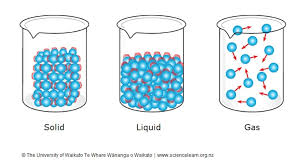
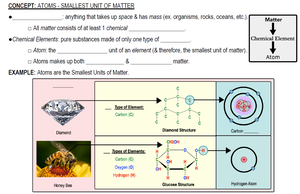
Matter is anything that takes up space and has mass.
It exists in different states: solid, liquid, and gas.
Matter is composed of elements, which are pure substances.
What are Elements?
An element is a pure substance consisting of only one type of atom and cannot be broken down by chemical means.
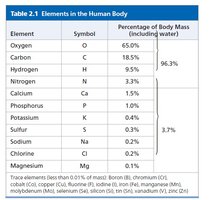
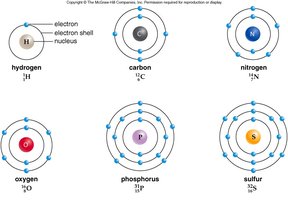
There are 92 naturally occurring elements; six are essential for life: CHNOPS (Carbon, Hydrogen, Nitrogen, Oxygen, Phosphorus, Sulfur).
Other important elements include sodium (Na), potassium (K), calcium (Ca), iron (Fe), and magnesium (Mg).
Atoms and Subatomic Particles
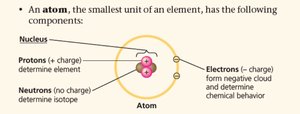
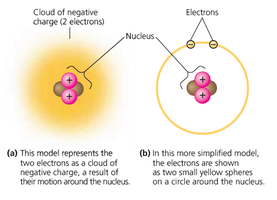
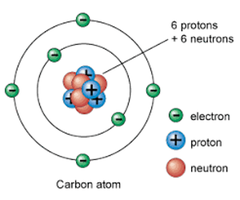
An atom is the smallest unit of an element, consisting of a dense nucleus surrounded by electrons.
Protons: Positively charged particles in the nucleus; determine the element's identity.
Neutrons: Neutral particles in the nucleus; determine the isotope.
Electrons: Negatively charged particles in shells around the nucleus; determine chemical behavior.
Atomic Structure and Atomic Number
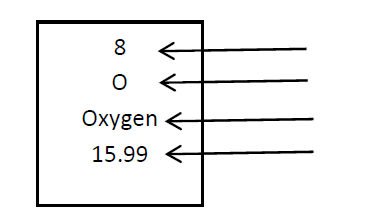
The atomic number is the number of protons in the nucleus and defines the element.
The atomic mass is the sum of protons and neutrons.
For a neutral atom, the number of electrons equals the number of protons.
Number of neutrons = Atomic mass - Atomic number.
Reading the Periodic Table
Each element is represented by its symbol, atomic number, and atomic mass.
Atoms: The Smallest Unit of Matter
Atoms make up both living and nonliving matter.
Examples: Diamond (carbon atoms), honey (glucose molecules), hydrogen atom.
1.2 Molecules and Types of Bonding
Atoms combine to form molecules through chemical bonds, which are essential for the structure and function of biological molecules.
What is a Compound?
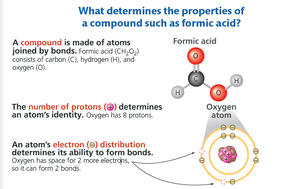
A compound is a substance composed of two or more different elements combined in a fixed ratio.
Compounds have properties different from their constituent elements.
Examples: Sodium chloride (NaCl) is made from sodium (a metal) and chlorine (a poisonous gas); water (H2O) is made from hydrogen and oxygen.
Isotopes
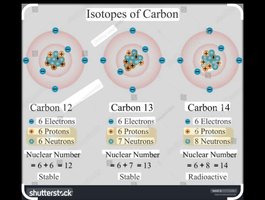
Isotopes are atoms of the same element with different numbers of neutrons, resulting in different atomic masses.
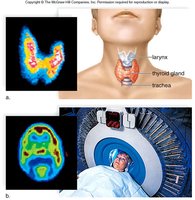
Radioactive isotopes are unstable and emit radiation; used in carbon dating and medical diagnostics.
Example: Carbon-12, Carbon-13, and Carbon-14 are isotopes of carbon.
Electron Arrangement and the Octet Rule
Electrons are arranged in shells around the nucleus: 1st shell (2 electrons), 2nd shell (8 electrons), 3rd shell (8 electrons).
The valence shell is the outermost shell; atoms with incomplete valence shells are reactive.
Valence electrons are electrons in the outermost shell and determine bonding behavior.
Valence and Bonding Capacity
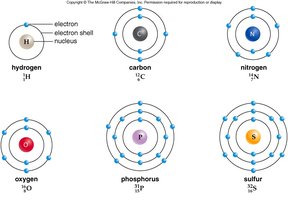
The valence of an atom is the number of covalent bonds it can form, equal to the number of unpaired electrons in the outer shell.
Examples: Hydrogen (1), Oxygen (2), Nitrogen (3), Carbon (4), Phosphorus (5).
Molecules and Chemical Bonds
A molecule is formed when two or more atoms join together.
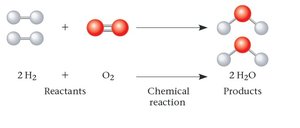
Diatomic molecules: Same type of atom (O2, H2).
Compound molecules: Different types of atoms (H2O, CO2).
Molecules are held together by chemical bonds: ionic, covalent (polar and non-polar), and hydrogen bonds.
Covalent Bonds
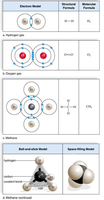
Covalent bonds form when two atoms share pairs of valence electrons.
Single covalent bond: One pair of shared electrons (e.g., H—H).
Double covalent bond: Two pairs of shared electrons (e.g., O=O).
Non-polar covalent bond: Electrons shared equally (e.g., H2).
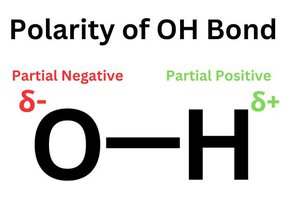
Polar covalent bond: Electrons shared unequally due to differences in electronegativity (e.g., H2O).

Ionic Bonds
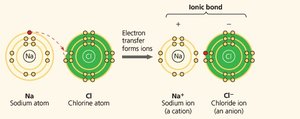
Ionic bonds form when one atom donates or gains electrons, creating charged ions that attract each other.
Example: Sodium (Na) donates an electron to chlorine (Cl), forming Na+ and Cl-, which combine to form NaCl.
Hydrogen Bonds
Hydrogen bonds are weak attractions between a hydrogen atom covalently bonded to an electronegative atom (like oxygen) and another electronegative atom.
They are crucial in stabilizing the structures of biological molecules, such as DNA and proteins.
Hydrogen bonds are not true bonds but are important collectively for molecular interactions.
Summary Table: Key Elements in the Human Body
Element | Symbol | Percentage of Body Mass |
|---|---|---|
Oxygen | O | 65.0% |
Carbon | C | 18.5% |
Hydrogen | H | 9.5% |
Nitrogen | N | 3.3% |
Calcium | Ca | 1.5% |
Phosphorus | P | 1.0% |
Potassium | K | 0.4% |
Sulfur | S | 0.3% |
Sodium | Na | 0.2% |
Chlorine | Cl | 0.2% |
Magnesium | Mg | 0.1% |
Key Equations
Number of neutrons:
Atomic mass:
Additional info: The concepts of atomic structure, isotopes, and chemical bonding are foundational for understanding biological molecules and processes, such as enzyme function, genetic information storage, and cellular metabolism.
