Back
The Chemical Context of Life, Water and Life, and Biological Macromolecules
Study Guide - Smart Notes
 Tailored notes based on your materials, expanded with key definitions, examples, and context.
Ch. 5 – The Structure and Function of Macromolecules
Macromolecules: Polymers and Monomers
Macromolecules are large molecules composed of repeating subunits (monomers). The four major classes are carbohydrates, lipids, proteins, and nucleic acids.
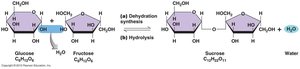
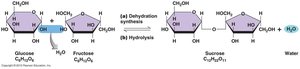
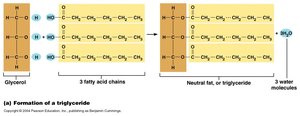
Polymerization: Monomers are joined by condensation (dehydration synthesis) reactions, releasing water.
Hydrolysis: Polymers are broken down into monomers by the addition of water.
Carbohydrates
Carbohydrates serve as energy sources and structural materials. They include monosaccharides (simple sugars), disaccharides, and polysaccharides.
Monosaccharides: Simple sugars like glucose, which often form ring structures.
Disaccharides: Two monosaccharides joined by a glycosidic bond.
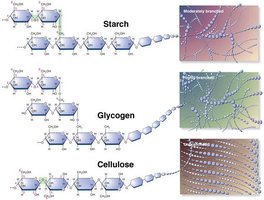
Polysaccharides: Long chains of monosaccharides for energy storage (starch, glycogen) or structure (cellulose, chitin).
Lipids
Lipids are hydrophobic molecules including fats, phospholipids, steroids, and waxes. They function in energy storage, insulation, and as structural components of cell membranes.
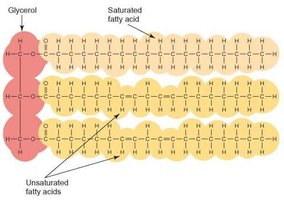
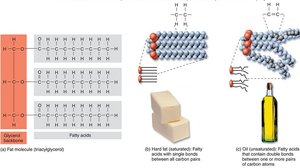
Fats (Triglycerides): Composed of glycerol and three fatty acids. Store energy efficiently.
Saturated Fats: No double bonds; solid at room temperature (animal fats).
Unsaturated Fats: One or more double bonds; liquid at room temperature (plant oils).
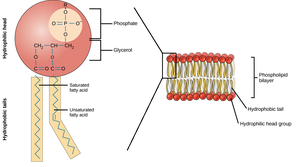
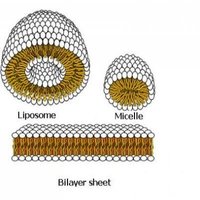
Phospholipids: Major component of cell membranes; have hydrophilic heads and hydrophobic tails, forming bilayers in water.
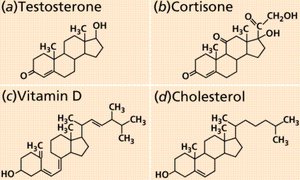
Steroids: Lipids with four fused rings, such as cholesterol and hormones.
Proteins
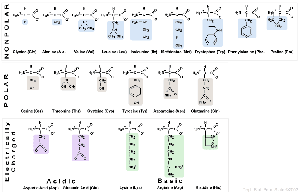
Proteins are polymers of amino acids (polypeptides) that perform a vast array of functions, including catalysis, structure, transport, and signaling.
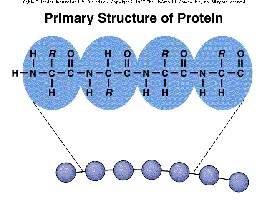
Primary Structure: Linear sequence of amino acids, determined by DNA.
Secondary Structure: Local folding (α-helix, β-sheet) stabilized by hydrogen bonds.
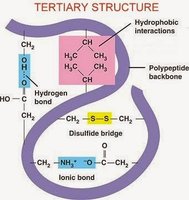
Tertiary Structure: Overall 3D shape due to interactions among R groups (hydrophobic, ionic, hydrogen bonds, disulfide bridges).
Quaternary Structure: Association of multiple polypeptide chains.
Denaturation: Loss of structure (and function) due to changes in temperature or pH; reversible unless primary structure is broken.
Nucleic Acids
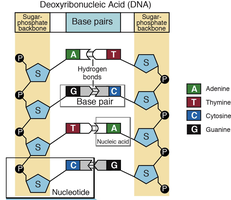
Nucleic acids (DNA and RNA) are polymers of nucleotides. They store and transmit genetic information.
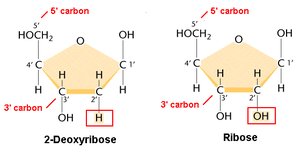
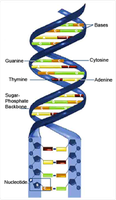
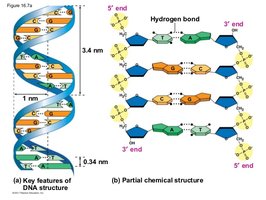
DNA: Double-stranded, deoxyribose sugar, bases A, T, C, G.
RNA: Single-stranded, ribose sugar, bases A, U, C, G.
Nitrogenous Bases: Pyrimidines (C, T, U) and purines (A, G).
Base Pairing: Hydrogen bonds hold complementary bases together (A-T/U, C-G).