 Back
The Chemical Foundation of Life: Atoms, Bonds, and Water
Study Guide - Smart Notes
 Tailored notes based on your materials, expanded with key definitions, examples, and context.
Hierarchy of Biological Organization
Elements and Compounds
All matter, both living and non-living, is composed of elements and compounds. Elements are pure substances that cannot be broken down into other substances by chemical means, while compounds are substances consisting of two or more different elements combined in a fixed ratio. Compounds are more common in organisms than pure elements.
Element: A substance made of only one kind of atom (e.g., Oxygen, O).
Compound: A substance made of two or more elements in a fixed ratio (e.g., H2O, C6H12O6).
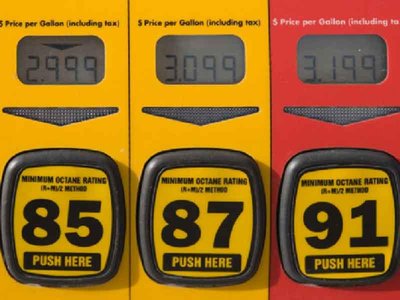
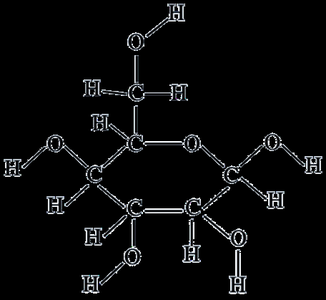
Example: Octane (C8H18) and glucose (C6H12O6) are compounds essential for energy in living organisms.
The Structure of the Atom
Subatomic Particles
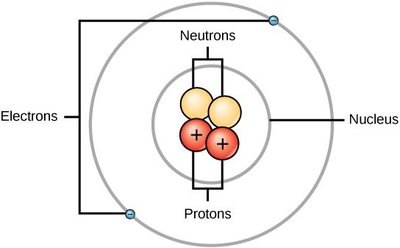
An atom is the smallest unit of matter that retains the properties of an element. Atoms are composed of three types of subatomic particles: protons, neutrons, and electrons.
Proton: Positive charge (+1), located in the nucleus, mass = 1 amu.
Neutron: No charge (0), located in the nucleus, mass = 1 amu.
Electron: Negative charge (-1), orbits the nucleus in shells, mass ≈ 0 amu.
Atomic Number and Mass Number
The atomic number is the number of protons in an atom, which determines the element. The atomic mass (or mass number) is the sum of protons and neutrons in the nucleus.
Atomic Number (Z): Number of protons
Atomic Mass (A): Number of protons + number of neutrons
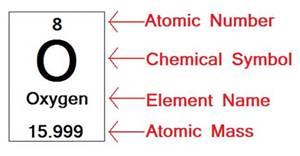
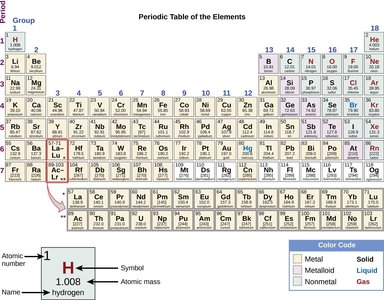
Example: Oxygen (O) has 8 protons, 8 neutrons, and 8 electrons in its neutral state. Its atomic mass is 16.
Isotopes
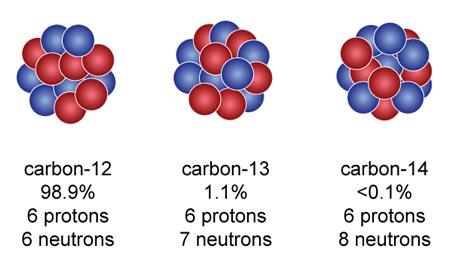
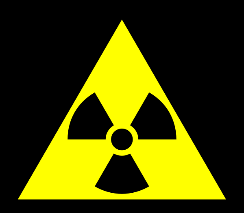
Isotopes are atoms of the same element with the same number of protons but different numbers of neutrons. Some isotopes are stable, while others are radioactive (unstable and emit radiation).
Example: Carbon-12, Carbon-13, and Carbon-14 are isotopes of carbon.
Electron Shells and Distribution
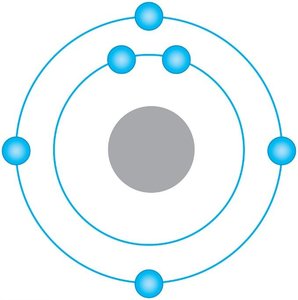
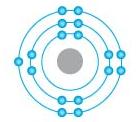
Electrons are arranged in shells around the nucleus. The arrangement of electrons determines the chemical properties of an atom.
1st shell: holds up to 2 electrons
2nd shell: holds up to 8 electrons
3rd shell: holds up to 8 electrons
Ions and Chemical Bonds
Ions
An ion is an atom or molecule with a net electric charge due to the loss or gain of electrons. Cations are positively charged (lost electrons), and anions are negatively charged (gained electrons).
Charge = Number of protons - Number of electrons
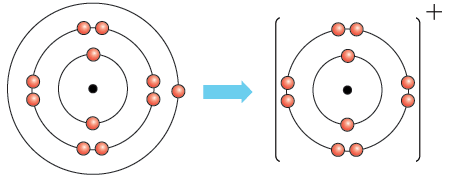
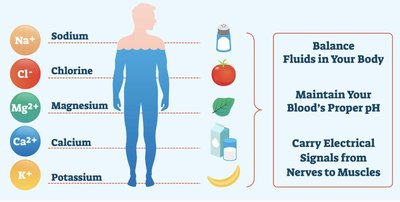
Example: Na+ (sodium ion), Cl- (chloride ion), Ca2+ (calcium ion)
Chemical Bonds
Chemical bonds hold atoms together in compounds. The main types are:
Ionic Bonds: Formed when electrons are transferred from one atom to another, creating oppositely charged ions that attract each other.
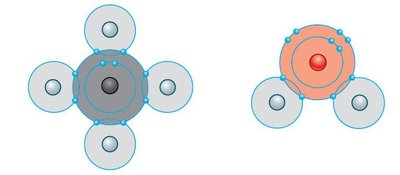
Covalent Bonds: Formed when two atoms share one or more pairs of electrons.
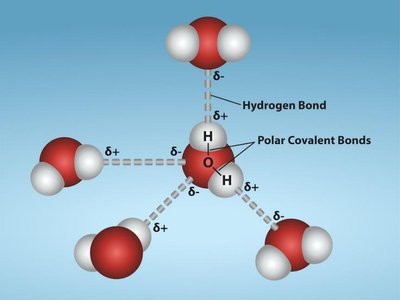
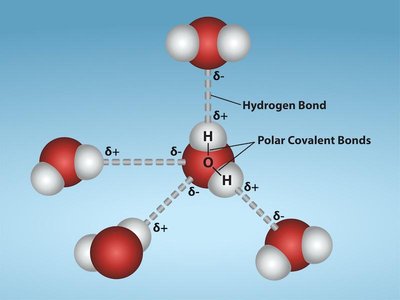
Hydrogen Bonds: Weak attractions between a hydrogen atom in one molecule and an electronegative atom (like oxygen) in another molecule.
Covalent Bonds: Polar and Nonpolar
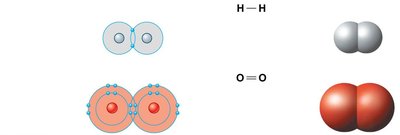
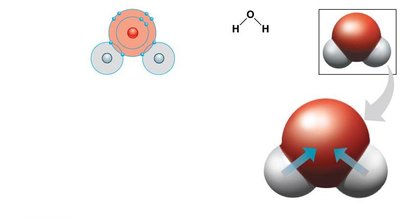
Nonpolar covalent bonds involve equal sharing of electrons (e.g., H2, O2), while polar covalent bonds involve unequal sharing, resulting in partial charges (e.g., H2O).
Water and Its Life-Supporting Properties
Polarity and Hydrogen Bonding
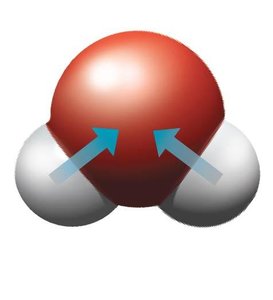
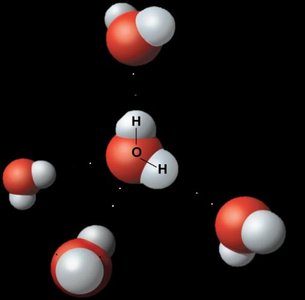
Water is a polar molecule, meaning it has regions of partial positive and negative charge. This allows water molecules to form hydrogen bonds with each other, which are crucial for many of water's unique properties.
Properties of Water
Cohesion: Water molecules stick to each other due to hydrogen bonding.
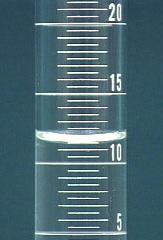
Adhesion: Water molecules stick to other substances.
Temperature Moderation: Water absorbs and releases heat slowly, helping to stabilize temperatures in organisms and environments.
Density of Ice: Solid water (ice) is less dense than liquid water, so ice floats.
Solvent Properties: Water dissolves many polar and ionic substances, making it the solvent of life.
Acids, Bases, and Buffers
pH Scale
The pH scale measures the concentration of hydrogen ions (H+) in a solution. Acids donate H+ ions, while bases accept H+ or donate OH- ions. Each pH unit represents a tenfold difference in H+ concentration.
Acid: pH < 7
Base: pH > 7
Neutral: pH = 7
Buffers
Buffers are substances that minimize changes in pH by accepting or donating H+ ions. They are essential for maintaining stable pH in biological systems, such as blood.
Carbon: The Backbone of Life
Carbon Bonding and Organic Molecules
Carbon can form four covalent bonds, allowing it to build large, complex, and diverse organic molecules. The carbon skeleton forms the framework of organic molecules, which may also contain hydrogen and various functional groups.
Example: Hydrocarbons (compounds of only carbon and hydrogen) are the simplest organic molecules.
Functional Groups
Functional groups are specific groups of atoms within molecules that confer particular chemical properties to those molecules (e.g., hydroxyl, carboxyl, amino groups).
Type of Bond | Description | Example |
|---|---|---|
Ionic | Transfer of electrons | NaCl (table salt) |
Covalent (nonpolar) | Equal sharing of electrons | H2, O2 |
Covalent (polar) | Unequal sharing of electrons | H2O |
Hydrogen | Attraction between polar molecules | Between water molecules |
Additional info: The diversity of organic molecules is due to the versatility of carbon and the variety of functional groups that can attach to the carbon skeleton.
