 Back
The Chemical Level of Organization: Foundations for General Biology
Study Guide - Smart Notes
 Tailored notes based on your materials, expanded with key definitions, examples, and context.
The Chemical Level of Organization
Introduction to Chemistry in Biology
Chemistry is fundamental to understanding biological processes because all living organisms are composed of matter, which is anything that occupies space and has mass. The study of matter and its changes is essential for grasping how the human body functions at the molecular level.
Matter and Its States
States of Matter
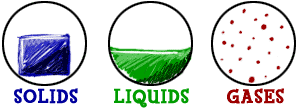
Matter exists in three primary states: solids, liquids, and gases. Each state has distinct properties based on the arrangement and movement of its particles.
Solids: Have a definite shape and volume.
Liquids: Have a definite volume but take the shape of their container.
Gases: Have neither a definite shape nor volume and expand to fill their container.
Physical vs. Chemical Changes
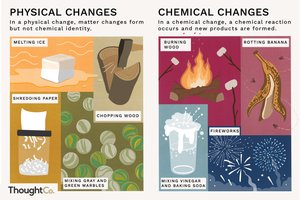
Physical changes alter the form of matter without changing its chemical identity, while chemical changes result in the formation of new substances through chemical reactions.
Physical Change: Melting ice, shredding paper.
Chemical Change: Burning wood, rotting banana.
Elements and Atoms
Elements in the Human Body
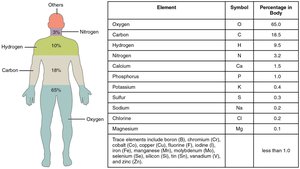
Elements are pure substances that cannot be broken down by ordinary chemical means. Four elements—oxygen, carbon, hydrogen, and nitrogen—make up the majority of the human body, with several others present in smaller amounts.
Element | Symbol | Percentage in Body |
|---|---|---|
Oxygen | O | 65.0 |
Carbon | C | 18.5 |
Hydrogen | H | 9.5 |
Nitrogen | N | 3.2 |
Calcium | Ca | 1.5 |
Phosphorus | P | 1.0 |
Potassium | K | 0.4 |
Sulfur | S | 0.3 |
Sodium | Na | 0.2 |
Chlorine | Cl | 0.2 |
Magnesium | Mg | 0.1 |
Structure of Atoms
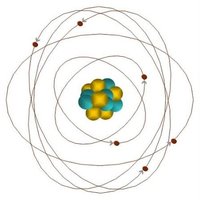
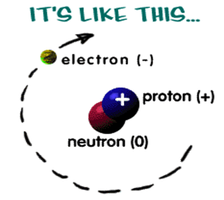
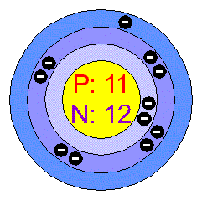
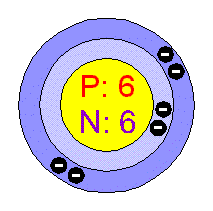
An atom is the smallest unit of an element that retains its chemical properties. Atoms are composed of three subatomic particles:
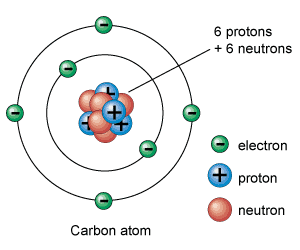
Protons: Positively charged, found in the nucleus.
Neutrons: No charge, found in the nucleus.
Electrons: Negatively charged, orbit the nucleus in shells.
Atomic Number and Mass
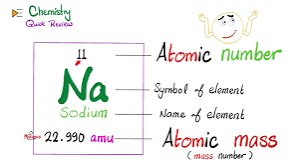
The atomic number is the number of protons in an atom, which determines the element. The atomic mass is the sum of protons and neutrons in the nucleus. Electrons have negligible mass.
Electron Shells
Electrons occupy energy levels or shells around the nucleus. Each shell can hold a specific number of electrons, and the arrangement of electrons determines an atom’s chemical properties.

Isotopes
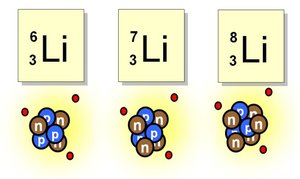
Isotopes are atoms of the same element with the same number of protons but different numbers of neutrons, resulting in different atomic masses.
Chemical Bonds
Types of Chemical Bonds
Atoms form chemical bonds to achieve stability. The main types of bonds are:
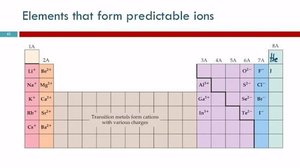
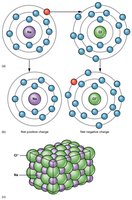
Ionic Bonds: Formed by the transfer of electrons from one atom to another, resulting in charged ions (cations and anions) that attract each other.
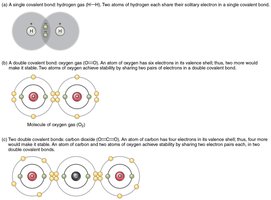
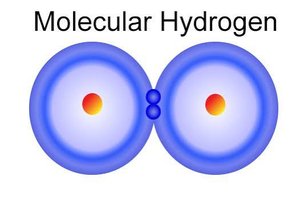
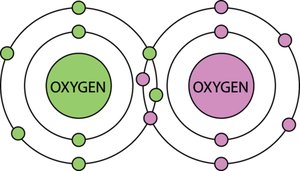
Covalent Bonds: Formed when two atoms share electrons. Can be single, double, or triple bonds depending on the number of shared electron pairs.
Hydrogen Bonds: Weak attractions between a hydrogen atom in one molecule and a slightly negative atom in another molecule, important in water and biological molecules.
Polar and Nonpolar Covalent Bonds
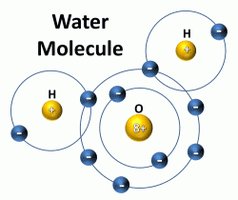
In covalent bonds, electrons may be shared equally (nonpolar) or unequally (polar). Water is a polar molecule, which allows it to dissolve many substances.
Hydrogen Bonds
Hydrogen bonds are weak but crucial for the structure and properties of water and biological molecules like DNA and proteins.
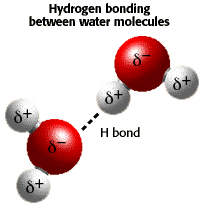
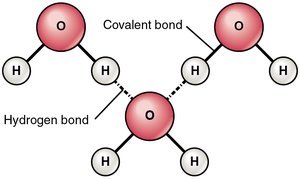
Ionic Bonds and Electrolytes
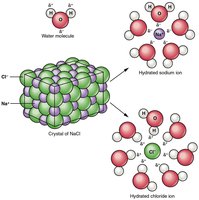
Ionic compounds dissociate in water to form electrolytes, which are essential for nerve impulses, muscle contraction, and fluid balance.
Compounds and Molecules
Molecules and Compounds
A molecule is formed when two or more atoms bond together. If the atoms are different elements, the molecule is also a compound. Water (H2O) is both a molecule and a compound.
Essential Molecules: Oxygen and Carbon Dioxide
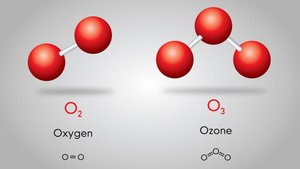
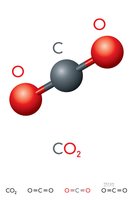
Oxygen (O2) is essential for cellular respiration, while carbon dioxide (CO2) is a metabolic waste product. Both are critical for life processes.
Chemical Reactions
Nature of Chemical Reactions
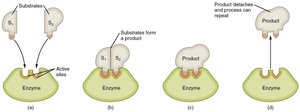
Chemical reactions involve the making or breaking of chemical bonds, resulting in new substances. Reactants are transformed into products, often with the help of catalysts such as enzymes.
Types of Chemical Reactions
Synthesis (Anabolism): Building larger molecules from smaller ones.
Decomposition (Catabolism): Breaking down larger molecules into smaller ones.
Exchange: Atoms are rearranged between molecules.
Biochemistry: Inorganic and Organic Compounds
Inorganic Compounds
Inorganic compounds do not contain both carbon and hydrogen. Important examples include water, salts, acids, and bases.
Water in Biological Systems
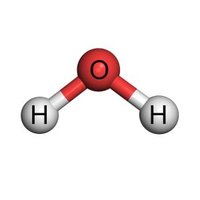
Water is the universal solvent, essential for temperature regulation, transport, lubrication, and as a reactant or product in many chemical reactions.
Dehydration Synthesis and Hydrolysis
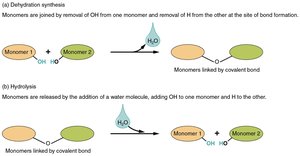
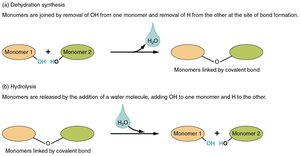
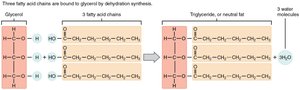
Dehydration synthesis joins molecules by removing water, while hydrolysis breaks molecules apart by adding water. These reactions are vital in metabolism and digestion.
Salts and Electrolytes
Salts dissociate into ions in water, forming electrolytes that are crucial for physiological functions such as nerve transmission and muscle contraction.
Acids, Bases, and pH
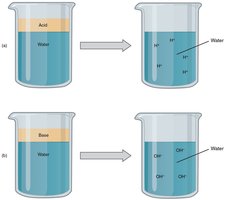
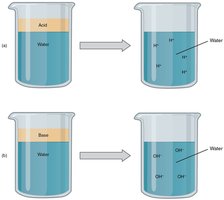
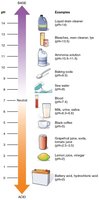
Acids release hydrogen ions (H+), while bases release hydroxide ions (OH-). The pH scale measures the acidity or alkalinity of a solution, with 7 being neutral. Normal blood pH is tightly regulated between 7.35 and 7.45.
Buffers
Buffers help maintain stable pH in the body by absorbing or releasing hydrogen ions as needed. The carbonic acid–bicarbonate buffer system is a key example.
Organic Compounds
Carbohydrates
Carbohydrates are composed of carbon, hydrogen, and oxygen. They serve as the main energy source for the body and are classified as monosaccharides, disaccharides, or polysaccharides.
Lipids
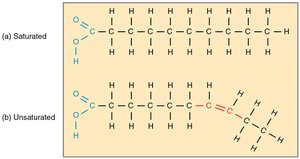
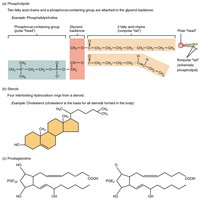
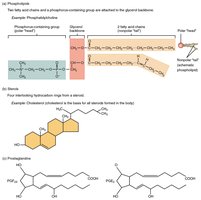
Lipids are hydrophobic molecules used for energy storage, insulation, and cell membrane structure. Main types include triglycerides, phospholipids, and steroids.
Proteins
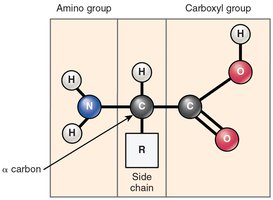
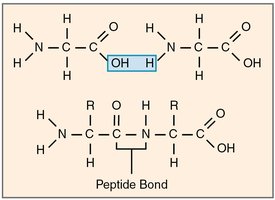
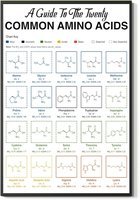
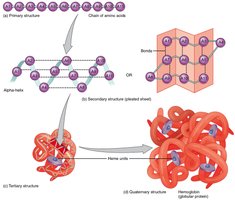
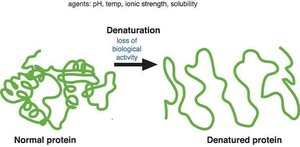
Proteins are polymers of amino acids linked by peptide bonds. They perform structural, enzymatic, and regulatory functions in the body. Protein shape is critical to function and can be altered by denaturation.
Energy and ATP
Energy in Biological Systems
Energy is the capacity to do work. In biological systems, energy is stored, transferred, and released through chemical reactions, primarily using the molecule ATP (adenosine triphosphate).
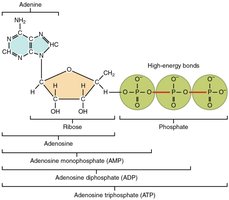
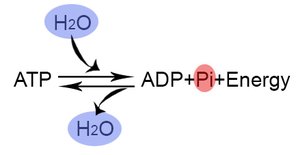
ATP: The main energy currency of the cell. Energy is released when ATP is hydrolyzed to ADP and inorganic phosphate ().
Key Terms
Metabolism: All chemical reactions in the body.
Homeostasis: Maintenance of a stable internal environment.
Electrolyte: Ion that conducts electricity in solution.
Catalyst: Substance that speeds up chemical reactions without being consumed.
