 Back
BackThe Chemistry of Life: Atoms, Molecules, and Macromolecules
Study Guide - Smart Notes
 Tailored notes based on your materials, expanded with key definitions, examples, and context.
Chemistry of Life
Matter and Its Properties
Matter is defined as anything that takes up space and has mass. It includes all physical substances such as cells, organelles, oils, metals, and gases. The distinction between mass and weight is important: mass is a measure of the amount of matter in an object and does not change, while weight is the force exerted by gravity on that mass.
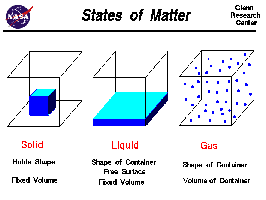
States of Matter: Solid, liquid, and gas differ in shape and volume properties.
Examples: Cells, organelles, oils, metals, gases.
Elements
An element is a type of matter that cannot be broken down into other substances by ordinary physical or chemical processes. There are 92 naturally occurring elements, each with unique properties such as color, density, melting point, boiling point, conductivity, malleability, and ductility.
Periodic Table: Lists all known elements.
Examples: Hydrogen, carbon, oxygen, sodium.
Atomic Structure
Composition of Atoms
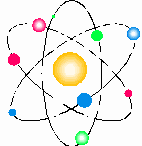
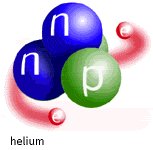
Atoms are the smallest unit of matter that retain the properties of an element. They consist of a nucleus (containing protons and neutrons) and an electron cloud (containing electrons).
Protons: Positive charge, mass = 1 AMU.
Neutrons: Neutral charge, mass = 1 AMU.
Electrons: Negative charge, mass ≈ 1/1836 AMU (negligible).
Nucleus: Always positively charged due to protons.
Electron Cloud: Always negatively charged due to electrons.
Atomic Number and Atomic Mass
The atomic number is the number of protons in the nucleus and is unique to each element. The atomic mass is the sum of protons and neutrons. The number of neutrons can be calculated by subtracting the atomic number from the atomic mass.
Example: Oxygen (atomic mass = 16, atomic number = 8) has 8 neutrons.
Formula:
Isotopes
Isotopes are forms of an element with different numbers of neutrons. Some isotopes are stable, while others are radioactive (radioisotopes), which can be used in carbon dating and diagnostic testing.
Example: Carbon-12 (stable), Carbon-14 (radioactive).
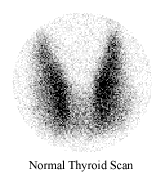
Applications: Carbon dating, thyroid scans.
Chemical Bonding
Energy and Electrons
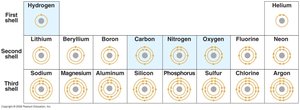
Only electrons are involved in chemical reactions because they contain energy, which is the ability to do work. Atoms are stable when their outermost energy level (valence shell) is filled, following the duet rule (for H and He) or the octet rule (for other elements).
Valence Electrons: Electrons in the outermost shell.
Valence Shell: Outermost energy level.
Ionic Bonds
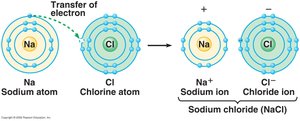
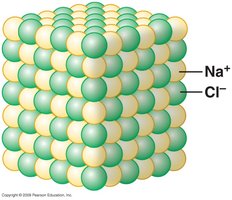
Ionic bonds involve the transfer of electrons between atoms, resulting in charged ions. A cation is a positive ion, and an anion is a negative ion. Opposite charges attract, forming ionic compounds.
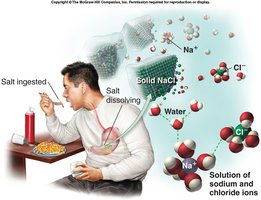
Example: Sodium (Na) transfers an electron to chlorine (Cl), forming Na+ and Cl-.
Covalent Bonds
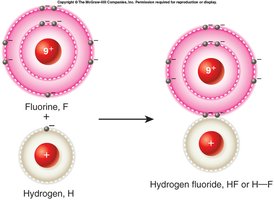
Covalent bonds involve the sharing of electrons between atoms to satisfy the duet or octet rule. These bonds can be single, double, or triple, but only single and double bonds are biologically important.
Example: H2 (hydrogen gas), CH4 (methane).
Polar Covalent Bonds
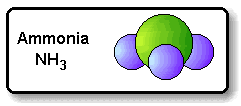
Polar covalent bonds occur when electrons are shared unequally, resulting in regions of partial positive and negative charge (poles). This is important in molecules like water (H2O) and ammonia (NH3).
Example: Water molecule with polar regions.
Hydrogen Bonds
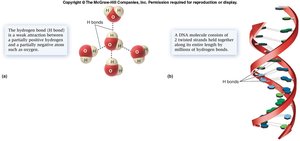
Hydrogen bonds are weak interactions between a covalently bonded hydrogen atom and a different atom. They are crucial for the properties of water and the structure of DNA.
Example: Hydrogen bonds between water molecules and in DNA.
Water and Solutions
Water as a Solvent
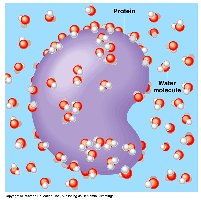
Water is a universal solvent due to its polarity, allowing it to dissolve most substances. Solutions are homogeneous mixtures of two or more substances, consisting of a solvent (the dissolving agent) and a solute (the substance being dissolved).
Hydrophilic: Substances that dissolve in water (polar or ionic).
Hydrophobic: Substances that repel water (non-polar).
Acids, Bases, and pH
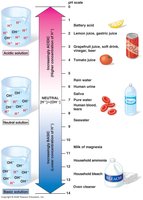
Acids donate hydrogen ions (H+), increasing the H+ concentration in a solution. Bases accept H+ or increase the concentration of hydroxide ions (OH-). The pH scale measures the concentration of H+ in a solution, ranging from 0 (acidic) to 14 (basic), with 7 being neutral.
Acidic: pH < 7 (higher H+ concentration).
Basic: pH > 7 (higher OH- concentration).
Formula:
Buffers
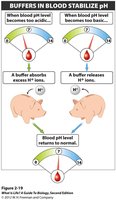
Buffers are solutions that resist changes in pH. They contain both a weak acid and a weak base, which help maintain pH stability in biological systems. Buffers are essential for maintaining the pH of blood and cells within a narrow range.
Example: Blood pH is maintained at 7.35–7.45.
Macromolecules
Organic Chemistry and Carbon
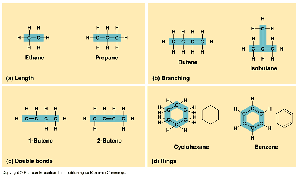
Organic chemistry is the study of carbon-containing molecules. Carbon's unique properties allow it to form chains, rings, and a variety of bonds, making it the backbone of organic molecules such as carbohydrates, proteins, lipids, and nucleic acids.
Hydrocarbons: Compounds of hydrogen and carbon, typically hydrophobic.
Functional Groups: Specific groups of atoms attached to carbon backbones that determine molecular properties and reactivity.
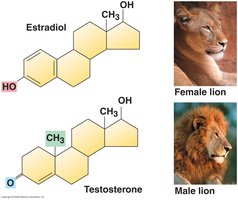
Macromolecules: Formation and Breakdown
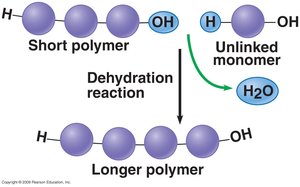
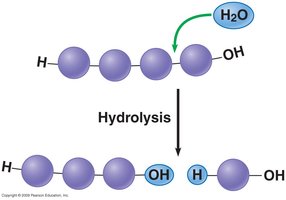
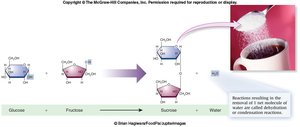
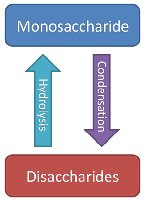
Macromolecules are large polymer molecules formed from smaller monomers. They are synthesized by dehydration reactions (removal of water) and broken down by hydrolysis (addition of water).
Dehydration Reaction: Joins monomers by removing water.
Hydrolysis: Splits polymers into monomers by adding water.
Carbohydrates
Structure and Types
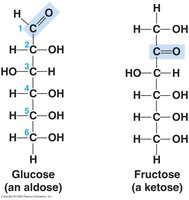
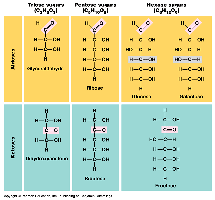
Carbohydrates are sugars and related compounds with the general formula CH2O. They are classified based on the length of their carbon chain and the location of their functional groups.
Monosaccharides: Simple sugars, monomers of complex carbohydrates (e.g., glucose, fructose).
Disaccharides: Two monosaccharides joined by a glycosidic linkage (e.g., sucrose, lactose, maltose).
Polysaccharides: Many monosaccharides joined together, used for energy storage and structural support (e.g., starch, glycogen, cellulose, chitin).


Polysaccharides
Polysaccharides are complex carbohydrates used for energy storage and structural support.
Starch: Energy storage in plants.
Glycogen: Energy storage in mammals.
Cellulose: Structural support in plant cell walls.
Chitin: Structural support in fungi and arthropod exoskeletons.
Lipids
Structure and Function
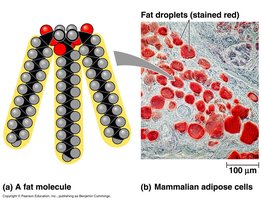
Lipids are hydrophobic organic molecules made from hydrocarbons and oxygen. They are insoluble in water but dissolve in non-polar solvents. Lipids include fats, waxes, phospholipids, and steroids.
Components: Glycerol and three fatty acids joined by ester linkages (dehydration reaction).
Uses: Energy storage, insulation, protection.
Steroids and Cholesterol
Steroids are lipids composed of four fused carbon rings. Cholesterol is essential for cell membrane fluidity, bile production, and vitamin D synthesis.
Saturated vs Unsaturated Fats
Saturated fats have hydrocarbon tails without double bonds, allowing tight packing and solid state at room temperature. Unsaturated fats have double bonds, causing kinks and preventing tight packing, resulting in a liquid state at room temperature.
Examples: Saturated (animal fats, butter), Unsaturated (corn oil, olive oil, fish oil).
Phospholipids
Phospholipids are similar to fats but have a phosphate group attached to the glycerol backbone. They have a hydrophilic head and two hydrophobic tails, forming the basis of biological membranes (phospholipid bilayer).
Proteins
Structure and Function
Proteins are used for structural support, energy storage, movement, transport, and as enzymes. Enzymes are proteins that regulate metabolism by accelerating chemical reactions.
Amino Acids: Monomers of proteins; 20 types used in protein synthesis.
Essential Amino Acids: Must be obtained from diet; humans can synthesize 11, but 9 are essential.
Perfect Proteins: Contain all essential amino acids (animal sources).
Non-perfect Proteins: Missing at least one essential amino acid (plant sources).
Amino Acid Structure
Amino acids have an amino group (NH2), a carboxyl group (COOH), and an R group (side chain) unique to each amino acid. The R group determines the characteristics of the amino acid (hydrophilic, hydrophobic, acidic, basic, electrically charged).
Peptide Bonds and Protein Structure
Amino acids are joined by peptide bonds (a type of dehydration reaction) to form polypeptides. Proteins have four levels of structure:
Primary Structure: Sequence of amino acids in a polypeptide. Changes in sequence can affect protein function (e.g., sickle-cell anemia).
Secondary Structure: Repetitive folding due to hydrogen bonds (α helix and β pleated sheet).
Tertiary Structure: Interactions of R groups (hydrophobic interactions, disulfide bridges, ionic bonds).
Quaternary Structure: Combination of two or more polypeptide subunits to form a functional protein.
Denaturation of Proteins
Denaturation occurs when a protein loses its final conformation due to environmental factors (pH, temperature, salt concentration, organic solvents), rendering it biologically inactive. Denatured proteins may refold if returned to a favorable environment.
