 Back
The Chemistry of Life: Foundations for General Biology
Study Guide - Smart Notes
 Tailored notes based on your materials, expanded with key definitions, examples, and context.
Unit 1: Chemistry of Life
Introduction
The chemistry of life forms the foundation for understanding biological processes. This unit covers the essential elements, atomic structure, chemical bonding, properties of water, and the structure and function of biological macromolecules.
Chemical Context of Life
Elements and Compounds
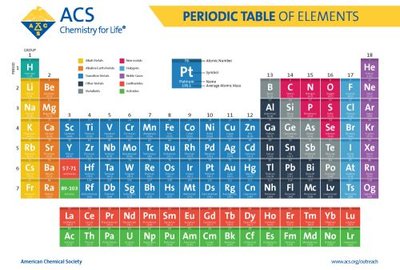
Element: A substance that cannot be broken down into other substances by chemical means. Examples: Carbon (C), Hydrogen (H), Oxygen (O), Nitrogen (N).
Compound: A substance consisting of two or more elements combined in a fixed ratio. Example: Water (H2O).
Atomic Structure
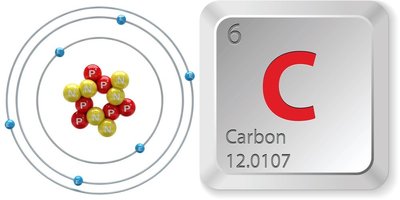
Atoms are composed of protons (positive), neutrons (neutral), and electrons (negative).
Atomic Number: Number of protons in an atom.
Mass Number: Sum of protons and neutrons.
Isotopes: Atoms of the same element with different numbers of neutrons. Some are radioactive and used in dating fossils or medical diagnostics.
Electron Configuration and Chemical Bonds
Electrons are arranged in shells around the nucleus. The outermost shell contains valence electrons that determine chemical reactivity.
Atoms with incomplete valence shells can form bonds to achieve stability.
Types of Chemical Bonds
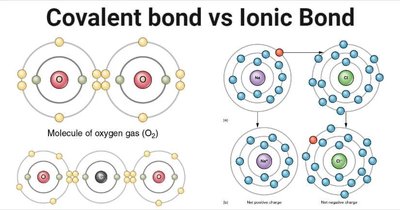
Covalent Bonds: Atoms share electrons. Can be nonpolar (equal sharing) or polar (unequal sharing).
Ionic Bonds: One atom donates an electron to another, forming charged ions (cations and anions) that attract each other. Example: NaCl (table salt).
Weak Chemical Interactions
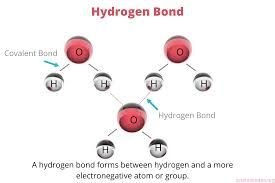
Hydrogen Bonds: Weak attractions between a hydrogen atom covalently bonded to an electronegative atom (like O or N) and another electronegative atom.
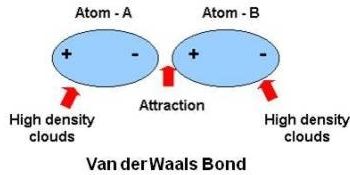
Van der Waals Interactions: Weak attractions due to transient local partial charges.
Chemical Reactions
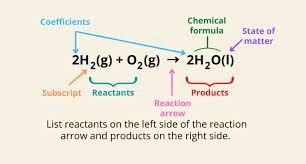
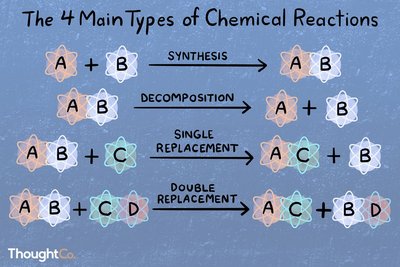
Chemical reactions involve the making and breaking of bonds, converting reactants to products.
All reactions are reversible and require activation energy to proceed.
Water and Life
Importance of Water
Water is the most abundant molecule in living organisms and is essential for life.
Its unique properties arise from its polarity and ability to form hydrogen bonds.

Properties of Water
Cohesion: Water molecules stick to each other, aiding transport in plants.
Adhesion: Water molecules stick to other substances.
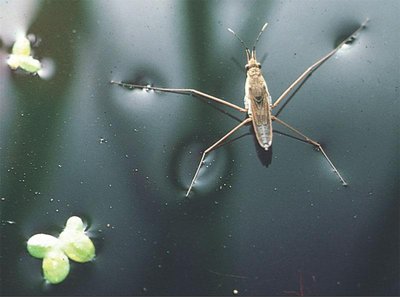
Surface Tension: Difficulty of breaking the surface of water due to cohesion.
High Specific Heat: Water absorbs or releases a large amount of heat with little temperature change, stabilizing environments.
Evaporative Cooling: As water evaporates, it removes heat, cooling surfaces (e.g., sweating).
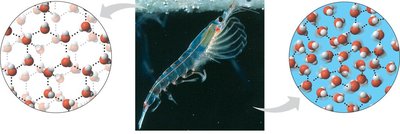
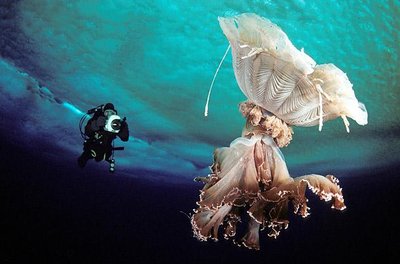
Ice Floats: Solid water is less dense than liquid water, insulating aquatic life in winter.
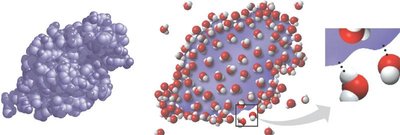
Universal Solvent: Water dissolves many substances due to its polarity.

Water as a Solvent
Hydrophilic substances: Attracted to water; usually polar or ionic (e.g., salts, carbohydrates).
Hydrophobic substances: Repel water; usually nonpolar (e.g., lipids).
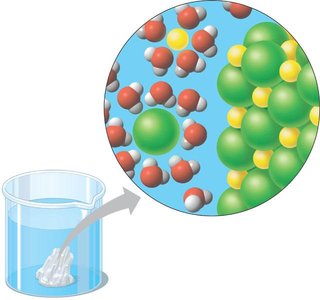
Water dissolves ionic compounds by surrounding ions, and can also interact with polar molecules like proteins.
Acids, Bases, and pH
Water can dissociate into hydronium (H+ or H3O+) and hydroxide (OH-) ions.
Acid: Increases H+ concentration in solution.
Base: Reduces H+ concentration (often by producing OH-).
pH Scale: Ranges from 0 (acidic) to 14 (basic), with 7 as neutral. pH = -log[H+]
Buffers: Substances that minimize changes in pH by accepting or donating H+ ions.


Carbon and Molecular Diversity
Carbon: The Backbone of Life
Carbon atoms can form four covalent bonds, allowing for a diversity of stable, complex molecules.
Organic compounds contain carbon and are the basis of life’s molecular diversity.
Macromolecules: Polymers and Monomers
Macromolecules: Large molecules essential for life, including carbohydrates, lipids, proteins, and nucleic acids.
Polymers: Long chains of repeating units (monomers) joined by covalent bonds.
Dehydration Synthesis: Joins monomers by removing water.
Hydrolysis: Breaks polymers into monomers by adding water.
Carbohydrates
Structure and Function
Monosaccharides: Simple sugars (e.g., glucose, ribose).
Disaccharides: Two monosaccharides joined by a glycosidic linkage (e.g., sucrose).
Polysaccharides: Long chains of monosaccharides; serve as energy storage (starch, glycogen) or structural support (cellulose, chitin).
Lipids
Structure and Function
Fats (Triglycerides): Glycerol + 3 fatty acids; energy storage.
Saturated Fats: No double bonds; solid at room temperature.
Unsaturated Fats: One or more double bonds; liquid at room temperature.
Phospholipids: Glycerol + 2 fatty acids + phosphate group; major component of cell membranes.
Steroids: Four fused carbon rings; includes cholesterol and hormones.
Proteins
Structure and Function
Amino Acids: Monomers of proteins; 20 types with different R groups.
Polypeptides: Chains of amino acids linked by peptide bonds.
Protein Structure: Four levels—primary (sequence), secondary (α-helix, β-sheet), tertiary (3D folding), quaternary (multiple polypeptides).
Functions: Enzymes, structural support, transport, communication, movement, defense.
Nucleic Acids
Structure and Function
Nucleotides: Monomers composed of a sugar, phosphate group, and nitrogenous base.
DNA: Double helix; stores genetic information.
RNA: Single-stranded; involved in protein synthesis.
ATP: A nucleotide used for energy transfer in cells.
Summary Table: Major Classes of Biological Macromolecules
Class | Monomer | Bond Type | Function |
|---|---|---|---|
Carbohydrates | Monosaccharide | Glycosidic linkage | Energy, structure |
Lipids | Fatty acids, glycerol | Ester linkage | Energy storage, membranes |
Proteins | Amino acids | Peptide bond | Catalysis, structure, transport |
Nucleic Acids | Nucleotide | Phosphodiester bond | Genetic information |
Additional info: This guide covers the foundational chemistry concepts essential for understanding biological structure and function, as outlined in the General Biology curriculum.
