 Back
Chapter 1
Study Guide - Smart Notes
 Tailored notes based on your materials, expanded with key definitions, examples, and context.
The Chemical Basis of Life
Introduction to Chemistry in Biology
Understanding the chemical principles underlying biological systems is essential for studying life. All living organisms are composed of matter, which is made up of elements and compounds with unique properties that contribute to biological function.
Matter: Anything that has mass and occupies space.
Element: A substance that cannot be broken down into simpler substances by chemical means.
Compound: A substance formed when two or more elements are chemically bonded together.
Emergent Properties: New characteristics that arise when elements combine to form compounds.
Example: Water (H2O) is a compound with properties different from its constituent elements, hydrogen and oxygen.
The Building Blocks of an Organism
Essential Elements in Living Organisms
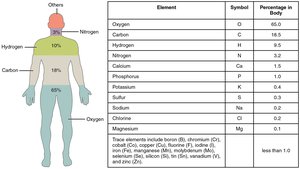
Six elements make up about 99% of the human body, while other elements are present in trace amounts but are still vital for life.
Major Elements: Oxygen (O), Carbon (C), Hydrogen (H), Nitrogen (N), Calcium (Ca), Phosphorus (P)
Trace Elements: Elements required in minute quantities, such as iodine, fluoride, and iron. Some trace elements are species-specific (e.g., only vertebrates require iodine).
Example: Iron is essential for oxygen transport in blood, while iodine is necessary for thyroid hormone production.
The Building Block of Matter: Atoms
Atomic Structure and Properties
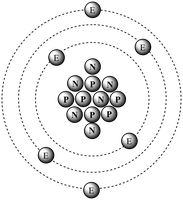
Atoms are the smallest units of elements, consisting of protons, neutrons, and electrons. The arrangement and number of these subatomic particles determine the atom's identity and properties.
Proton: Positively charged particle in the nucleus.
Neutron: Neutral particle in the nucleus.
Electron: Negatively charged particle in electron shells around the nucleus.
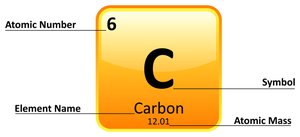
Atomic Number: Number of protons in an atom.
Mass Number: Number of protons plus neutrons.
Atomic Mass: Mass of an atom, measured in Daltons.
Isotopes: Atoms of the same element with different numbers of neutrons.
Radioactive Isotopes: Unstable isotopes that decay, emitting radiation.
Example: Carbon-12 and Carbon-14 are isotopes of carbon, differing in their number of neutrons.
Chemical Bonds
Types of Chemical Bonds
Atoms combine to form molecules through chemical bonds, which involve the sharing or transfer of electrons. The type of bond affects the properties of the resulting compound.
Covalent Bonds: Atoms share electrons. Can be polar (unequal sharing) or non-polar (equal sharing).
Ionic Bonds: Electrons are transferred from one atom to another, creating charged ions that attract each other.
Hydrogen Bonds: Weak attractions between a hydrogen atom in one molecule and an electronegative atom (like oxygen or nitrogen) in another.
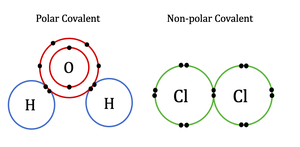
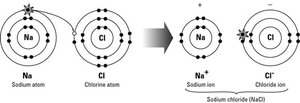
Example: Table salt (NaCl) forms through ionic bonding, while water molecules are held together by polar covalent and hydrogen bonds.
Chemical Reactions
Rearrangement of Molecules
Chemical reactions involve the making and breaking of bonds, resulting in the transformation of substances. These reactions obey the Law of Conservation of Mass.
Reactants: Starting substances in a chemical reaction.
Products: Substances formed as a result of the reaction.
Law of Conservation of Mass: Matter is neither created nor destroyed in a chemical reaction.
Example: Cellular respiration and photosynthesis are key chemical reactions in biology.
The Importance of Water
Properties and Functions of Water
Water is essential for life due to its unique chemical and physical properties, which arise from its molecular structure and hydrogen bonding.
Cohesion: Attraction between water molecules.
Adhesion: Attraction between water molecules and other substances.
Thermoregulation: Water absorbs and releases heat slowly, helping organisms maintain stable temperatures.
Evaporative Cooling: As water evaporates, it removes heat, cooling surfaces.
Ice: Solid water is less dense than liquid water, allowing ice to float and insulate aquatic environments.
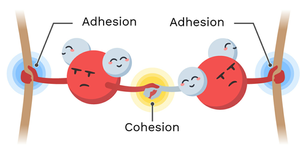
Example: Water transport in plants relies on cohesion and adhesion to move water from roots to leaves.
Water as the Universal Solvent
Solubility and Solutions
Water's polarity allows it to dissolve a wide variety of substances, making it the "universal solvent" and essential for biochemical reactions.
Solute: Substance dissolved in a solvent.
Solvent: Substance that dissolves the solute (water in biological systems).
Solution: Homogeneous mixture of solute and solvent.
Aqueous Solution: Solution in which water is the solvent.
Example: Salts, sugars, and gases like oxygen and carbon dioxide dissolve in water, facilitating cellular processes.
Life’s Sensitivity to the Environment
pH, Acids, Bases, and Temperature
Organisms are sensitive to changes in their environment, particularly pH and temperature. Water's ability to moderate pH and temperature is crucial for life.
pH: Measure of hydrogen ion (H+) concentration; scale ranges from 0 (acidic) to 14 (basic), with 7 being neutral.
Acids: Substances that increase H+ concentration in solution.
Bases: Substances that decrease H+ concentration.
Buffers: Solutions that resist changes in pH by absorbing or releasing H+ ions.
Calorie: Unit of energy; the amount of heat needed to raise the temperature of 1 gram of water by 1°C.
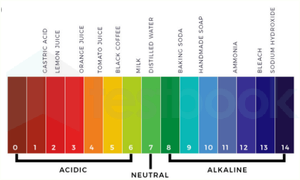
Example: Human blood is maintained at a pH of about 7.4 by buffer systems.
