 Back
The Chemistry of Living Things: Foundations for General Biology
Study Guide - Smart Notes
 Tailored notes based on your materials, expanded with key definitions, examples, and context.
The Chemistry of Living Things
Introduction to Chemistry in Biology
Chemistry is fundamental to understanding biological processes because all living organisms are composed of chemical substances. The study of matter and energy, and their interactions, provides the foundation for understanding the structure and function of cells, tissues, and organs.
Matter: Anything that has mass and occupies space; composed of elements.
Elements: Pure substances that cannot be broken down into simpler substances by chemical means. Examples include oxygen, carbon, and hydrogen.
Energy: The capacity to do work; essential for all biological activities.
All known elements are organized in the periodic table, which arranges them by increasing atomic number.
Atoms: The Building Blocks of Matter
Atoms are the smallest functional units of elements. They consist of a central nucleus (containing protons and neutrons) and surrounding shells of electrons.
Protons: Positively charged particles in the nucleus.
Neutrons: Neutral particles in the nucleus.
Electrons: Negatively charged particles in shells around the nucleus; have negligible mass.
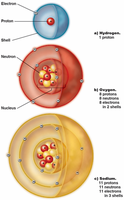
The arrangement of electrons in shells determines an atom’s chemical properties and reactivity.
Isotopes and Radioactivity
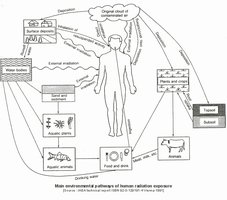
Isotopes are atoms of the same element with different numbers of neutrons, resulting in different atomic masses. Some isotopes are unstable (radioisotopes) and emit radiation.
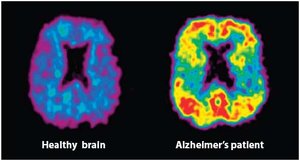
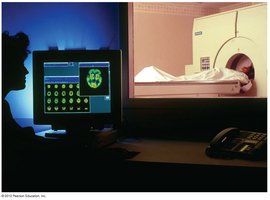
Radioisotopes: Used in dating fossils, medical imaging, cancer treatment, and as power sources for implants.
Uncontrolled exposure to radioisotopes can damage DNA and proteins, leading to health risks.
Free Radicals
Free radicals are atoms or molecules with unpaired electrons, making them highly reactive. They can damage cellular components and accelerate aging.
Chemical Bonds
Atoms combine to form molecules through chemical bonds, which are attractive forces holding atoms together. The main types of chemical bonds are covalent, ionic, and hydrogen bonds.
Covalent Bonds
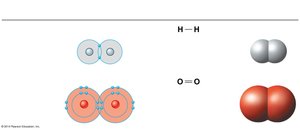
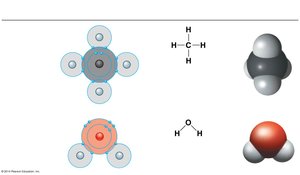
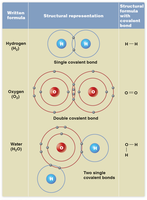
Covalent bonds involve the sharing of electrons between atoms. They can be nonpolar (equal sharing) or polar (unequal sharing).
Nonpolar covalent bonds: Electrons are shared equally (e.g., O2, H2).
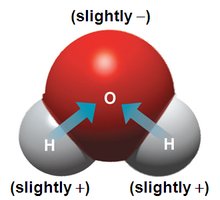
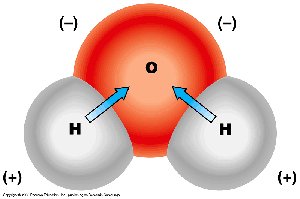
Polar covalent bonds: Electrons are shared unequally, creating partial charges (e.g., H2O).
Ionic Bonds
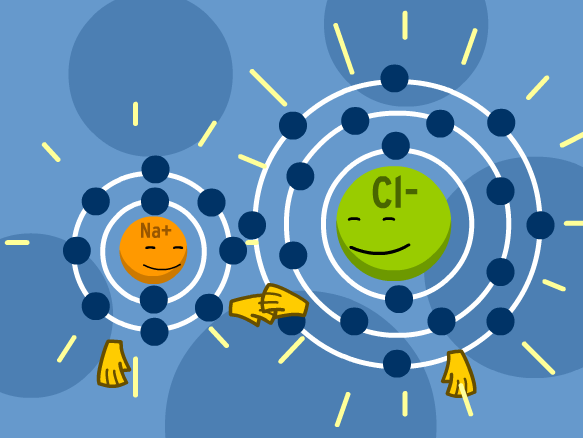
Ionic bonds form between oppositely charged ions. An ion is an atom or molecule that has gained or lost electrons.
Cation: Positively charged ion (e.g., Na+).
Anion: Negatively charged ion (e.g., Cl-).
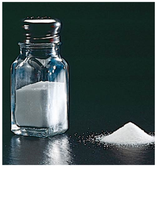
Ionic bond: Attraction between cations and anions (e.g., NaCl).
Hydrogen Bonds
Hydrogen bonds are weak attractions between the slightly positive hydrogen atom of one polar molecule and the slightly negative atom of another polar molecule. They are crucial in stabilizing the structures of water, proteins, and DNA.
Energy in Biological Systems
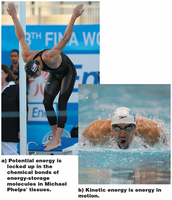
Energy exists in two main forms: potential (stored) and kinetic (in motion). Electrons in higher shells have more potential energy. Energy transformations are essential for life processes.
Potential energy: Stored in chemical bonds.
Kinetic energy: Energy of motion, such as muscle contraction.
Elements Essential for Life
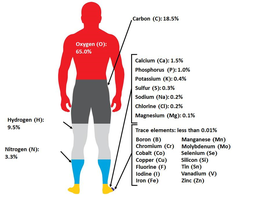
Living organisms are composed mainly of a few elements. About 99% of body weight is due to six elements: oxygen, carbon, hydrogen, nitrogen, calcium, and phosphorus.
Water: The Medium of Life
Properties of Water
Water is vital for life due to its unique properties, which arise from its polarity and hydrogen bonding.
Excellent solvent for polar and ionic substances.
Liquid at body temperature, facilitating transport and chemical reactions.
High heat capacity, helping regulate body temperature.
Ice is less dense than liquid water, so it floats.
Water as a Solvent
Water dissolves many substances, making it the biological solvent. Substances that dissolve in water are hydrophilic, while those that do not are hydrophobic.
Acids, Bases, and pH
The chemistry of life is sensitive to acidic and basic conditions. The pH scale (0–14) measures the concentration of hydrogen ions (H+) in a solution.
Acid: Donates H+ ions (pH < 7).
Base: Accepts H+ ions or donates OH- (pH > 7).
Buffer: Substance that resists changes in pH by accepting or donating H+ ions (e.g., carbonic acid in blood).
Organic Molecules in Living Organisms
Introduction to Organic Molecules
Organic molecules contain carbon and hydrogen, and often other elements such as nitrogen, oxygen, phosphorus, or sulfur. They are held together by covalent bonds and form the basis of life.
Four major classes: carbohydrates, lipids, proteins, nucleic acids.
Carbohydrates
Carbohydrates are composed of carbon, hydrogen, and oxygen (CHO). They are hydrophilic and serve as energy sources and structural materials.
Monosaccharides: Simple sugars (e.g., glucose, fructose, ribose).
Disaccharides: Two monosaccharides linked (e.g., sucrose, lactose).
Polysaccharides: Long chains for energy storage (starch, glycogen) or structure (cellulose).
Lipids
Lipids are hydrophobic molecules important for energy storage, membrane structure, and signaling.
Triglycerides: Glycerol + 3 fatty acids; energy storage.
Phospholipids: Main component of cell membranes; amphipathic (hydrophilic head, hydrophobic tails).
Steroids: Four-ring structures (e.g., cholesterol, hormones).
Proteins
Proteins are polymers of amino acids joined by peptide bonds. Their structure determines their function.
Primary structure: Amino acid sequence.
Secondary structure: Alpha helices and beta sheets.
Tertiary structure: Three-dimensional folding.
Quaternary structure: Multiple polypeptide chains.
Enzymes: Proteins that catalyze biochemical reactions.
Nucleic Acids
Nucleic acids (DNA and RNA) store and transmit genetic information. They are polymers of nucleotides, each containing a sugar, phosphate group, and nitrogenous base.
DNA: Double-stranded; bases are adenine (A), thymine (T), cytosine (C), guanine (G).
RNA: Single-stranded; bases are adenine (A), uracil (U), cytosine (C), guanine (G).
ATP (adenosine triphosphate) is a nucleotide that serves as the universal energy carrier in cells.
Additional info: This summary integrates and expands upon the provided lecture slides and textbook images, ensuring a comprehensive and academically rigorous overview suitable for General Biology students. All images included are directly relevant to the adjacent explanations and reinforce key concepts.
