 Back
BackThe Chemistry of Living Things: Water, pH, and Organic Molecules
Study Guide - Smart Notes
 Tailored notes based on your materials, expanded with key definitions, examples, and context.
The Chemistry of Living Things
Water as a Biological Solvent
Water is the most important molecule for life, making up about 60% of human body weight. It acts as an excellent solvent, remains liquid at body temperature, absorbs and retains heat, and participates in essential chemical reactions.
Solvent: A liquid in which other substances (solutes) dissolve. Water is a polar solvent at body temperature.
Example: Table Salt (NaCl): In water, Na+ and Cl- ions are pulled from the crystal lattice and surrounded by water molecules, preventing them from re-crystallizing. Thus, salt remains dissolved.
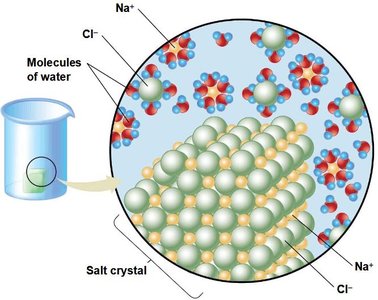
Types of Molecules: Hydrophilic vs. Hydrophobic
Hydrophilic molecules: Polar, attracted to water (e.g., ions, polar molecules).
Hydrophobic molecules: Non-polar, do not interact with water (e.g., oils).
Water's Physical States and Biological Importance
Water exists as a liquid at body temperature (0–100°C), which is crucial for its role as a transport medium in the body. Its state depends on hydrogen bonding:
Below 0°C: Ice (stable hydrogen bonds, rigid lattice)
0–100°C: Liquid (hydrogen bonds constantly form and break, molecules move freely)
Above 100°C: Gas (hydrogen bonds broken, water vapor forms)
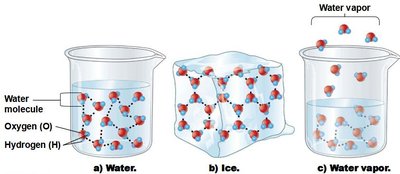
Water is the main component of all fluid-filled body spaces (intracellular, intercellular, urine, digestive fluids, eye fluids) and is essential for transporting oxygen, carbon dioxide, nutrients, and waste.
Water and Body Temperature Regulation
Water absorbs large amounts of heat energy, minimizing rapid temperature changes.
Evaporation (sweating) removes heat from the body, cooling the blood and lowering body temperature.
The Importance of Hydrogen Ions and pH
Acids, Bases, and the pH Scale
Acids: Substances that donate H+ ions, increasing H+ concentration and lowering pH (e.g., vinegar, coffee, orange juice).
Bases: Substances that accept H+ ions, decreasing H+ concentration and raising pH (e.g., baking soda, detergents).
pH Scale: Measures H+ concentration, ranges from 0 (most acidic) to 14 (most alkaline). Pure water is neutral at pH 7 (10-7 mol/L).
The scale is logarithmic: a difference of 1 pH unit equals a tenfold change in H+ concentration.
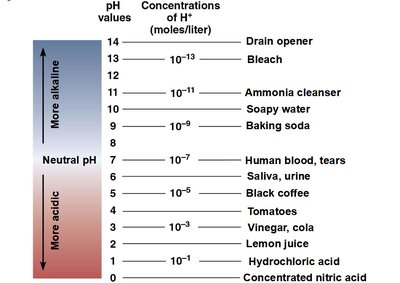
Blood pH: Maintained at ~7.4 (slightly alkaline), crucial for homeostasis. Changes in pH affect molecular structure, reaction rates, and protein function.
Buffers and pH Homeostasis
Buffers: Substances that minimize changes in pH by absorbing or releasing H+ ions. Essential for maintaining stable pH in blood and other fluids.
Biological buffers exist as pairs: an acid form (donates H+) and a base form (accepts H+).
Bicarbonate buffer system in blood: HCO3- (base) and H2CO3 (acid) maintain blood pH by reversible reactions:
The Organic Molecules of Living Organisms
Carbon: The Building Block of Life
Organic molecules contain carbon, often bonded to hydrogen, oxygen, nitrogen, or other carbons.
Carbon forms four covalent bonds, allowing for complex branching and ring structures.
Macromolecules are large organic molecules made of thousands to millions of smaller subunits.
Macromolecule Synthesis and Breakdown
Dehydration synthesis: Joins subunits by removing water, requires energy.
Hydrolysis: Breaks macromolecules by adding water, releases energy.
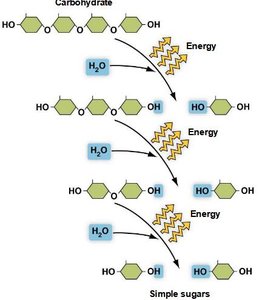
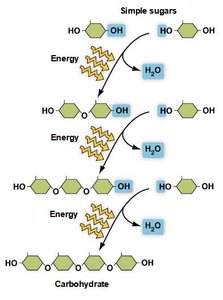
Four main classes: carbohydrates, lipids, proteins, nucleic acids.
Carbohydrates
Composed of carbon, hydrogen, and oxygen in a 2:1 ratio (like water).
Serve as energy sources (e.g., glucose) and structural support (e.g., cellulose in plants).
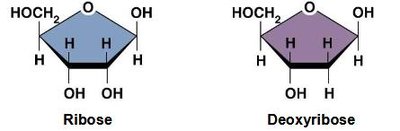
Monosaccharides: Simple sugars (e.g., glucose, fructose, ribose, deoxyribose).
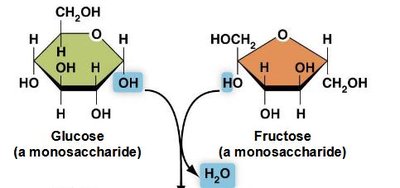
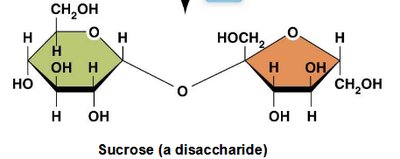
Oligosaccharides: Short chains (e.g., disaccharides like sucrose, lactose).
Polysaccharides: Long chains (e.g., glycogen in animals, cellulose in plants).
Lipids
Insoluble in water, include triglycerides, phospholipids, and steroids.
Triglycerides: Glycerol + 3 fatty acids, used for energy storage.
Saturated fats: No double bonds, solid at room temperature, straight chains.
Unsaturated fats: Double bonds, liquid at room temperature, kinked chains.
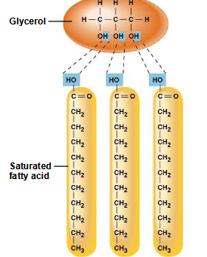
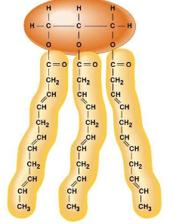
Phospholipids: Glycerol + 2 fatty acids + phosphate group, main component of cell membranes (polar head, nonpolar tail).
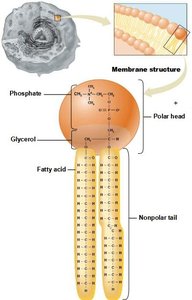
Steroids: Four carbon rings, e.g., cholesterol (membrane structure, hormone precursor).
Proteins
Polymers of amino acids (20 types), joined by peptide bonds.
Structure determines function:
Primary: Amino acid sequence
Secondary: Alpha helix or beta sheet (hydrogen bonding)
Tertiary: 3D folding (R-group interactions)
Quaternary: Association of multiple polypeptides
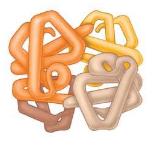
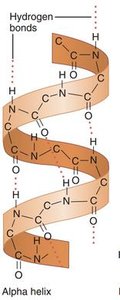
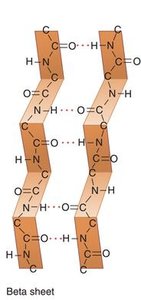
Functions: structural support, muscle contraction, membrane transport, enzymes.
Denaturation: Loss of structure and function due to heat or pH changes.
Enzymes
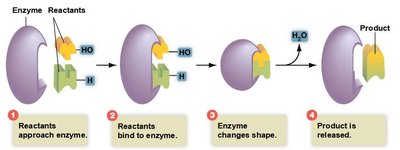
Proteins that act as biological catalysts, speeding up reactions without being consumed.
Enzyme activity depends on shape, which is influenced by temperature, pH, and ion concentration.
Nucleic Acids
DNA: Genetic material, double helix, bases A, T, C, G.
RNA: Single-stranded, bases A, U, C, G, involved in protein synthesis.
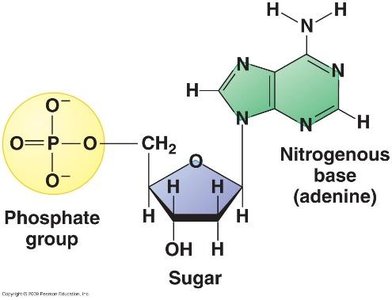
Both are polymers of nucleotides (phosphate, sugar, nitrogenous base).
ATP: The Energy Carrier
Adenosine triphosphate (ATP): Main energy currency of the cell.
Structure: Adenine base, ribose sugar, three phosphate groups.
Energy is released when the terminal phosphate bond is broken:
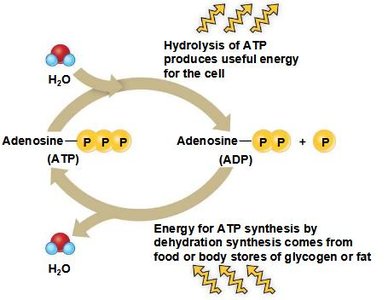
ATP is regenerated from ADP and phosphate using energy from food (glycogen, fat).
