Back
The Chromosomal Basis of Inheritance
Study Guide - Smart Notes
 Tailored notes based on your materials, expanded with key definitions, examples, and context.
Chapter 15: The Chromosomal Basis of Inheritance
Introduction
This chapter explores how chromosomes are the physical carriers of genetic information, connecting Mendel’s principles of inheritance to the behavior of chromosomes during meiosis. It also examines exceptions to Mendelian inheritance, the consequences of chromosomal alterations, and the inheritance of genes outside the nucleus.
Concept 15.1: Mendelian Inheritance and Chromosome Behavior
The Chromosome Theory of Inheritance
Mendel’s hereditary units were theoretical until parallels were drawn between their behavior and that of chromosomes during meiosis.
The chromosome theory of inheritance states that genes are located on chromosomes, and the behavior of chromosomes during meiosis accounts for inheritance patterns.
Thomas Hunt Morgan provided the first solid evidence associating a specific gene with a specific chromosome using Drosophila melanogaster (fruit fly).

Morgan’s Experimental Organism: Drosophila melanogaster
Fruit flies are ideal for genetic studies due to their short generation time, high offspring number, and only four pairs of chromosomes.
Wild type refers to the normal phenotype; mutant phenotypes are alternatives, such as white eyes instead of red.
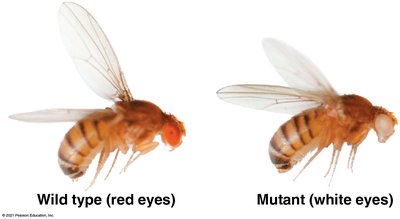
Correlating Gene Behavior with Chromosome Behavior
Morgan’s cross between white-eyed males and red-eyed females showed that the white-eyed trait appeared only in F2 males, suggesting the gene is on the X chromosome.
This supported the chromosome theory of inheritance.
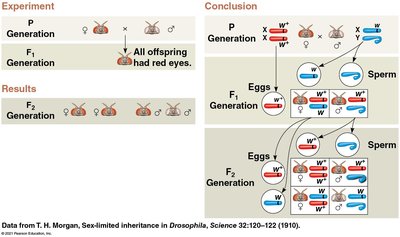
Concept 15.2: Sex-Linked Genes and Patterns of Inheritance
The Chromosomal Basis of Sex
Humans have two sex chromosomes: X (large) and Y (small).
XX individuals develop female anatomy; XY individuals develop male anatomy.
Other sex determination systems exist, such as X-0, Z-W, and haplo-diploid systems in other organisms.
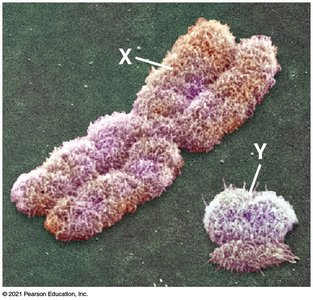
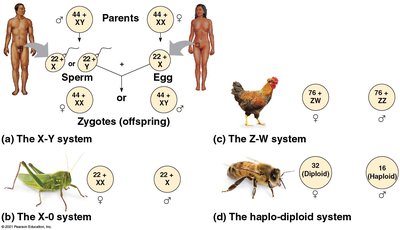
Sex-Linked Genes
Sex-linked genes are located on either sex chromosome.
Y-linked genes are few and mostly related to sex determination (e.g., SRY gene).
X-linked genes are numerous and can affect traits unrelated to sex.
Inheritance of X-Linked Genes
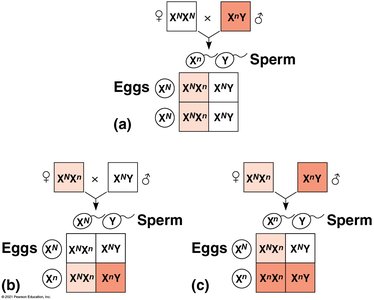
For a recessive X-linked trait to be expressed, females need two copies (homozygous), while males need only one (hemizygous).
X-linked recessive disorders are more common in males (e.g., color blindness, Duchenne muscular dystrophy, hemophilia).
X Inactivation in Female Mammals
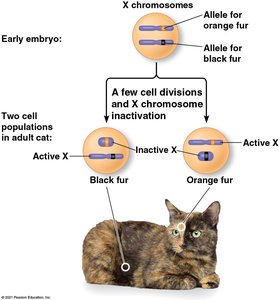
One X chromosome in each cell is randomly inactivated during embryonic development, forming a Barr body.
Females heterozygous for X-linked genes are mosaics for those traits.
X inactivation involves the XIST gene and modification of DNA and histones.
Concept 15.3: Linked Genes and Genetic Recombination
Linked Genes
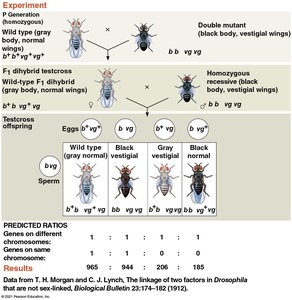
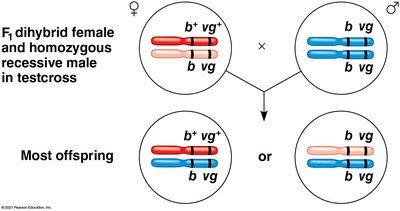
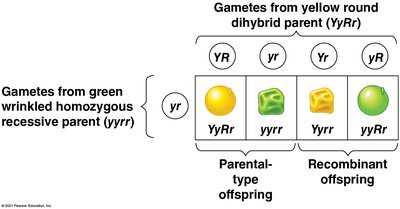
Genes located near each other on the same chromosome tend to be inherited together and are called linked genes.
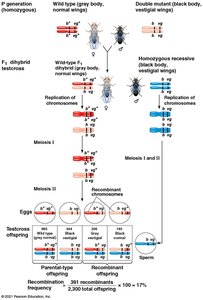
Morgan’s experiments with fruit flies showed that linked genes do not assort independently.
Genetic Recombination
Genetic recombination produces offspring with combinations of traits different from either parent.
For genes on different chromosomes, recombination frequency is 50% due to independent assortment.
For linked genes, recombination occurs through crossing over during meiosis.
Genetic Mapping
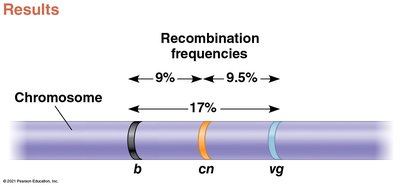
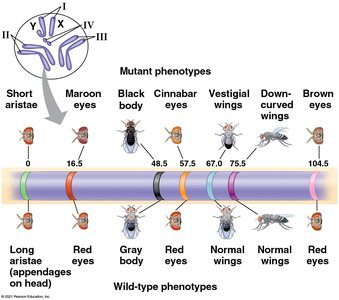
Linkage maps are genetic maps based on recombination frequencies.
One map unit (centimorgan) equals a 1% recombination frequency.
Genes far apart on the same chromosome can appear genetically unlinked.
Concept 15.4: Alterations of Chromosome Number or Structure
Abnormal Chromosome Number
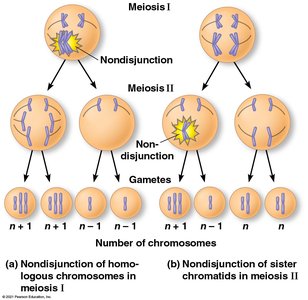
Nondisjunction is the failure of homologous chromosomes or sister chromatids to separate properly during meiosis.
Aneuploidy results from fertilization involving gametes with abnormal chromosome numbers (e.g., monosomy, trisomy).
Polyploidy is the presence of more than two complete sets of chromosomes, common in plants.
Alterations of Chromosome Structure
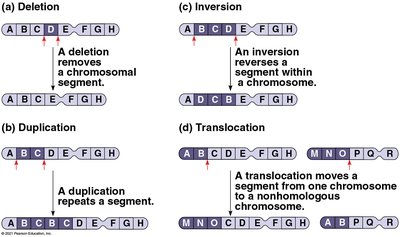
Chromosome breakage can cause:
Deletion: loss of a segment
Duplication: repeat of a segment
Inversion: reversal of a segment
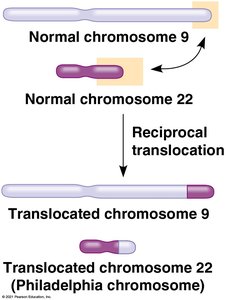
Translocation: movement of a segment to another chromosome
Human Disorders Due to Chromosomal Alterations
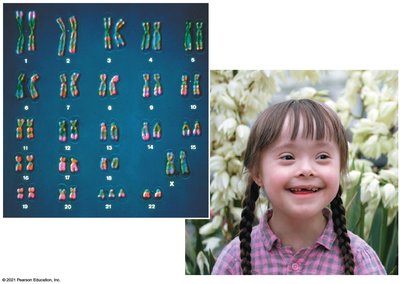
Down syndrome (trisomy 21) is caused by three copies of chromosome 21.
Sex chromosome aneuploidies include Klinefelter syndrome (XXY), XYY males, XXX females, and Turner syndrome (X0).
Structural changes can cause disorders such as cri du chat (deletion on chromosome 5) and chronic myelogenous leukemia (CML, translocation).
Concept 15.5: Exceptions to Standard Mendelian Inheritance
Genomic Imprinting
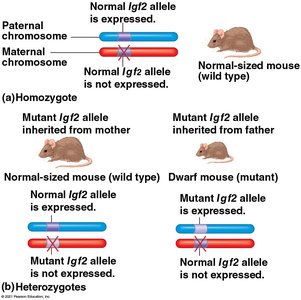
Some genes are expressed in a parent-of-origin-specific manner, a phenomenon called genomic imprinting.
Imprinting involves methylation of DNA and typically affects embryonic development.
Example: Only the paternal allele of the Igf2 gene is expressed in mice.
Inheritance of Organelle Genes
Extranuclear genes are found in mitochondria and chloroplasts and are inherited maternally.
Defects in mitochondrial genes can cause diseases affecting energy production, such as mitochondrial myopathy and Leber’s hereditary optic neuropathy.
Inheritance patterns can be observed in plants with variegated leaves due to chloroplast gene mutations.