 Back
The Chromosomal Basis of Inheritance
Study Guide - Smart Notes
 Tailored notes based on your materials, expanded with key definitions, examples, and context.
Chapter 12: The Chromosomal Basis of Inheritance
Introduction to Chromosomal Inheritance
The chromosomal theory of inheritance connects Mendel’s laws of heredity with the behavior of chromosomes during meiosis. This chapter explores how genes are located on chromosomes, how their arrangement and behavior explain inheritance patterns, and how chromosomal changes can lead to genetic disorders.
Sex-Linked Genes and X-Inactivation
Sex-Linked Inheritance Patterns
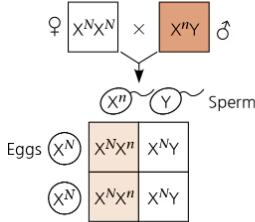
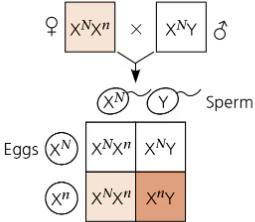
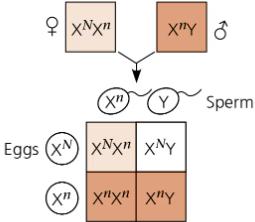
Sex-linked genes are located on sex chromosomes (X or Y). In humans, most sex-linked traits are X-linked because the X chromosome contains more genes than the Y chromosome. Males (XY) are hemizygous for X-linked genes, so recessive alleles are expressed more frequently in males.
X-linked recessive inheritance: Traits such as color blindness are more common in males. Females can be carriers if they have one normal and one mutant allele.
Carrier females: Heterozygous females (XNXn) do not express the trait but can pass it to offspring.
Inheritance patterns: The combination of parental genotypes determines the probability of affected offspring.
X Chromosome Inactivation and Dosage Compensation
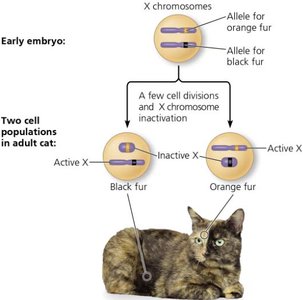
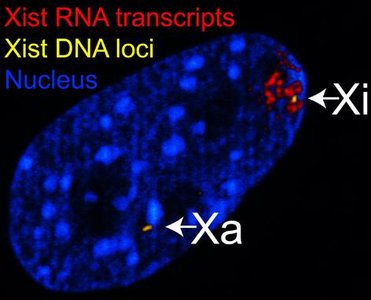
In female mammals, one of the two X chromosomes in each cell is randomly inactivated during early embryonic development. This process, called dosage compensation, ensures that females, like males, have one functional copy of the X chromosome in each body cell. The inactivated X condenses into a Barr body.
Mosaicism: Because X inactivation is random, females are mosaics for X-linked genes, with different cells expressing genes from either the maternal or paternal X chromosome.
Barr body: The condensed, inactive X chromosome visible in the nucleus of interphase cells.
XIST gene: The X-inactive specific transcript (XIST) gene produces RNA that coats the X chromosome to be inactivated.
Linkage and Recombination
Linked Genes and Deviation from Mendel’s Laws
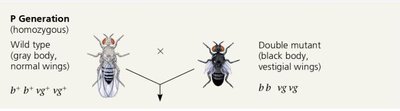
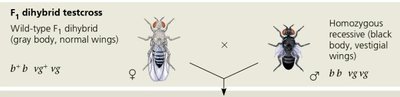
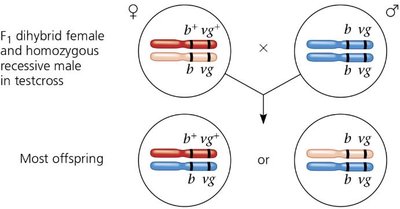
Genes located close together on the same chromosome are called linked genes and tend to be inherited together. This linkage can cause deviations from Mendel’s law of independent assortment.
Linked genes: Do not assort independently unless separated by crossing over during meiosis.
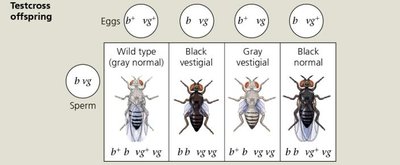
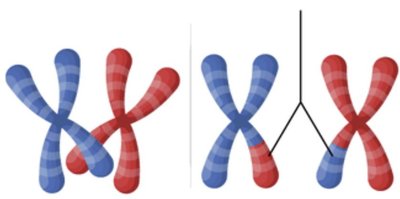
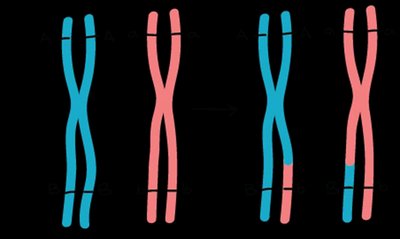
Recombination: Crossing over between homologous chromosomes can break the physical connection between linked genes, producing recombinant chromosomes and phenotypes.
Chromosomal Basis of Recombination
During meiosis, homologous chromosomes can exchange segments in a process called crossing over. The frequency of recombination between two genes is proportional to their distance apart on the chromosome.
Recombinant frequency: The percentage of recombinant offspring is used to estimate the distance between genes (1% recombination = 1 map unit or centimorgan).
Linkage maps: Diagrams showing the relative positions of genes on a chromosome based on recombination frequencies.
Alterations of Chromosome Number and Structure
Aneuploidy and Polyploidy
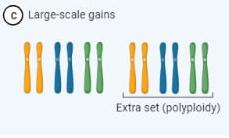
Errors during meiosis can result in gametes with abnormal numbers of chromosomes, leading to aneuploidy (extra or missing chromosomes) or polyploidy (extra sets of chromosomes).
Aneuploidy: The presence of an abnormal number of chromosomes (e.g., trisomy 21, which causes Down syndrome).
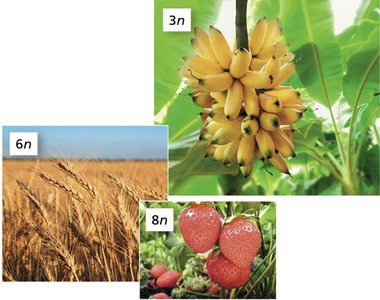
Polyploidy: More than two complete sets of chromosomes, common in plants.
Nondisjunction: Failure of homologous chromosomes or sister chromatids to separate properly during meiosis.
Structural Alterations of Chromosomes
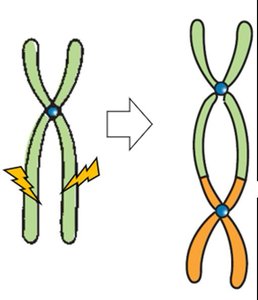
Chromosome structure can be altered by deletions, duplications, inversions, and translocations, often due to DNA breakage and faulty repair. These changes can disrupt gene function and cause genetic disorders.
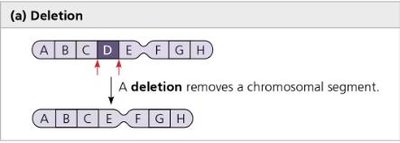
Deletion: Loss of a chromosome segment.
Duplication: Repetition of a chromosome segment.
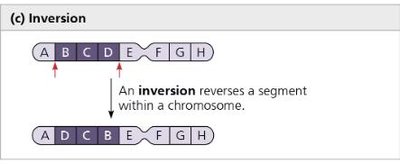
Inversion: Reversal of a chromosome segment.
Translocation: Movement of a segment from one chromosome to another.
Chromosomal Alterations and Human Disorders
Alterations in chromosome number or structure can lead to genetic disorders. For example, trisomy 21 causes Down syndrome, and certain translocations are associated with cancers such as chronic myelogenous leukemia.
Down syndrome: Caused by an extra copy of chromosome 21 (trisomy 21).
Cancer: Some cancers are linked to specific chromosomal translocations that create fusion genes and disrupt normal cell regulation.
Summary Table: Types of Chromosomal Alterations
Type of Alteration | Description | Example |
|---|---|---|
Aneuploidy | Abnormal number of chromosomes | Down syndrome (trisomy 21) |
Polyploidy | Extra sets of chromosomes | Wheat (6n), strawberry (8n) |
Deletion | Loss of a chromosome segment | Cri du chat syndrome |
Duplication | Repetition of a segment | Charcot-Marie-Tooth disease |
Inversion | Reversal of a segment | Some forms of hemophilia |
Translocation | Segment moves to another chromosome | Chronic myelogenous leukemia |
Key Concepts and Learning Outcomes
Explain how the behavior of chromosomes during meiosis accounts for Mendel’s laws of segregation and independent assortment.
Describe the inheritance patterns of sex-linked genes and the effects of X inactivation.
Understand how genetic linkage and crossing over affect inheritance and how recombination frequencies are used to map genes.
List and explain different types of chromosomal alterations and their consequences for genetic disorders.
