 Back
The Chromosomal Basis of Inheritance
Study Guide - Smart Notes
 Tailored notes based on your materials, expanded with key definitions, examples, and context.
Chapter 15: The Chromosomal Basis of Inheritance
Introduction
This chapter explores how Mendelian inheritance is explained by the behavior of chromosomes during meiosis. It covers the experimental evidence for the chromosome theory of inheritance, the unique inheritance patterns of sex-linked genes, the concept of linked genes, and the consequences of chromosomal alterations.
Concept 15.1: Mendelian Inheritance and Chromosome Behavior
Chromosome Theory of Inheritance
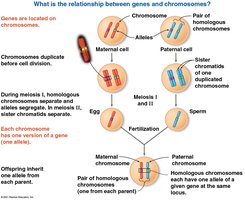
The chromosome theory of inheritance states that genes are located on chromosomes, and the behavior of chromosomes during meiosis accounts for inheritance patterns.
Genes are segments of DNA located on chromosomes.
Chromosomes duplicate before cell division and segregate during meiosis, ensuring each gamete receives one set of chromosomes.
Homologous chromosomes separate during meiosis I, and sister chromatids separate during meiosis II.
Each chromosome carries one version (allele) of a gene.
Morgan’s Experiments with Drosophila melanogaster
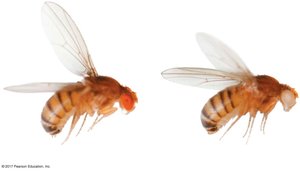
Thomas Hunt Morgan used fruit flies to provide the first solid evidence associating a specific gene with a specific chromosome.
Drosophila melanogaster is ideal for genetic studies due to its short generation time, high offspring number, and only four pairs of chromosomes.
Wild type refers to the normal phenotype, while mutant phenotypes are alternatives.
Morgan discovered a white-eyed mutant, linking the trait to the X chromosome.
Correlating Gene Behavior with Chromosome Behavior
Morgan’s findings supported the chromosome theory by showing that the inheritance of a gene parallels the inheritance of a chromosome.
Concept 15.2: Sex-Linked Genes and Inheritance Patterns
Sex Chromosomes and Sex Determination
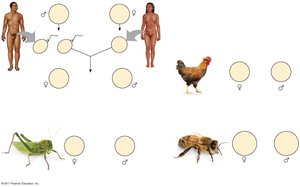
Sex chromosomes (X and Y) determine the sex of an individual in many organisms, including humans.
Females have two X chromosomes (XX), while males have one X and one Y (XY).
The SRY gene on the Y chromosome triggers male development.
Other systems of sex determination exist, such as the Z-W system in birds, the X-0 system in insects, and the haplo-diploid system in bees.
Sex-Linked Genes
Genes located on sex chromosomes exhibit unique inheritance patterns.
X-linked genes are found on the X chromosome; the human X chromosome contains about 1,100 genes.
Y-linked genes are found on the Y chromosome; only a few genes are present.
Recessive X-linked disorders are more common in males (e.g., color blindness, hemophilia).
X Inactivation in Female Mammals
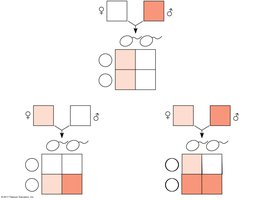
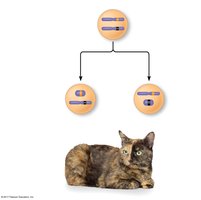
In female mammals, one X chromosome in each cell is randomly inactivated during embryonic development, forming a Barr body. This leads to mosaicism for X-linked traits.
Females heterozygous for X-linked genes can show mosaic phenotypes (e.g., tortoiseshell cats).
Concept 15.3: Linked Genes and Genetic Recombination
Linked Genes
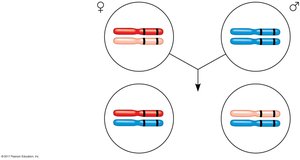
Genes located close together on the same chromosome tend to be inherited together and are called linked genes.
Linked genes do not assort independently.
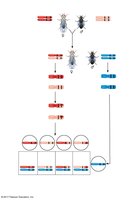
Testcrosses can reveal linkage by showing a higher proportion of parental-type offspring.
Genetic Recombination and Crossing Over
Genetic recombination produces offspring with new combinations of traits. Crossing over during meiosis can break the linkage between genes, resulting in recombinant chromosomes.
Recombination frequency can be used to map gene locations on chromosomes.
Parental types have phenotypes matching the parents; recombinants have new combinations.
Concept 15.4: Chromosomal Alterations and Genetic Disorders
Alterations in Chromosome Number
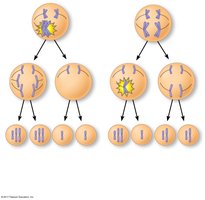
Errors in meiosis can lead to abnormal chromosome numbers, causing genetic disorders.
Nondisjunction is the failure of homologous chromosomes or sister chromatids to separate properly.
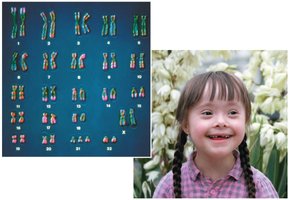
Aneuploidy results from fertilization involving gametes with abnormal chromosome numbers (e.g., monosomy, trisomy).
Polyploidy is the presence of more than two complete sets of chromosomes, common in plants.
Human Disorders Due to Aneuploidy
Down syndrome (Trisomy 21): Caused by three copies of chromosome 21; risk increases with maternal age.
Klinefelter syndrome (XXY): Males with an extra X chromosome.
Turner syndrome (X0): Females with only one X chromosome; the only viable human monosomy.
Alterations of Chromosome Structure
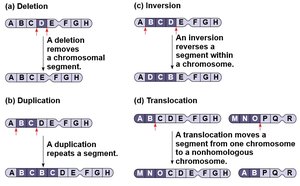
Chromosome breakage can lead to four types of structural changes:
Deletion: Loss of a chromosome segment.
Duplication: Repetition of a segment.
Inversion: Reversal of a segment within a chromosome.
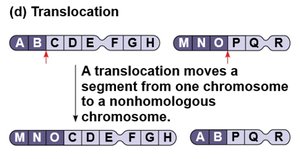
Translocation: Movement of a segment to a nonhomologous chromosome.
Disorders Caused by Chromosomal Alterations
Cri du chat syndrome: Caused by a deletion in chromosome 5; leads to intellectual disability and a distinctive cry.
Chronic myelogenous leukemia (CML): Caused by a reciprocal translocation between chromosomes 9 and 22 (Philadelphia chromosome).
Additional info: The study notes above expand on the provided content with definitions, examples, and context to ensure a comprehensive understanding of the chromosomal basis of inheritance, as required for college-level biology.
