 Back
The Chromosomal Basis of Inheritance: Morgan, Fruit Flies, and Patterns of Genetic Transmission
Study Guide - Smart Notes
 Tailored notes based on your materials, expanded with key definitions, examples, and context.
The Chromosomal Theory of Inheritance
Historical Foundations
The chromosomal theory of inheritance, proposed by Walter Sutton and Theodor Boveri in 1904, established that chromosomes are the carriers of genetic material. This theory was based on observations of meiotic cells and provided a mechanistic explanation for Mendel's laws of inheritance.
Chromosomes are present in all dividing cells and are passed from one generation to the next.
This theory explains how traits are inherited and how genes are physically located on chromosomes at specific loci.
Thomas Hunt Morgan's work with fruit flies provided the first experimental evidence supporting this theory.
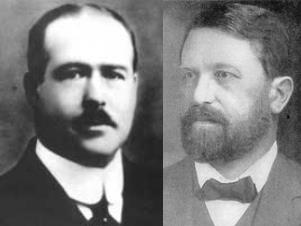
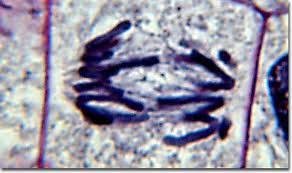
Thomas Hunt Morgan and Drosophila melanogaster
Why Fruit Flies?
Drosophila melanogaster (fruit fly) became a model organism for genetic studies due to several experimental advantages:
Short generation time (breeds every two weeks)
Large number of offspring per mating
Variety of easily distinguishable traits
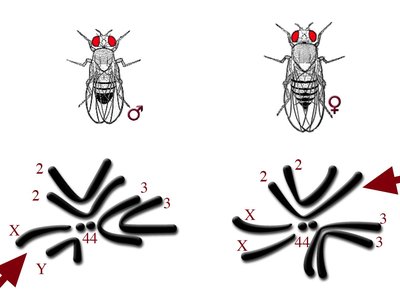
Only four pairs of chromosomes, simplifying genetic analysis
Low maintenance cost
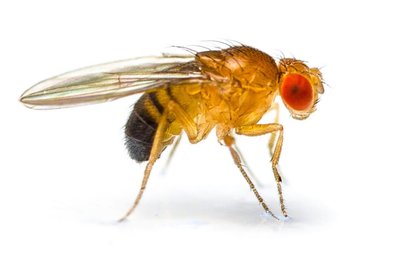
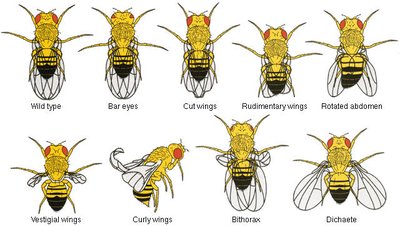
Morgan's Experiments and Discoveries
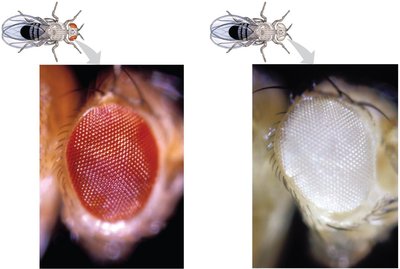
Morgan and his students conducted experiments from 1910 to 1928, providing evidence that genes are located on chromosomes. He identified the wild-type (normal) and mutant phenotypes in fruit fly populations, notably discovering a white-eyed mutant.
Wild type (w+): The most common phenotype in a population
Mutant phenotype (w): Traits that differ from the wild type
Sex Chromosomes and Sex-Linked Traits
Chromosomal Basis of Sex Determination
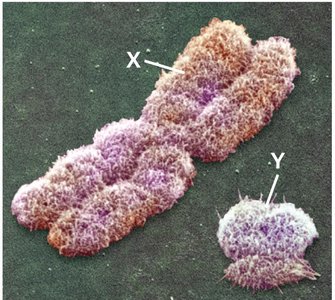
In both humans and fruit flies, sex is determined by the combination of sex chromosomes:
Females: XX
Males: XY
Males are hemizygous for the X chromosome, meaning they have only one copy.
Sex-Linked Genes and Inheritance Patterns
Sex-linked traits are typically associated with genes found on the X chromosome (X-linked traits). These traits follow specific inheritance patterns:
For a recessive X-linked trait to be expressed:
Females must have two copies of the recessive allele (homozygous).
Males need only one copy (hemizygous).
As a result, X-linked recessive disorders are more common in males than females.
Morgan's Crosses and Sex-Linked Inheritance
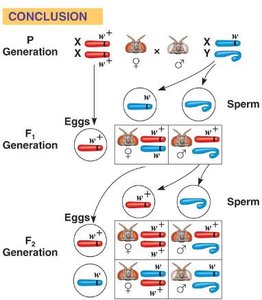
Morgan's experiments with white-eyed mutants demonstrated the inheritance of sex-linked traits. Reciprocal and test crosses confirmed that the white-eye trait was X-linked and not lethal to females.
Test cross: XwY × Xw+Xw
Reciprocal cross: Xw+Y × XwXw
Results showed that parental gender did not affect the inheritance pattern, confirming sex-linkage.
Examples of X-Linked Traits
Color Blindness
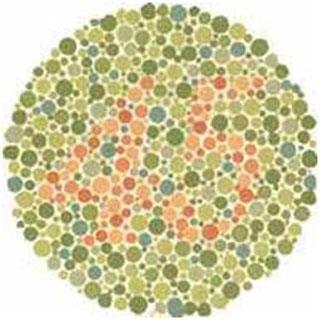
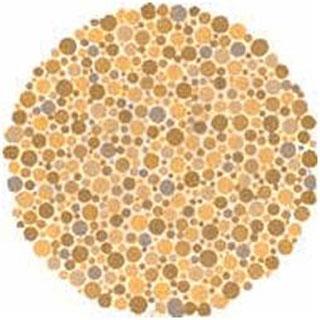
Red-green color blindness is a classic example of an X-linked recessive trait. It is more common in males due to their hemizygous state for the X chromosome.
Alleles: Xw+ (wild-type, normal vision), Xc (color-blind)
Genotypes:
Women: Xw+Xw+, Xw+Xc, XcXc
Men: Xw+Y, XcY
Pedigree Analysis
Understanding Pedigrees
A pedigree is a diagram that shows the occurrence and appearance of phenotypes of a particular gene or organism and its ancestors from one generation to the next. Pedigrees are used to determine the inheritance pattern of traits.
Symbols represent individuals and lines indicate genetic relationships.
Key questions:
Are generations skipped?
Are males and females equally affected?
Do affected fathers transmit the trait to sons?
Patterns of Inheritance
Pattern | Generations Skipped? | Sex Ratio | Father-to-Son Transmission? | Example |
|---|---|---|---|---|
Sex-linked Recessive | Yes | Males > Females | No | Hemophilia, Duchenne muscular dystrophy |
Sex-linked Dominant | No | Equal | No | Vitamin D-resistant rickets |
Autosomal Recessive | Yes | Equal | Yes | Cystic Fibrosis, Phenylketonuria |
Autosomal Dominant | No | Equal | Yes | Huntington disease, Polycystic kidney disease |
General Rules for Pedigree Analysis
Autosomal vs. Sex-linked: If affected fathers pass the trait to sons, it is autosomal; if not, it is sex-linked.
Dominant vs. Recessive: Dominant traits do not skip generations; recessive traits do.
Summary
The chromosomal theory of inheritance connects Mendel's laws to the physical behavior of chromosomes during meiosis.
Morgan's work with fruit flies established the chromosomal location of genes and the concept of sex-linked inheritance.
Pedigree analysis is a powerful tool for determining the mode of inheritance of genetic traits in families.
