 Back
The Chromosomal Basis of Inheritance: Principles and Applications
Study Guide - Smart Notes
 Tailored notes based on your materials, expanded with key definitions, examples, and context.
The Chromosomal Basis of Inheritance
Key Principles of Chromosomal Genetics
The chromosomal theory of inheritance connects Mendel’s laws to the physical behavior of chromosomes during meiosis. Chromosomes carry genes, and their segregation and independent assortment explain how alleles are transmitted from parents to offspring.
Locus: The specific physical location of a gene on a chromosome.
Alleles: Alternative forms of a gene found at the same locus on homologous chromosomes.
Segregation: During meiosis I, alleles of the same gene separate as homologous chromosomes are pulled apart.
Independent Assortment: Alleles of different genes assort independently into gametes, leading to genetic variation.
Linkage: Genes located on the same chromosome tend to be inherited together unless separated by crossing over.
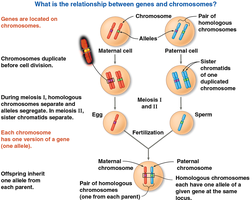
Chromosome Theory of Inheritance
This theory states that chromosomes are the carriers of Mendel’s hereditary factors (genes). The physical separation of homologous chromosomes during anaphase I of meiosis causes the segregation of alleles, explaining Mendel’s observations.
Homologous chromosomes align and separate independently during meiosis I, resulting in the independent assortment of alleles.
Random distribution of chromosomes produces Mendel’s 9:3:3:1 phenotypic ratios in dihybrid crosses.
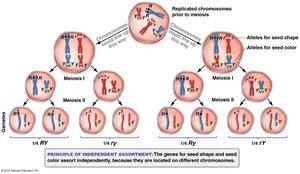
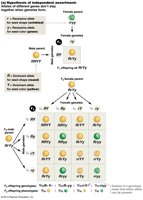
Exceptions and Extensions to Mendel’s Rules
Not all inheritance patterns strictly follow Mendel’s laws. Some exceptions include sex linkage, gene linkage, incomplete dominance, codominance, multiple alleles, pleiotropy, and polygenic inheritance.
Type of Inheritance | Definition | Consequences or Comments |
|---|---|---|
Sex linkage | A gene is located on a sex chromosome. | Patterns of inheritance in males and females differ. |
Linkage | Two or more genes are on the same chromosome. | Linked genes do not assort independently. |
Incomplete dominance | Heterozygotes have intermediate phenotypes. | More than two phenotypes are seen. |
Codominance | Heterozygotes have phenotypes of both alleles. | More than two phenotypes are seen. |
Multiple allelism | More than two alleles for a gene exist in a population. | More than two phenotypes are seen. |
Pleiotropy | A single gene affects many traits. | Pleiotropy is common. |
Polygenic inheritance | Multiple genes contribute to a single trait. | Traits show continuous variation. |
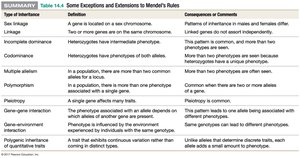
Sex Chromosomes and Sex-Linked Inheritance
Discovery and Structure of Sex Chromosomes
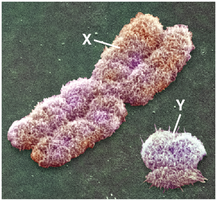
Sex chromosomes determine the biological sex of an organism. In mammals, females are XX and males are XY. The SRY gene on the Y chromosome triggers testis development. Other species may use different systems for sex determination.
Polygenic Inheritance and Gender Diversity
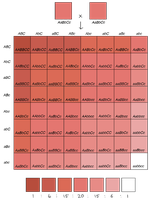
Sex determination is influenced by multiple genes, not just the presence of X or Y chromosomes. Genes such as SRY, SOX9, WNT4, RSPO1, DAX1, FGF9, and CYP19A1 all play roles in the development of sex characteristics. The interaction of these genes results in a broad spectrum of gender phenotypes.
X-Linked Genes and Inheritance Patterns
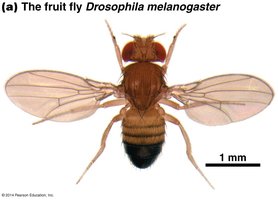
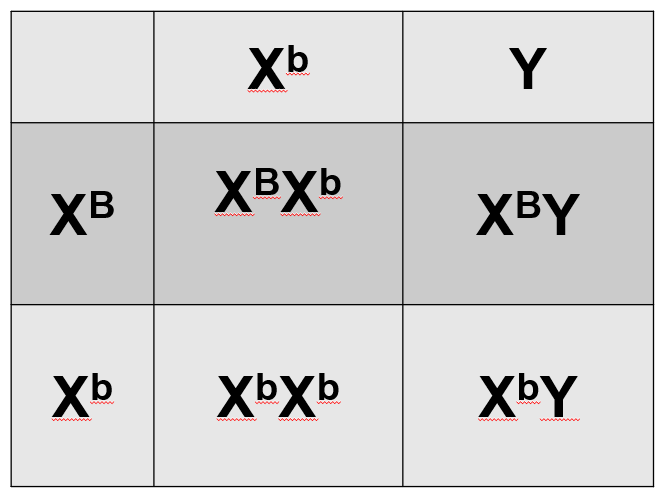
Genes located on the X chromosome exhibit unique inheritance patterns. X-linked recessive traits are more common in males, who have only one X chromosome (hemizygous). Females must inherit two copies of a recessive allele to express the trait.
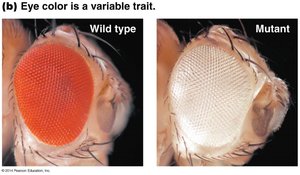
Wild type: The most common phenotype in a population.
Mutant: A phenotype that differs from wild type due to a gene change.
Reciprocal crosses yield different results for X-linked traits, confirming their chromosomal location.
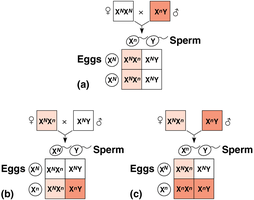
Human X-Linked Disorders
Several human disorders are caused by recessive alleles on the X chromosome, including color blindness, Duchenne muscular dystrophy, and hemophilia. These conditions are more common in males due to their single X chromosome.
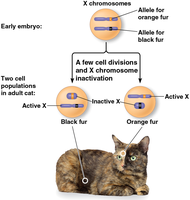
X Inactivation and Dosage Compensation
In female mammals, one X chromosome in each cell is randomly inactivated during early embryonic development, forming a Barr body. This process, controlled by the XIST gene, ensures dosage compensation between males and females. Mosaic expression can occur, as seen in the coat color of calico cats.
Linkage and Genetic Mapping
Gene Linkage and Test Crosses
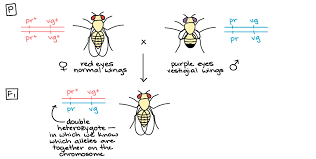
Linked genes are located on the same chromosome and tend to be inherited together. A test cross involves crossing an individual of unknown genotype with a homozygous recessive individual to reveal the unknown genotype based on offspring phenotypes.
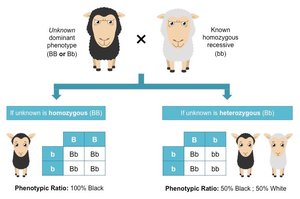
Recombination and Crossing Over
Crossing over during meiosis exchanges DNA between homologous chromosomes, producing recombinant offspring with new allele combinations. Parental types are more common, while recombinants are less frequent.
Linkage Maps and Recombination Frequency
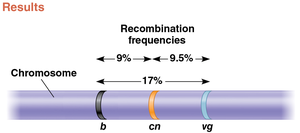
Recombination frequency is used to estimate the relative distances between genes on a chromosome. One map unit (centimorgan, cM) equals a 1% recombination frequency. Genes far apart on a chromosome can appear genetically unlinked due to high recombination rates.
Summary Table: Linked Genes
Concept | Description |
|---|---|
Linked Genes | Genes located close together on the same chromosome, inherited together unless separated by crossing over. |
Recombination Frequency | Proportion of recombinant offspring; used to estimate genetic distance. |
Map Unit (cM) | 1% recombination frequency; measures relative gene distance. |
Additional info: The study of linked genes and recombination frequencies laid the foundation for modern genetic mapping and understanding of chromosome structure and function.
