 Back
The Chromosomal Basis of Inheritance: Sex Determination and Chromosomal Disorders
Study Guide - Smart Notes
 Tailored notes based on your materials, expanded with key definitions, examples, and context.
The Chromosomal Basis of Sex
Sex Determination Systems
Sex in organisms is determined by specific chromosomes known as sex chromosomes. The presence or absence of certain sex chromosomes dictates whether an individual develops as male or female. Different species utilize distinct systems for sex determination:
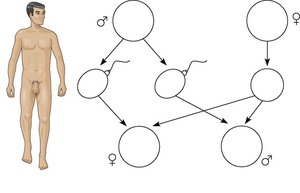
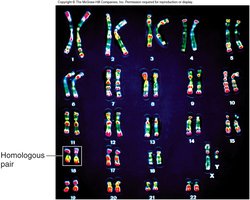
X-Y System: Found in humans and most mammals. Males have XY chromosomes, females have XX chromosomes.
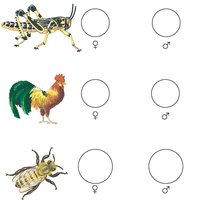
X-0 System: Seen in some insects, such as grasshoppers. Males have a single X chromosome (X0), females have two (XX).
Z-W System: Used by birds, some fish, and some reptiles. Males are ZZ, females are ZW.
Haplo-Diploid System: Found in bees and ants. Females are diploid (2n), males are haploid (n).
Example: In humans, the sperm determines the sex of the offspring: sperm carrying an X chromosome produces a female (XX), while sperm carrying a Y chromosome produces a male (XY).
Inheritance of Sex-Linked Genes
Sex-Linked Genes and Their Patterns
Sex chromosomes carry genes for traits unrelated to sex. Genes located on either sex chromosome are called sex-linked genes. Most sex-linked genes are found on the X chromosome, as it is larger and contains more genes than the Y chromosome.
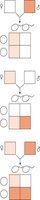
Inheritance Patterns: Sex-linked genes follow unique inheritance patterns. For example, X-linked recessive disorders are more common in males because they have only one X chromosome.
Examples of X-linked Disorders: Color blindness, Duchenne muscular dystrophy, and hemophilia.
Example: If a father has an X-linked disorder, he will pass the mutant allele to all daughters (who become carriers) but not to sons. If a carrier mother mates with a normal male, each son has a 50% chance of having the disorder.
Abnormal Chromosome Number
Nondisjunction and Aneuploidy
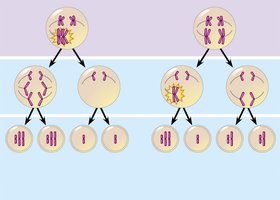
Nondisjunction occurs when homologous chromosomes or sister chromatids fail to separate properly during meiosis. This results in gametes with abnormal chromosome numbers, leading to aneuploidy in offspring.
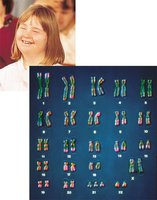
Trisomy: The zygote has three copies of a chromosome (e.g., trisomy 21 causes Down syndrome).
Monosomy: The zygote has only one copy of a chromosome (e.g., monosomy X causes Turner syndrome).
Example: Down syndrome is usually caused by trisomy 21, where the individual has three copies of chromosome 21.
Aneuploidy of Sex Chromosomes
Nondisjunction of sex chromosomes can produce various aneuploid conditions:
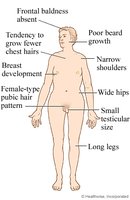
Klinefelter Syndrome (XXY): Males with an extra X chromosome. Symptoms include small testes, breast development, and reduced body hair.
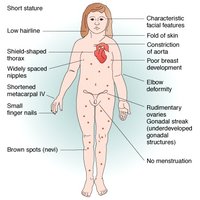
Turner Syndrome (X0): Females with only one X chromosome. Symptoms include short stature, webbed neck, and lack of ovarian development.
Human Disorders Due to Chromosomal Alterations
Alterations of Chromosome Structure
Chromosome breakage can lead to four main types of structural changes:
Deletion: Loss of a chromosomal segment.
Duplication: Repetition of a segment.
Inversion: Reversal of a segment within a chromosome.
Translocation: Movement of a segment from one chromosome to another, nonhomologous chromosome. Reciprocal translocation involves exchange of fragments between chromosomes.
Example: Deletion of part of chromosome 5 causes Cri du chat syndrome.
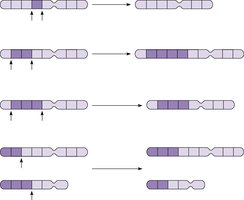
Type | Description | Example Disorder |
|---|---|---|
Deletion | Loss of segment | Cri du chat syndrome |
Duplication | Repeat of segment | Charcot-Marie-Tooth disease |
Inversion | Reversal of segment | Often asymptomatic |
Translocation | Segment moves to another chromosome | Chronic myelogenous leukemia |
Additional info: Chromosomal alterations can have profound effects on phenotype and health, depending on the genes affected and the extent of the change.
