 Back
The Chromosomal Basis of Inheritance: Study Notes
Study Guide - Smart Notes
 Tailored notes based on your materials, expanded with key definitions, examples, and context.
The C001hromosomal Basis of Inheritance
Introduction
The chromosomal basis of inheritance explains how genes are transmitted from one generation to the next through the behavior of chromosomes during meiosis. This concept integrates Mendelian genetics with cytological observations, providing a physical explanation for Mendel's laws.
Mendelian Inheritance and Chromosome Behavior
The Chromosome Theory of Inheritance
Chromosome Theory of Inheritance: Mendelian genes have specific loci (positions) on chromosomes, and chromosomes undergo segregation and independent assortment during meiosis.
Physical Basis: The behavior of chromosomes during meiosis accounts for Mendel’s laws of segregation and independent assortment.
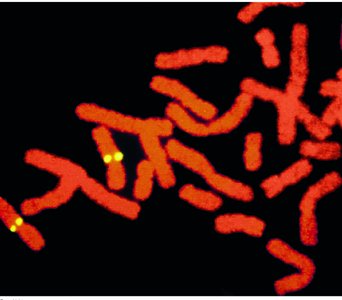
Genes and Chromosomes: Genes are located on chromosomes, and each chromosome carries many genes.
Relationship Between Genes and Chromosomes
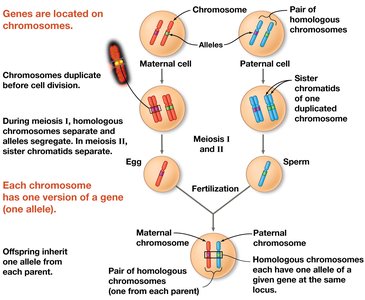
Chromosomes duplicate before cell division, ensuring each gamete receives one allele for each gene.
During meiosis I, homologous chromosomes (and thus alleles) segregate; in meiosis II, sister chromatids separate.
Each parent contributes one set of chromosomes to the offspring, resulting in homologous pairs.
Experimental Evidence: Morgan’s Work with Drosophila
Thomas Hunt Morgan’s Experiments
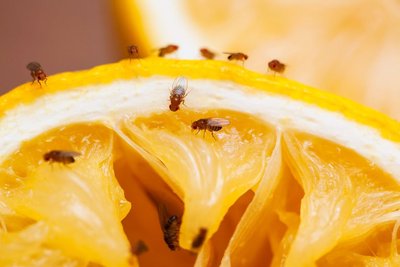
Morgan used Drosophila melanogaster (fruit flies) for genetic studies due to their short generation time, high offspring number, and only four pairs of chromosomes.
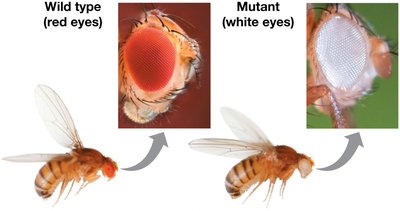
He identified wild-type (normal) and mutant phenotypes, such as red eyes (wild-type) and white eyes (mutant).


Morgan’s Crosses and Conclusions
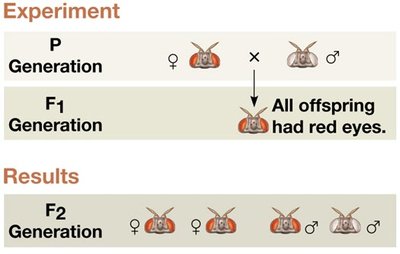
When Morgan crossed red-eyed females with white-eyed males, all F1 offspring had red eyes, indicating red is dominant.
In the F2 generation, only males exhibited the white-eyed phenotype, suggesting the gene for eye color is located on the X chromosome (sex-linked inheritance).
Sex Determination Systems
Overview of Sex Determination
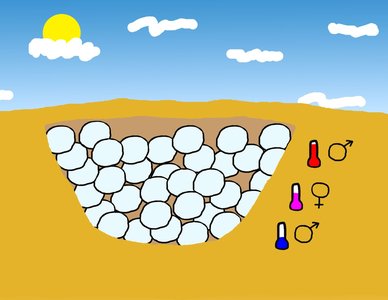
Sex is determined by specific chromosomes in many organisms, but mechanisms vary.
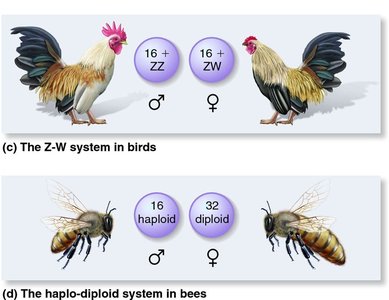
Common systems include XY (mammals), XO (insects), ZW (birds), and haplo-diploid (bees).

Sex Chromosomes in Humans
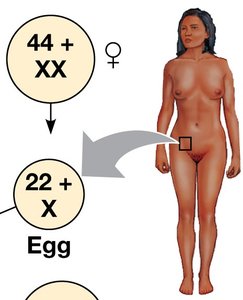
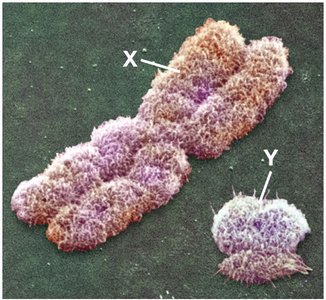
Humans have 22 pairs of autosomes and one pair of sex chromosomes (XX for females, XY for males).
The presence of the Y chromosome determines maleness.

Sex-Linked Genes and Disorders
Sex-Linked Genes
Sex-linked gene: A gene located on either sex chromosome (X or Y).
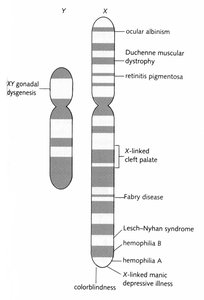
X-linked genes: Genes on the X chromosome; most sex-linked traits are X-linked.
Y-linked genes: Genes on the Y chromosome; very few exist.

Inheritance Patterns of X-Linked Disorders
Males are hemizygous for X-linked genes (only one X chromosome), so recessive disorders are more common in males.
Examples include red-green color blindness, hemophilia, and Duchenne muscular dystrophy.

Examples of X-Linked Disorders
Disorder | Cause |
|---|---|
Red-Green Color Blindness | Inability to distinguish red and green colors |
Hemophilia A | Mutation in Factor VIII, blood does not clot |
Hemophilia B | Mutation in Factor IX, blood does not clot |
Duchenne Muscular Dystrophy | Muscle degeneration and weakness |
X-linked Agammaglobulinemia | Failure to produce mature B cells |
X Inactivation in Female Mammals
Mechanism and Consequences
In female mammals, one X chromosome in each cell is randomly inactivated during early development, forming a Barr body.
This ensures dosage compensation between males (XY) and females (XX).
Females heterozygous for X-linked genes are mosaics, with different cells expressing different alleles.



Linked Genes and Genetic Mapping
Linked Genes
Genes located close together on the same chromosome tend to be inherited together (linked genes).
Linked genes do not assort independently, violating Mendel’s law of independent assortment.
Genetic Recombination and Crossing Over
Crossing over during meiosis can separate linked genes, producing recombinant offspring.
The frequency of recombination is proportional to the distance between genes.
Genetic Maps
Linkage maps: Show the relative positions of genes based on recombination frequencies (measured in map units or centimorgans).
Cytogenetic maps: Indicate gene positions relative to chromosomal features (bands).
Sequence maps: Provide detailed physical distances in base pairs.
Alterations of Chromosome Number and Structure
Aneuploidy and Polyploidy
Aneuploidy: Abnormal number of a particular chromosome, often due to nondisjunction during meiosis.
Monosomy: Only one copy of a chromosome (e.g., Turner syndrome, XO).
Trisomy: Three copies of a chromosome (e.g., Down syndrome, trisomy 21).
Polyploidy: More than two complete sets of chromosomes; common in plants.
Alterations of Chromosome Structure
Deletion: Loss of a chromosomal segment.
Duplication: Repetition of a segment.
Inversion: Reversal of a segment within a chromosome.
Translocation: Movement of a segment to a nonhomologous chromosome.
Exceptions to Standard Chromosomal Inheritance
Extranuclear (Cytoplasmic) Inheritance
Genes in mitochondria and chloroplasts are inherited maternally, as the zygote’s cytoplasm comes from the egg.
Genomic Imprinting
Genomic imprinting involves the silencing of certain genes depending on the parent of origin, often through DNA methylation.
This can affect the phenotype and is an example of epigenetic inheritance.
Summary Table: Sex Chromosome Abnormalities
Chromosomes | Condition | Incidence | Symptoms |
|---|---|---|---|
XXX | Triplo-X | 1 in 1500 females | Tall stature, menstrual irregularities |
XXY | Klinefelter syndrome | 1 in 750 males | Sexual underdevelopment, long limbs, breast tissue |
XYY | Jacobs syndrome | 1 in 1000 males | Tall stature, acne, speech/reading problems |
XO | Turner syndrome | 1 in 2000 females | Short stature, infertility |
Additional info: These notes integrate foundational concepts from Mendelian genetics, cytogenetics, and molecular biology, providing a comprehensive overview of the chromosomal basis of inheritance and its exceptions.
