 Back
Chapter 15 Lecture Notes
Study Guide - Smart Notes
 Tailored notes based on your materials, expanded with key definitions, examples, and context.
The Chromosomal Basis of Inheritance
Introduction
The chromosomal basis of inheritance explains how genes are transmitted from one generation to the next through chromosomes. This concept integrates Mendelian genetics with cytology, providing a framework for understanding genetic inheritance, sex determination, and chromosomal mutations.
Chromosome Theory of Inheritance
Key Principles
Genes are located on chromosomes at specific positions called loci.
Each chromosome contains dozens to thousands of genes, depending on its size.
Chromosomes are the vehicles for genetic information, passing traits from parents to offspring.
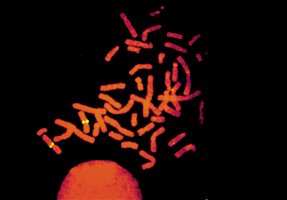
Sex Chromosomes and Autosomes
Types and Structure
Autosomes: Non-sex chromosomes; humans have 44 autosomes (22 pairs).
Sex chromosomes: X and Y chromosomes determine biological sex in humans.
The X chromosome is much larger than the Y chromosome and contains more genes.
X and Y chromosomes are mostly non-homologous but share small homologous regions for pairing during meiosis.
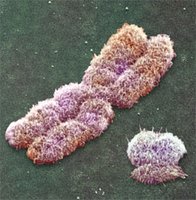
Sex Determination in Humans
Mechanism
Females: 44 autosomes + XX
Males: 44 autosomes + XY
The presence of the SRY gene (Testis Determining Factor, TDF) on the Y chromosome initiates male development.
The sperm's sex chromosome determines the sex of the offspring.
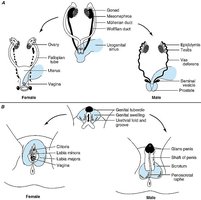
Sex-Linked Genes and Inheritance Patterns
Location and Expression
Genes located on the X or Y chromosome are called sex-linked genes.
The X chromosome contains about 1000 genes, most unrelated to sexual characteristics.
The Y chromosome contains about 30 genes, with ~15 important for male fertility.
Males are hemizygous for most X and Y genes, having only one copy.
This leads to unique inheritance patterns, especially for X-linked traits.
X-Linked Inheritance
Alleles for X-linked genes are shown as superscripts on the X chromosome (e.g., XA, Xa).
Y chromosome lacks most alleles present on X, so males express recessive X-linked traits if present.
Females with one recessive allele are carriers (heterozygous), while males with the allele always express the trait.
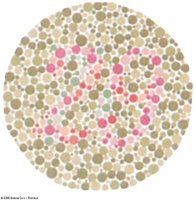
Example: Red/Green Color Blindness
An X-linked recessive trait affecting about 8% of males in the US.
Females are less likely to express the trait unless they inherit two copies of the recessive allele.

Pedigree Analysis
Pedigrees are used to trace inheritance patterns of traits through families.
Example: Hemophilia B in European royal families, an X-linked recessive disorder.
Y-Linked Inheritance
Traits determined by genes on the Y chromosome appear only in males.
Example: Some forms of male infertility are Y-linked.
X Inactivation in Female Mammals
Mechanism and Consequences
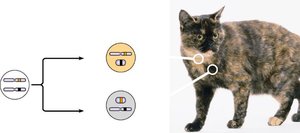
In females, one X chromosome in each cell is randomly inactivated early in embryonic development.
This leads to mosaicism for X-linked traits (e.g., tortoiseshell cats).
If a female is heterozygous for an X-linked gene, she will express both alleles in different cells.
Chromosomal Mutations
Types and Effects
Alterations in chromosome number or structure can cause developmental disorders or miscarriage.
Common types include aneuploidy (abnormal number) and structural mutations (changes in chromosome structure).
Aneuploidy
Results from missing or extra chromosomes.
Monosomy: Only one copy of a chromosome (e.g., Turner syndrome, XO).
Trisomy: Three copies of a chromosome (e.g., Down syndrome, trisomy 21).
Detected by karyotype analysis, which arranges chromosomes by size and number.

Cause: Meiotic Non-disjunction
Non-disjunction occurs when chromosomes fail to separate properly during meiosis I or II.
This leads to gametes with abnormal chromosome numbers, resulting in aneuploid offspring.
Structural Chromosomal Mutations
Involve changes to large sections of DNA, affecting many genes.
Types include:
Translocation: A segment moves to a different chromosome.
Inversion: A segment is reversed within the chromosome.
Duplication: A segment is repeated.
Deletion: A segment is lost.
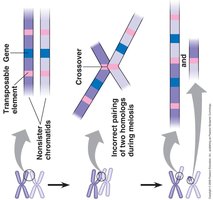
Causes include errors during crossing over, radiation, and carcinogens.
Transposable Elements
Definition and Impact
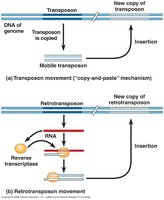
Transposable elements ("jumping genes") are DNA segments that can move within the genome.
They can promote unequal crossover events during meiosis, leading to duplications or deletions.
Summary Table: Chromosomal Disorders
Disorder | Cause | Chromosomes |
|---|---|---|
Down Syndrome | Extra copy of chromosome 21 | Trisomy 21 |
Patau Syndrome | Extra copy of chromosome 13 | Trisomy 13 |
Edward's Syndrome | Extra copy of chromosome 18 | Trisomy 18 |
Triple X Syndrome | Extra X chromosome in females | XXX |
Turner Syndrome | Missing X in females | XO |
Klinefelter Syndrome | Extra X chromosome in males | XXY |
XYY Syndrome | Extra Y chromosome in males | XYY |
Cri-du-Chat Syndrome | Deletion on chromosome 5 | 5p- |
Fragile X Syndrome | Duplications on X | X |
Acute Myelogenous Leukemia | Translocation between chromosomes 8 and 21 | t(8;21) |
Key Equations and Concepts
Probability of offspring genotype (Punnett square):
Karyotype: An image showing all chromosomes in order of size, used to detect chromosomal abnormalities.
Applications and Examples
Understanding inheritance patterns helps diagnose and predict genetic disorders.
Pedigree analysis is crucial for genetic counseling and studying hereditary diseases.
Karyotyping is used in prenatal diagnosis and cancer genetics.
