 Back
Ch 15 - The Chromosomal Basis of Inheritance (F26 Bernhardt)
Study Guide - Smart Notes
 Tailored notes based on your materials, expanded with key definitions, examples, and context.
The Chromosomal Basis of Inheritance
Genes and Chromosomes
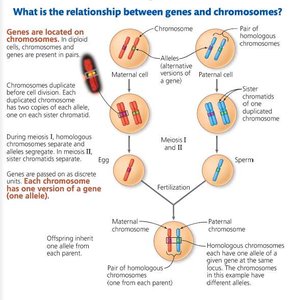
The foundation of modern genetics is the understanding that genes are segments of DNA located on chromosomes. Each gene occupies a specific locus, and chromosomes are present in pairs in diploid cells. During gamete formation, each gamete receives one allele for each gene, ensuring offspring inherit one allele from each parent.
Gene: A unit of heredity; a segment of DNA encoding a functional product.
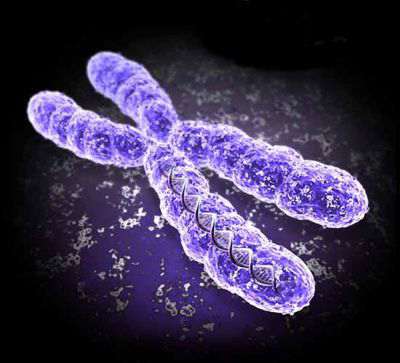
Chromosome: A DNA molecule with associated proteins, carrying genetic information.
Locus: The specific location of a gene on a chromosome.
Allele: Different versions of a gene.
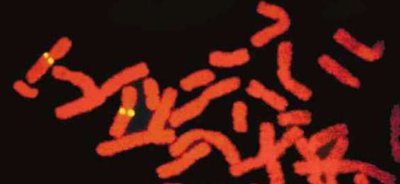
The Chromosome Theory of Inheritance
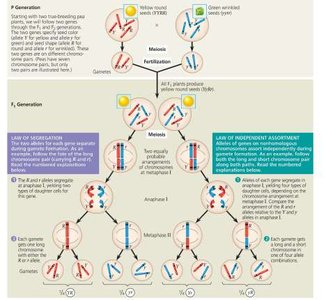
The chromosome theory of inheritance states that Mendelian genes have specific loci on chromosomes, and chromosomes undergo segregation and independent assortment during meiosis. The behavior of chromosomes during meiosis explains Mendel’s laws.
Law of Segregation: The two alleles for each gene separate during gamete formation.
Law of Independent Assortment: Alleles of genes on nonhomologous chromosomes assort independently.
Mendel’s Laws and Chromosomes
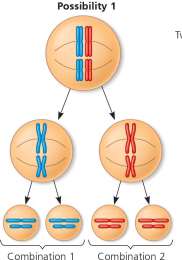
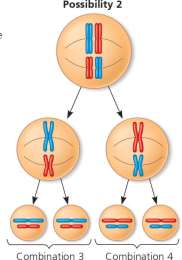
Mendel’s experiments with pea plants demonstrated the laws of segregation and independent assortment. Chromosome pairs line up independently at metaphase I, resulting in four possible gamete types.
Segregation: R and r alleles separate at anaphase I.
Independent Assortment: Chromosome pairs line up independently, producing gametes with different allele combinations.
Experimental Evidence: Morgan and Drosophila
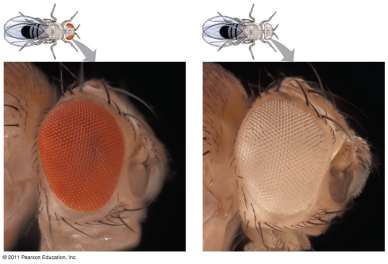
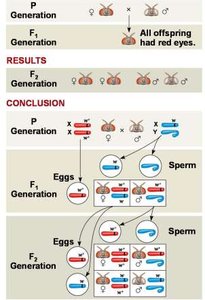
Thomas Hunt Morgan provided the first solid evidence linking a specific gene to a specific chromosome using the fruit fly Drosophila melanogaster. Morgan observed wild type (normal) and mutant phenotypes, and his experiments demonstrated that the white-eyed mutant allele was located on the X chromosome.
Wild type: Common phenotype in a population.
Mutant phenotype: Alternative to the wild type.
The Chromosomal Basis of Sex
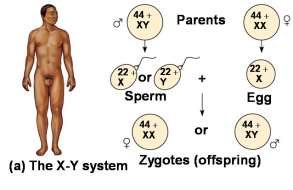
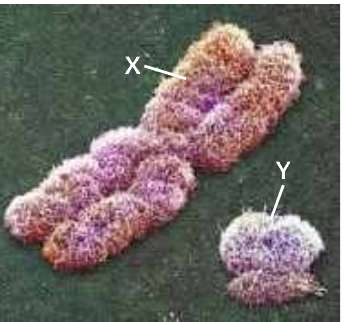
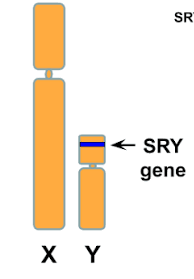
Sex determination in humans and other mammals is based on the presence of X and Y chromosomes. Females are XX, males are XY. The SRY gene on the Y chromosome is required for testes development.
SRY gene: Sex-determining region of Y; triggers male development.
Sex chromosomes: X and Y in mammals; other systems exist in different organisms.
Other Chromosomal Systems of Sex Determination
Different organisms use various chromosomal systems for sex determination:
System | Organisms | Sex Chromosomes | Determining Gamete |
|---|---|---|---|
X-Y | Mammals | XX (female), XY (male) | Sperm |
X-0 | Grasshoppers, cockroaches | XX (female), X (male) | Sperm |
Z-W | Birds, some fishes | ZW (female), ZZ (male) | Egg |
Haplo-diploid | Bees, ants | No sex chromosomes | Fertilization |
Inheritance of X-linked Genes
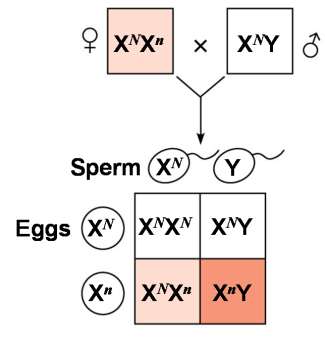
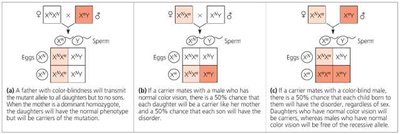
Genes located on sex chromosomes are called sex-linked genes. X-linked genes follow specific inheritance patterns, with recessive X-linked traits being more common in males due to their hemizygosity.
X-linked gene: Located on the X chromosome; ~1,100 genes.
Y-linked gene: Located on the Y chromosome; ~78 genes.
Hemizygous: Males have only one X chromosome, so a single recessive allele will express the trait.
X Inactivation in Female Mammals
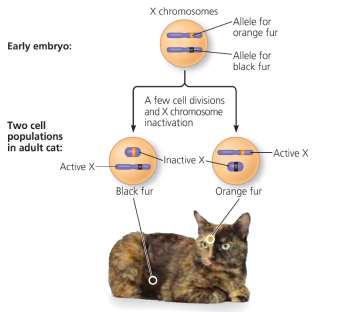
In female mammals, one X chromosome is randomly inactivated in each cell early in development, forming a Barr body. This ensures equal expression of X-linked genes in males and females. Heterozygous females are mosaics for X-linked traits, as seen in tortoiseshell cats.
Barr body: Inactivated X chromosome in female cells.
Mosaic: Presence of two or more populations of cells with different genotypes.
Linked Genes and Genetic Recombination
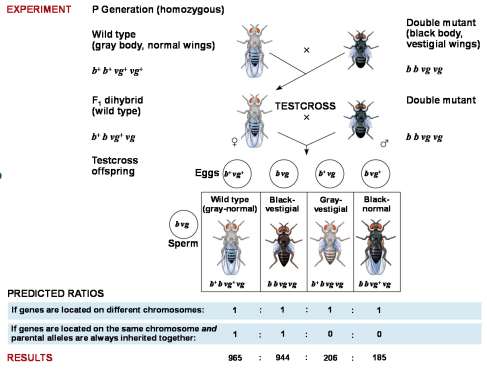
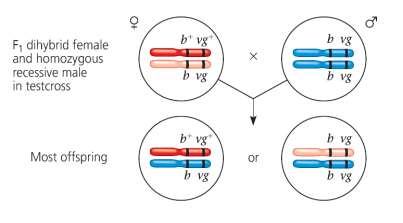
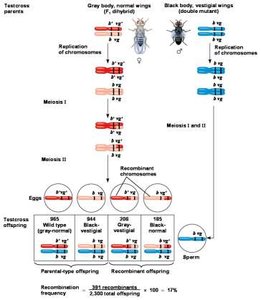
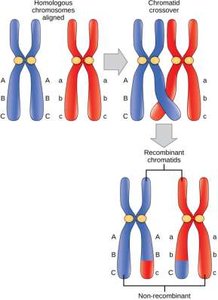
Genes located near each other on the same chromosome are called linked genes and tend to be inherited together. However, crossing over during meiosis can produce recombinant chromosomes, breaking the linkage and creating new combinations of traits.
Linked genes: Genes close together on the same chromosome.
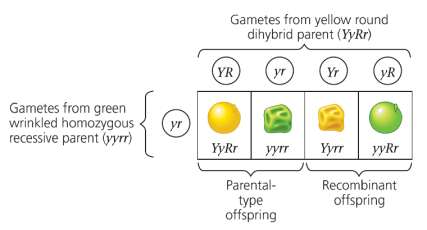
Genetic recombination: Offspring with combinations of traits different from either parent.
Crossing over: Exchange of DNA between nonsister chromatids during prophase I of meiosis.
Genetic Variation and Evolution
Genetic variation is essential for evolution. Mutations are the original source of genetic diversity, and sexual reproduction increases variation through crossing over, independent assortment, and random fertilization.
Crossing over: Produces recombinant chromosomes.
Independent assortment: Homolog pairs orient randomly at metaphase I; combinations in humans.
Random fertilization: Any sperm can fuse with any egg; ~70 trillion possible zygotes.
Summary Table: Chromosomal Basis of Inheritance
Concept | Description | Key Example |
|---|---|---|
Gene | Segment of DNA on chromosome | Mendel’s hereditary factors |
Chromosome Theory | Genes have loci; chromosomes segregate and assort independently | Mendel’s laws explained by meiosis |
Sex Determination | X-Y, X-0, Z-W, Haplo-diploid systems | SRY gene in humans |
X-linked Inheritance | Traits more common in males; fathers pass to daughters | Color blindness, Drosophila eye color |
Linked Genes | Genes inherited together; crossing over creates recombinants | Drosophila body color and wing size |
Genetic Variation | Crossing over, independent assortment, random fertilization | Human genetic diversity |
Additional info:
For a recessive X-linked trait to be expressed, females must be homozygous, while males need only one copy.
Crossing over occurs at chiasmata during prophase I of meiosis.
Genetic recombination frequency can be used to map gene loci on chromosomes.
