 Back
The Chromosomal Basis of Inheritance: Study Guide
Study Guide - Smart Notes
 Tailored notes based on your materials, expanded with key definitions, examples, and context.
The Chromosomal Basis of Inheritance
Introduction
The chromosomal theory of inheritance connects Mendel’s principles of genetics to the physical behavior of chromosomes during meiosis. This chapter explores how genes are carried on chromosomes, how their behavior explains inheritance patterns, and how chromosomal alterations can lead to genetic disorders.
Concept 15.1: Mendelian Inheritance and Chromosomes
Morgan’s Choice of Experimental Organism
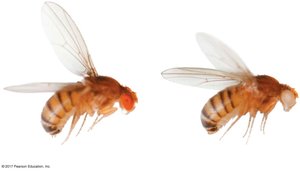
Thomas Hunt Morgan used Drosophila melanogaster (fruit fly) for genetic studies due to its short generation time, high offspring number, and only four pairs of chromosomes.
Wild type: The normal phenotype commonly found in nature.
Mutant phenotype: Traits that differ from the wild type, such as white eyes instead of red.
Chromosome theory of inheritance: Genes are located on chromosomes, and their behavior during meiosis explains inheritance patterns.
Relationship Between Genes and Chromosomes
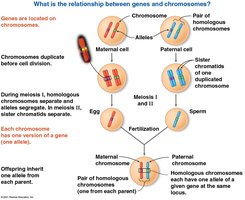
Genes are segments of DNA located on chromosomes. Chromosomes duplicate before cell division, and during meiosis, homologous chromosomes separate, distributing alleles to gametes.
Each chromosome carries many genes.
Homologous chromosomes have the same genes at the same loci but may have different alleles.
Meiosis ensures segregation and independent assortment of alleles.
Concept 15.2: Sex-Linked Genes and Inheritance Patterns
Sex Chromosomes and Sex Determination
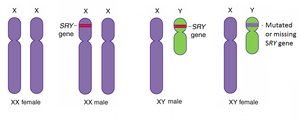
Humans and other mammals have two types of sex chromosomes: X and Y. Females have two X chromosomes (XX), while males have one X and one Y (XY).
SRY gene: Located on the Y chromosome, responsible for male development.
Short homologous regions allow X and Y to pair during meiosis.
Systems of Sex Determination
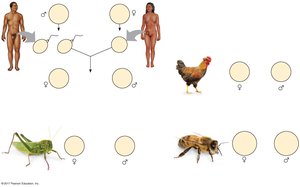
Different organisms use various systems to determine sex, including X-Y, X-0, Z-W, and haplo-diploid systems.
X-Y system: Humans and most mammals.
X-0 system: Some insects.
Z-W system: Birds, some fish, and reptiles.
Haplo-diploid system: Bees and ants.
Inheritance of X-Linked Genes
X-linked genes exhibit unique inheritance patterns because males (XY) have only one X chromosome, making them more susceptible to X-linked recessive disorders.
Examples: Color blindness, Duchenne muscular dystrophy, hemophilia.
Females can be carriers if heterozygous for a recessive allele.
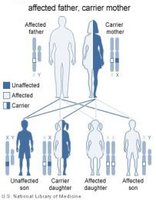
X Inactivation in Female Mammals
In female mammals, one X chromosome in each cell is randomly inactivated, forming a Barr body. This leads to mosaicism for X-linked traits.
Barr body: Inactive X chromosome.
Example: Mosaic fur color in female cats.
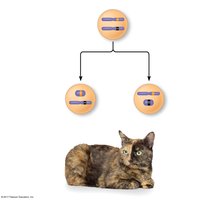
Concept 15.3: Linked Genes and Genetic Recombination
Linked Genes
Genes located close together on the same chromosome tend to be inherited together and are called linked genes.
Linked genes violate Mendel’s law of independent assortment.
Example: Body color and wing shape in Drosophila.
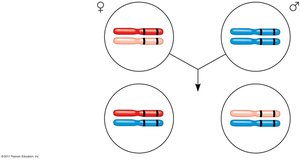
Genetic Recombination and Crossing Over
Recombination produces offspring with new combinations of traits. Crossing over during meiosis creates recombinant chromosomes, increasing genetic diversity.
Parental types: Offspring with phenotypes matching the parents.
Recombinants: Offspring with new trait combinations.
Recombination frequency can be used to map gene locations.
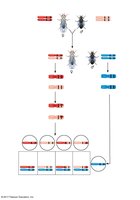
Concept 15.4: Chromosomal Alterations and Genetic Disorders
Alterations of Chromosome Number
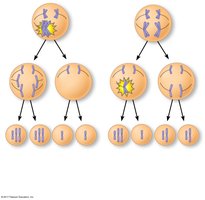
Errors during meiosis, such as nondisjunction, can lead to abnormal chromosome numbers (aneuploidy).
Nondisjunction: Failure of homologous chromosomes or sister chromatids to separate.
Aneuploidy: Presence of an abnormal number of chromosomes.
Monosomy: One chromosome missing.
Trisomy: One extra chromosome.
Human Disorders Due to Aneuploidy
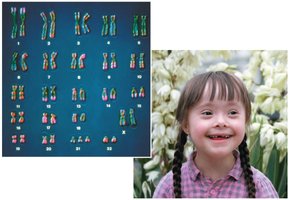
Some aneuploid conditions are viable and result in characteristic syndromes.
Down syndrome (Trisomy 21): Three copies of chromosome 21.
Klinefelter syndrome (XXY): Extra X chromosome in males.
Turner syndrome (X0): Missing X chromosome in females.
Polyploidy: More than two complete sets of chromosomes, common in plants.
Alterations of Chromosome Structure
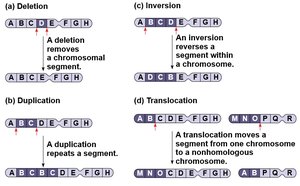
Chromosome breakage can lead to structural changes: deletion, duplication, inversion, and translocation.
Deletion: Loss of a chromosome segment.
Duplication: Repetition of a segment.
Inversion: Reversal of a segment within a chromosome.
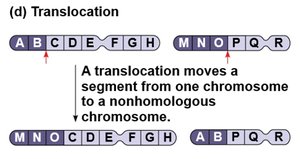
Translocation: Movement of a segment to a nonhomologous chromosome.
Disorders Caused by Structural Alterations
Specific structural changes can cause genetic disorders.
Cri du chat syndrome: Deletion in chromosome 5, leading to intellectual disability and a distinctive cry.
Chronic myelogenous leukemia (CML): Caused by a reciprocal translocation between chromosomes 9 and 22 (Philadelphia chromosome).
Summary Table: Types of Chromosomal Alterations
Type | Description | Example Disorder |
|---|---|---|
Aneuploidy | Abnormal number of chromosomes | Down syndrome, Turner syndrome |
Polyploidy | More than two sets of chromosomes | Common in plants |
Deletion | Loss of chromosome segment | Cri du chat syndrome |
Duplication | Repeat of chromosome segment | Some cancers |
Inversion | Reversal of segment | Usually no disorder |
Translocation | Segment moves to another chromosome | CML |
Key Equations
Recombination frequency:
Conclusion
The chromosomal basis of inheritance explains how genes are transmitted from parents to offspring and how chromosomal changes can lead to genetic disorders. Understanding these principles is fundamental to genetics and modern biology.
