 Back
The Discovery and Structure of DNA: Foundations of Molecular Genetics
Study Guide - Smart Notes
 Tailored notes based on your materials, expanded with key definitions, examples, and context.
Genetics: Historical Foundations and the Discovery of DNA
Early Theories and the Nature of Hereditary Material
The study of genetics began with early theorists who sought to understand the laws governing inheritance. The rediscovery of Mendelian genetics in 1900, alongside advances in microscopy and chromosomal visualization, set the stage for identifying DNA as the hereditary material. Early geneticists established that DNA and RNA are molecules of heredity, containing the necessary and sufficient information to perpetuate life.
Genetic Material Properties: Must be stable, capable of replication, contain information specifying phenotype, and allow for variability.
Chromosomal Theory: Chromosomes carry genetic material, correlating with inheritance patterns.
Transforming Principle: Experiments showed that DNA from dead cells could transform living cells, proving DNA's role in heredity.
Attributes of Heritable Material
Stability: Genetic material must persist through generations.
Replication: Must be copied accurately for inheritance.
Information Content: Specifies organismal form and function.
Variability: Allows for genetic diversity and evolution.
The Race to Discover the Structure of DNA
Key Scientists and Their Contributions
The elucidation of DNA's structure was a competitive and collaborative effort involving several scientists:
Linus Pauling: Proposed a triple helix model for DNA, based on his work with protein structures.
Maurice Wilkins: Used X-ray diffraction to study DNA.
James Watson and Francis Crick: Developed the correct double helix model, integrating data from others.
Rosalind Franklin: Produced high-quality X-ray diffraction images, crucial for understanding DNA's 3D structure.
X-ray Diffraction and Photo 51
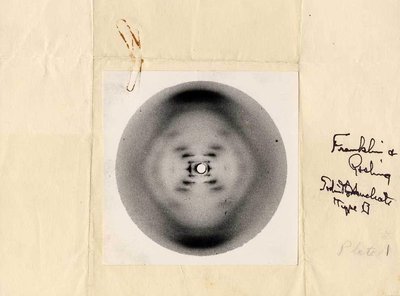
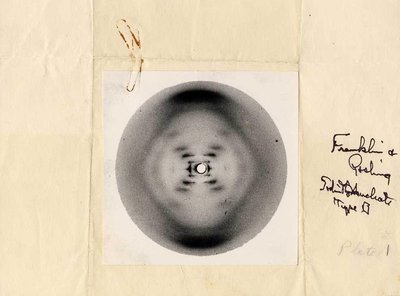
X-ray diffraction was the key technique used to visualize DNA's structure. Rosalind Franklin's "Photo 51" provided critical evidence for the helical nature of DNA.
Photo 51: Revealed the double helix structure through indirect imaging.
Collaboration and Controversy: Franklin's data was shared with Watson and Crick without her knowledge, leading to the final model.
X-ray Diffraction Technique
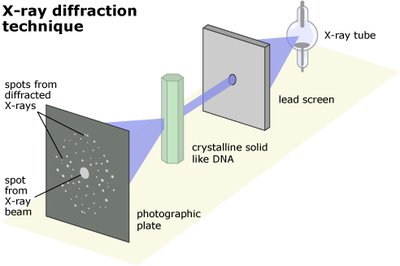
X-ray diffraction involves directing X-rays at a crystalline sample (such as DNA), then capturing the pattern of diffracted rays on a photographic plate. This pattern reveals the molecular structure.
Crystalline DNA: Produces distinct diffraction patterns.
Interpretation: Patterns are analyzed to deduce the arrangement of atoms.
Chargaff's Rules and Base Composition
Ernst Chargaff's Findings
Ernst Chargaff developed methods to purify and quantify nucleic acid components, leading to two key rules:
Base Pair Equality: The amount of adenine (A) equals thymine (T), and guanine (G) equals cytosine (C).
Species-Specific Composition: The relative proportions of A, T, G, and C vary between species.
Chargaff's Rules:
The Double Helix Model of DNA
Watson and Crick's Theoretical Model
Watson and Crick integrated X-ray diffraction data and Chargaff's rules to propose the double helix structure of DNA. The model consists of two antiparallel strands forming a right-handed helix, with a sugar-phosphate backbone and nitrogenous bases paired in the interior.
Sugar-Phosphate Backbone: Provides structural stability.
Base Pairing: A-T and G-C pairs held together by hydrogen bonds.
Antiparallel Strands: Strands run in opposite directions (5' to 3' and 3' to 5').
DNA Structure Equation:
Modern Visualization and Molecular Genetics
Direct Imaging of DNA
Advances in electron microscopy now allow direct visualization of DNA, confirming its double helical structure.
Electron Micrograph: Shows interwoven double helical fibers.
Birth of Molecular Genetics and Genetic Engineering
The discovery of DNA's structure led to the birth of molecular genetics and genetic engineering. Unique microorganisms, such as oil-eating bacteria, have been developed using genetic engineering techniques, demonstrating the practical applications of manipulating genetic material.
Genetically Engineered Microorganisms: Contain multiple plasmids specifying separate degradative pathways.
Applications: Bioremediation, drug resistance, and industrial processes.
Summary Table: Key Events in the Discovery of DNA Structure
Year | Event | Scientist(s) |
|---|---|---|
1858 | Theory of Evolution | Charles Darwin |
1865 | Laws of Inheritance | Gregor Mendel |
1900 | Rediscovery of Genetics | Multiple |
1940s-50s | Race to Discover DNA Structure | Pauling, Wilkins, Franklin, Watson, Crick |
1953 | Double Helix Model Proposed | Watson & Crick |
1972 | First Genetically Engineered Life-form | Chakrabarti |
Conclusion
The discovery of DNA's structure revolutionized biology, providing a molecular basis for heredity and enabling the development of molecular genetics and biotechnology. Understanding the properties, structure, and function of DNA is fundamental to all areas of biology.
