 Back
BackThe Discovery of DNA as the Genetic Material
Study Guide - Smart Notes
 Tailored notes based on your materials, expanded with key definitions, examples, and context.
DNA as the Genetic Material
Historical Context and the Search for Genetic Material
Early in the 20th century, scientists debated whether DNA or proteins served as the genetic material. Proteins, with their structural diversity, were initially favored, but pivotal experiments with bacteria and viruses shifted consensus toward DNA.
Evidence That DNA Can Transform Bacteria
Griffith's Transformation Experiment
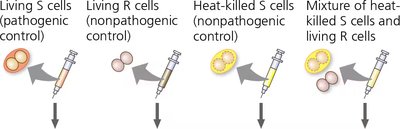
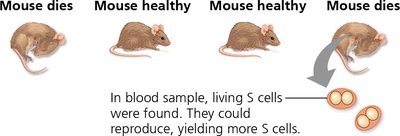
Frederick Griffith's 1928 experiment with Streptococcus pneumoniae demonstrated that a heritable substance could transform nonpathogenic bacteria into pathogenic forms. He worked with two strains: the smooth (S) strain, which is pathogenic due to its protective capsule, and the rough (R) strain, which is nonpathogenic.
Key Point 1: Mixing heat-killed S cells with living R cells resulted in the transformation of R cells into pathogenic S cells.
Key Point 2: The trait of pathogenicity was inherited by subsequent generations, indicating a genetic change.
Definition: Transformation is a change in genotype and phenotype due to assimilation of external DNA by a cell.
Example: Griffith's experiment is a classic demonstration of transformation in bacteria.
Evidence That Viral DNA Can Program Cells
Bacteriophage Experiments
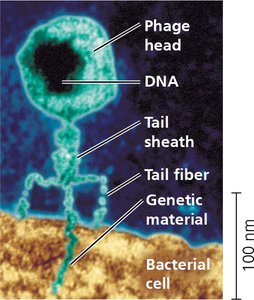
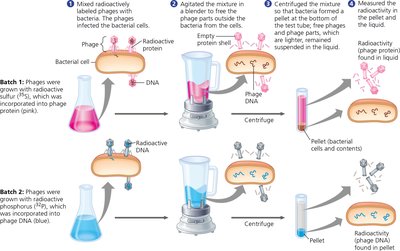
Bacteriophages (phages) are viruses that infect bacteria. They consist of DNA (or RNA) enclosed in a protein coat. The Hershey-Chase experiment (1952) used phages to show that DNA, not protein, is the genetic material injected into bacteria to direct viral replication.
Key Point 1: Phages labeled with radioactive phosphorus (DNA marker) transferred radioactivity into bacteria, while those labeled with radioactive sulfur (protein marker) did not.
Key Point 2: Only DNA entered the bacterial cells and directed the production of new phages.
Definition: Bacteriophage is a virus that infects bacteria, used as a model in molecular genetics.
Example: The Hershey-Chase experiment provided strong evidence that DNA is the hereditary material.
Structure of DNA
DNA as a Polymer of Nucleotides
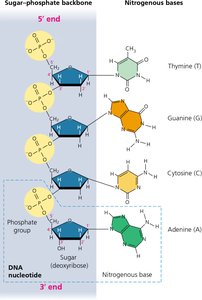
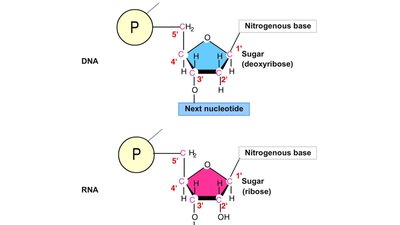
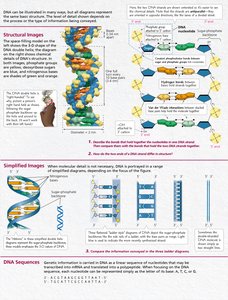
DNA is a polymer composed of nucleotide monomers, each consisting of a nitrogenous base, a deoxyribose sugar, and a phosphate group. The nucleotides are linked by phosphodiester bonds, forming a sugar-phosphate backbone with protruding bases.
Key Point 1: The four nitrogenous bases in DNA are adenine (A), thymine (T), guanine (G), and cytosine (C).
Key Point 2: The backbone has directionality, with a 5' end (phosphate group) and a 3' end (hydroxyl group).
Example: The structure of a DNA strand is essential for its replication and function.
Chargaff's Rules
Base Composition and Species Variation
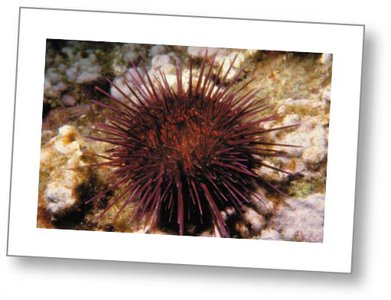
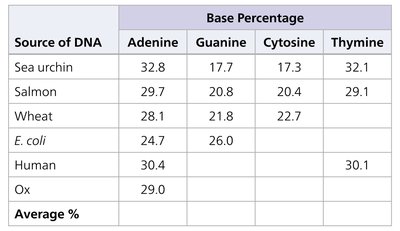
Erwin Chargaff discovered that DNA composition varies between species, but the amount of adenine always equals thymine, and guanine equals cytosine. These findings, known as Chargaff's rules, were critical for understanding DNA structure.
Key Point 1: Chargaff's Rule 1: DNA base composition varies between species.
Key Point 2: Chargaff's Rule 2: In any species, the amount of A = T and G = C.
Example: The table below shows base percentages in various organisms, illustrating Chargaff's rules.
Source of DNA | Adenine | Guanine | Cytosine | Thymine |
|---|---|---|---|---|
Sea urchin | 32.8 | 17.7 | 17.3 | 32.1 |
Salmon | 29.7 | 20.8 | 20.4 | 29.1 |
Wheat | 28.1 | 21.8 | 22.7 | ? |
E. coli | 24.7 | 26.0 | ? | ? |
Human | 30.4 | ? | ? | 30.1 |
Ox | 29.0 | ? | ? | ? |
Average % |
Discovery of the Double Helix
X-ray Crystallography and Model Building
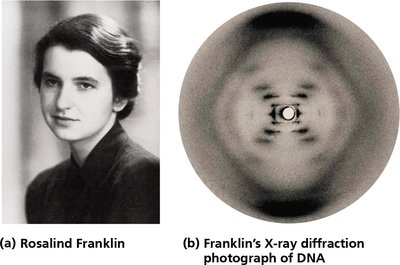
Rosalind Franklin's X-ray diffraction images revealed that DNA is helical and suggested its dimensions. Watson and Crick used these data, along with Chargaff's rules, to build a double helix model with antiparallel sugar-phosphate backbones and specific base pairing.
Key Point 1: The double helix consists of two antiparallel strands twisted around each other.
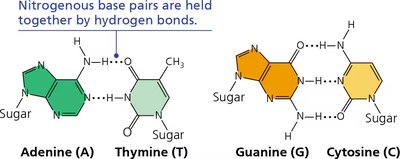
Key Point 2: The bases pair specifically: A with T (via two hydrogen bonds), and G with C (via three hydrogen bonds).
Example: The X-ray diffraction photo provided the critical evidence for the helical structure.
Base Pairing and the Double Helix
Specificity of Base Pairing
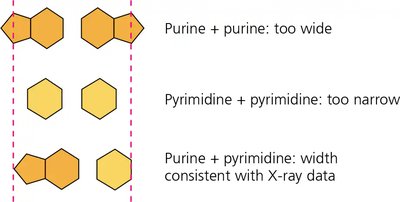
The width of the double helix is consistent only if a purine (A or G) pairs with a pyrimidine (T or C). This specificity is dictated by hydrogen bonding and the molecular structure of the bases.
Key Point 1: Purine-purine pairs are too wide; pyrimidine-pyrimidine pairs are too narrow; purine-pyrimidine pairs fit the helix.
Key Point 2: The base-pairing rules explain Chargaff's findings and ensure accurate DNA replication.
Summary Table: Key Experiments and Discoveries
Experiment/Scientist | Discovery |
|---|---|
Griffith (1928) | Transformation in bacteria; evidence for a heritable substance |
Avery, MacLeod, McCarty (1944) | Identified DNA as the transforming substance |
Hershey & Chase (1952) | DNA, not protein, is the genetic material in phages |
Chargaff (1950) | Base composition rules (A=T, G=C) |
Franklin & Wilkins (1952) | X-ray diffraction evidence for helical structure |
Watson & Crick (1953) | Double helix model of DNA |
Conclusion
The discovery of DNA as the genetic material and the elucidation of its double helix structure were foundational to modern biology. These advances explained how genetic information is stored, replicated, and transmitted across generations, setting the stage for molecular genetics and biotechnology.
