 Back
The Diversity of Plants: Evolution, Adaptations, and Ecological Roles
Study Guide - Smart Notes
 Tailored notes based on your materials, expanded with key definitions, examples, and context.
Chapter 22: The Diversity of Plants
Key Features of Plants
Plants are a diverse group of organisms that share several defining characteristics, setting them apart from other life forms. Understanding these features is essential for grasping plant biology and evolution.
Photosynthesis: All plants are photosynthetic, using the pigment chlorophyll to capture light energy and convert it into chemical energy. This process is fundamental for life on Earth as it produces oxygen and organic compounds.
Multicellular Embryos: Plants develop multicellular embryos that are retained and nourished by the parent plant, a trait not found in photosynthetic protists.
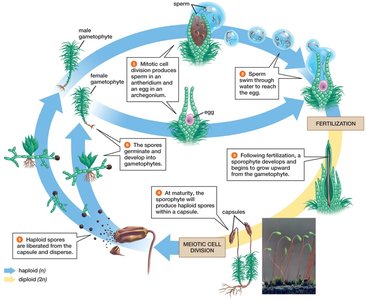
Alternation of Generations: Plants exhibit a life cycle known as alternation of generations, involving both multicellular haploid (gametophyte) and diploid (sporophyte) stages.
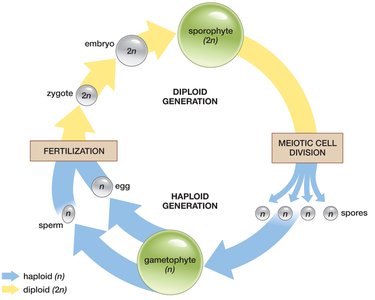
Example: Mosses, ferns, and flowering plants all display alternation of generations, though the dominant stage varies among groups.
How Have Plants Evolved?
The evolutionary history of plants reveals a series of adaptations that enabled the transition from aquatic to terrestrial environments. Plants form a clade within the green algae, specifically the charophytes.
Common Ancestry: Plants and charophytes share traits such as starch storage, cellulose cell walls, and chlorophyll a and b.
Transition to Land: Early plants evolved from aquatic ancestors, gaining advantages such as increased sunlight and access to new nutrients, but also facing challenges like desiccation and the need for structural support.
Key Adaptations:
Roots: Anchor plants and absorb water/nutrients.
Cuticle: A waxy layer that prevents water loss.
Stomata: Pores for gas exchange that can close to conserve water.
Vascular Tissues: Xylem (transports water/minerals) and phloem (transports sugars).
Lignin: Provides rigidity and support.
Pollen and Seeds: Enable reproduction without water and protect embryos.
Flowers and Fruits: Enhance pollination and seed dispersal.
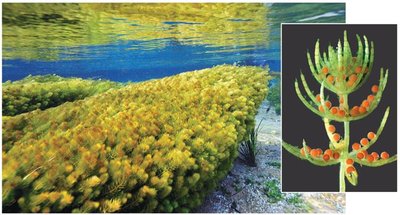
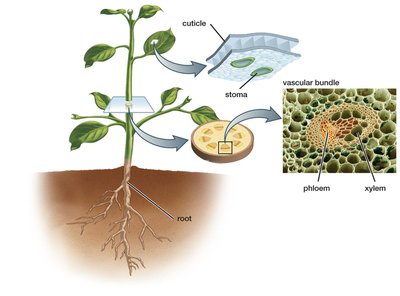
Example: The evolution of pollen allowed seed plants to reproduce in dry environments, while flowers and fruits increased reproductive success through animal interactions.
Major Groups of Plants
Plant diversity is organized into several major groups, each with unique adaptations and evolutionary histories.
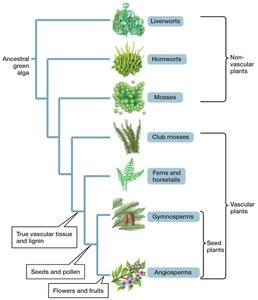
Nonvascular Plants (Bryophytes): Include liverworts, hornworts, and mosses. They lack true roots, stems, and leaves, and require moist environments for reproduction.
Vascular Plants (Tracheophytes): Possess vascular tissues (xylem and phloem) and are divided into seedless and seed plants.
Seedless Vascular Plants: Club mosses, horsetails, and ferns. They reproduce via spores and require water for fertilization.
Seed Plants: Include gymnosperms (nonflowering) and angiosperms (flowering plants). They reproduce using seeds and pollen, allowing colonization of diverse terrestrial habitats.
Nonvascular Plants
Liverworts: Lobed, liver-shaped gametophytes; abundant in moist habitats.
Hornworts: Spiky, hornlike sporophytes; also found in moist environments.
Mosses: Most diverse and widespread; can survive desiccation and form peat in northern regions.
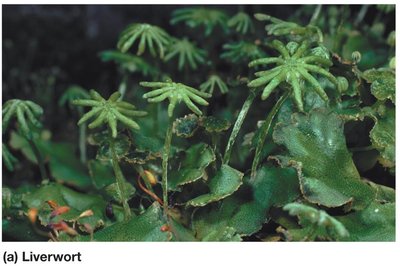
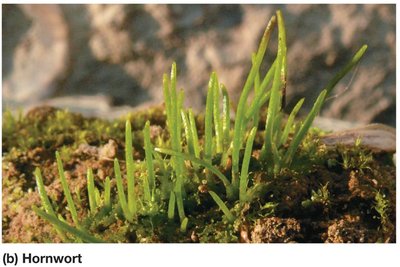
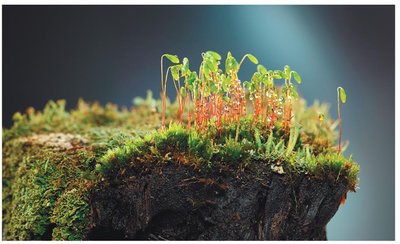
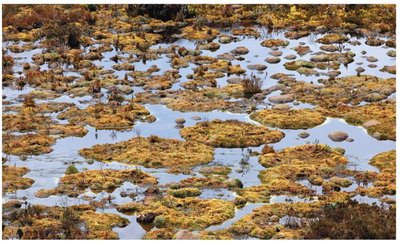
Reproduction: Nonvascular plants have enclosed reproductive structures (archegonia and antheridia) and require water for sperm to reach eggs. The sporophyte remains attached to the gametophyte.
Seedless Vascular Plants
Club Mosses: Small, scalelike leaves; not true mosses.
Horsetails: Reduced leaves, silica in cell walls, only one genus (Equisetum).
Ferns: Broad leaves, most diverse group of seedless vascular plants; can be tree-sized in the tropics.
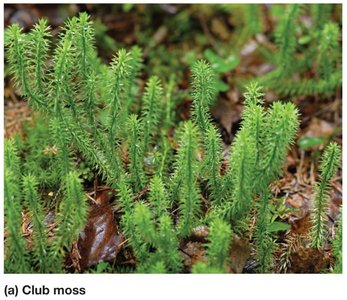
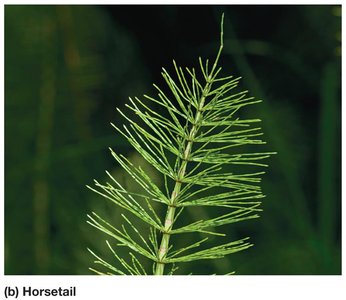
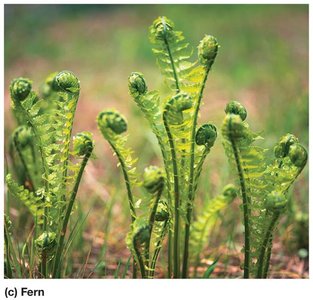
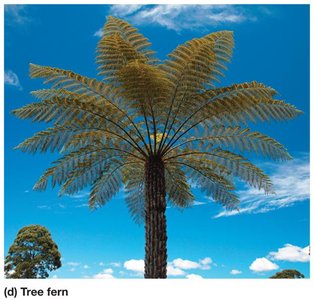
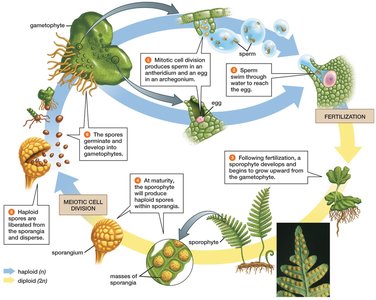
Reproduction: Ferns and their relatives produce spores in sporangia. Gametes are produced on small gametophytes, and fertilization requires water. The sporophyte grows from the gametophyte.
Seed Plants
Gymnosperms: Nonflowering seed plants (e.g., conifers, cycads, ginkgoes, gnetophytes). Seeds are not enclosed in fruits.
Angiosperms: Flowering plants; seeds are enclosed in fruits. Most diverse and ecologically dominant group.
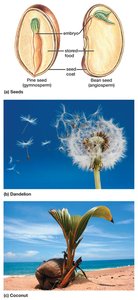
Seed Structure: Seeds contain an embryonic sporophyte, a food supply, and a protective coat. They enable plants to survive harsh conditions and disperse widely.
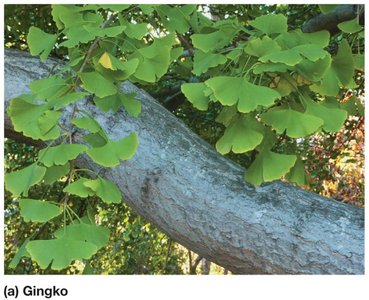
Gymnosperm Examples: Ginkgo (Ginkgo biloba), cycads, conifers (pines, firs, spruces), and gnetophytes (e.g., Ephedra, Welwitschia).
Angiosperms (Flowering Plants)
Flowers: Specialized reproductive structures that attract pollinators and facilitate fertilization.
Fruits: Develop from the ovary and aid in seed dispersal by attracting animals or using wind/water.
Broad Leaves: Increase photosynthetic capacity but are more susceptible to herbivory, leading to the evolution of physical and chemical defenses.
How Plants Affect Other Organisms
Plants play essential ecological and economic roles, supporting life on Earth in numerous ways.
Primary Producers: Plants capture solar energy and form the base of terrestrial food webs.
Atmosphere Regulation: Plants produce oxygen and remove carbon dioxide through photosynthesis.
Soil Formation and Protection: Plant material decomposes to form soil, and roots prevent erosion.
Water Regulation: Plants retain water in ecosystems, reduce runoff, and help prevent flooding.
Human Uses: Plants provide food, shelter, fuel, medicines, and aesthetic value.
Examples: Aspirin (from willow bark), codeine, morphine, digoxin, Taxol, and vinblastine are all plant-derived medicines. Wood and coal are plant-based fuels, and many spices and stimulants are plant chemicals.
Summary Table: Major Plant Groups and Key Features
Group | Vascular Tissue | Seeds | Flowers/Fruits | Dominant Generation | Examples |
|---|---|---|---|---|---|
Nonvascular Plants | No | No | No | Gametophyte | Mosses, Liverworts, Hornworts |
Seedless Vascular Plants | Yes | No | No | Sporophyte | Ferns, Club Mosses, Horsetails |
Gymnosperms | Yes | Yes | No | Sporophyte | Pines, Ginkgo, Cycads |
Angiosperms | Yes | Yes | Yes | Sporophyte | Flowering plants (roses, grasses, oaks) |
Additional info: The alternation of generations is a unifying theme in plant life cycles, but the prominence of the gametophyte or sporophyte varies among groups. The evolutionary trend is toward a dominant sporophyte and reduced gametophyte.
