 Back
The Diversity of Prokaryotes and Viruses: Structure, Function, and Impact
Study Guide - Smart Notes
 Tailored notes based on your materials, expanded with key definitions, examples, and context.
The Diversity of Prokaryotes and Viruses
Overview
This chapter explores the diversity, structure, and ecological roles of prokaryotes (Bacteria and Archaea) and non-living infectious agents (viruses, viroids, and prions). It covers their classification, survival strategies, reproduction, and their profound effects on humans and the biosphere.
Members of the Domains Archaea and Bacteria
Characteristics of Prokaryotes
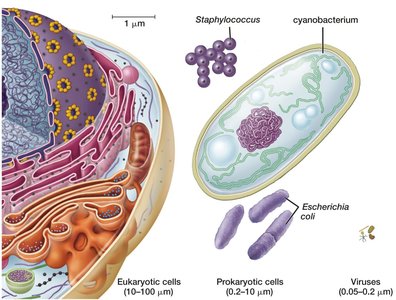
Prokaryotes are single-celled organisms lacking membrane-bound organelles.
They were Earth's first organisms and dominated life for over 1.5 billion years.
Prokaryotes are extremely abundant, inhabiting diverse environments including the human body.
Typical size: 0.2–10 micrometers in diameter.
Three common shapes:
Spherical (cocci)
Rod-like (bacilli)
Corkscrew-shaped (spirilla/spirochetes)
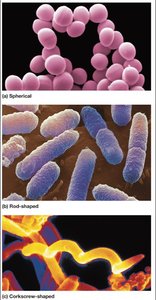
Domains: Bacteria vs. Archaea
Bacteria and Archaea are two of the three domains of life, both consisting entirely of prokaryotes.
Despite superficial similarities, they have significant structural and biochemical differences.
Feature | Archaea | Bacteria |
|---|---|---|
Peptidoglycan in cell wall | Absent | Present |
Membrane lipid structure | Branched hydrocarbons | Unbranched hydrocarbons |
Histone proteins with DNA | Present | Absent |
Introns | Present in some genes | Absent |
RNA polymerase | Several types | One type |
Initiator amino acid for protein synthesis | Methionine | Formylmethionine |
Additional info: Histones are proteins that help package DNA; introns are non-coding regions in genes; RNA polymerase synthesizes RNA from DNA.
Classification and Diversity
Classification is based on DNA sequence data, cell shape, locomotion, pigments, nutrient requirements, colony appearance, and Gram staining.
Major bacterial clades include Cyanobacteria (photosynthetic), while major archaeal clades include Crenarchaeota (thermophiles) and Euryarchaeota (methanogens).
Prokaryotic evolutionary history is difficult to trace due to frequent mutations and a sparse fossil record.
How Prokaryotes Survive and Reproduce
Adaptations for Survival
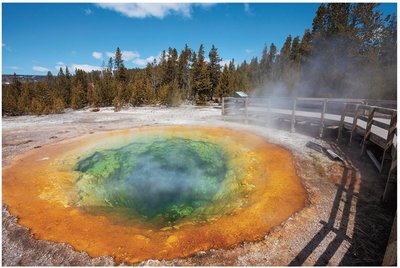
Prokaryotes have flexible metabolisms, allowing survival in extreme environments (deep ocean vents, arctic ice, hot springs).
Some are motile, using flagella for movement. Bacterial and archaeal flagella differ in structure and composition.
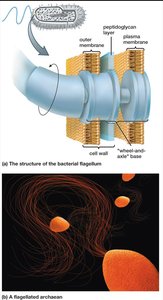
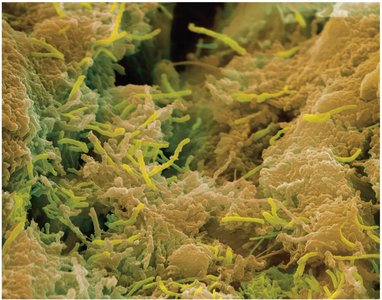
Biofilms and Quorum Sensing
Many prokaryotes form biofilms—communities of cells embedded in a protective slime.
Quorum sensing is a process where prokaryotes communicate via signaling molecules to coordinate behavior based on population density.
Biofilms protect against disinfectants and antibiotics; dental plaque is a common example.
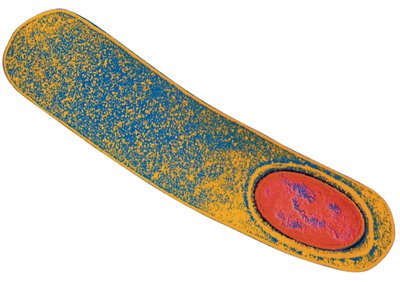
Endospores
Some bacteria form endospores—dormant, tough structures that survive extreme conditions (heat, desiccation).
Endospores can remain viable for millions of years and resume activity when conditions improve.
Habitats and Metabolism
Prokaryotes inhabit nearly every environment, including extreme heat, pressure, cold, and chemical conditions.
Metabolic diversity:
Anaerobes: Do not require oxygen; some are poisoned by it.
Aerobes: Require oxygen.
Some can switch between aerobic and anaerobic metabolism.
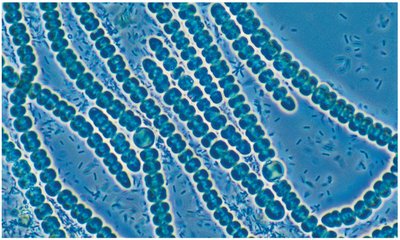
Photosynthetic bacteria (e.g., cyanobacteria) use sunlight; some use H2S instead of water.
Others extract energy from organic or inorganic molecules (e.g., petroleum, ammonia, iron).
Reproduction and Genetic Exchange
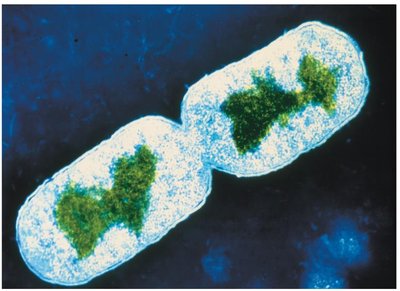
Prokaryotes reproduce asexually by binary fission, producing genetically identical cells.
Rapid division (as fast as every 20 minutes) enables quick evolution.
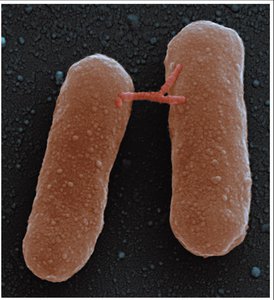
Genetic variation is introduced by conjugation—transfer of DNA (often plasmids) between cells via a cytoplasmic bridge.
How Prokaryotes Affect Humans and Other Organisms
Beneficial Roles
Prokaryotes aid in animal nutrition (e.g., cellulose digestion in herbivores).
Used in food production (cheese, yogurt) and synthesize vitamins (K, B12) in the human gut.
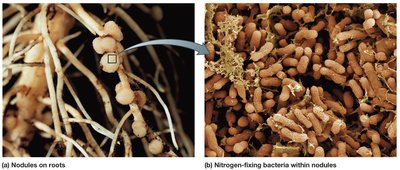
Essential for nitrogen fixation—conversion of atmospheric N2 to ammonium for plant use, especially in legumes.
Act as decomposers, recycling nutrients from dead organisms and waste.
Used in bioremediation to clean up pollutants (e.g., oil spills).
Pathogenic Prokaryotes
Some bacteria are pathogenic, causing diseases by producing toxins (e.g., tetanus, botulism, plague, Lyme disease, cholera).
Pathogenic archaea have not been identified.
Emerging and re-emerging diseases include Lyme disease, gonorrhea, syphilis, and cholera.
Viruses, Viroids, and Prions
Viruses
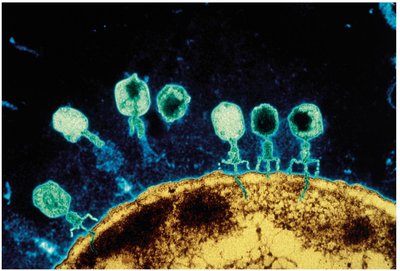
Viruses are nonliving infectious particles, not considered alive by most biologists.
Lack cellular structure, metabolism, and independent reproduction.
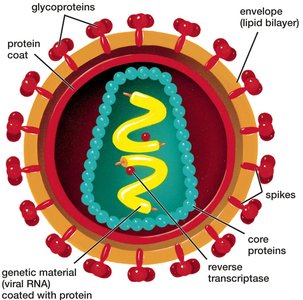
Consist of genetic material (DNA or RNA) surrounded by a protein coat; some have an additional envelope.
Extremely small (0.05–0.2 μm), much smaller than prokaryotic cells.
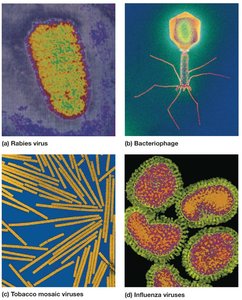
Come in a variety of shapes and infect specific hosts (host specificity).
Viral Reproduction and Disease
Viruses reproduce only inside host cells, hijacking cellular machinery to produce new viruses.
Some viruses infect bacteria (bacteriophages), others infect plants or animals.
Diseases caused by viruses include the common cold, herpes, AIDS, and some cancers.
Antibiotics are ineffective against viruses; antiviral drugs target viral enzymes but resistance evolves rapidly.
Viroids
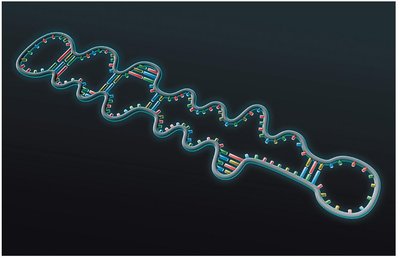
Viroids are infectious RNA molecules lacking a protein coat.
Cause plant diseases (e.g., potato spindle tuber disease) but do not infect animals.
Prions
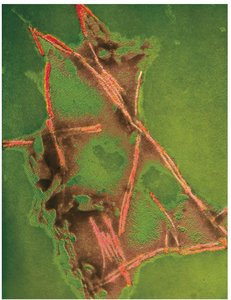
Prions are infectious proteins that cause degenerative nervous system diseases in mammals (e.g., kuru, scrapie).
Prions are misfolded versions of normal proteins (PrP) that induce other proteins to misfold.
They lack nucleic acids and replicate by altering normal proteins.
Summary Table: Key Differences Among Prokaryotes, Viruses, Viroids, and Prions
Feature | Bacteria | Archaea | Viruses | Viroids | Prions |
|---|---|---|---|---|---|
Cellular structure | Yes | Yes | No | No | No |
Genetic material | DNA | DNA | DNA or RNA | RNA | No |
Protein coat | No | No | Yes | No | No |
Metabolism | Yes | Yes | No | No | No |
Reproduction | Binary fission | Binary fission | Only in host cell | Only in host cell | Induces misfolding |
Diseases caused | Yes | Not known | Yes | Plants only | Mammals |
