 Back
20. The Diversity of Prokaryotes and Viruses: Structured Study Notes
Study Guide - Smart Notes
 Tailored notes based on your materials, expanded with key definitions, examples, and context.
The Diversity of Prokaryotes and Viruses
Members of the Domains Archaea and Bacteria
Prokaryotes are single-celled organisms that lack membrane-bound organelles. They were Earth's first life forms and remain abundant today, inhabiting diverse environments including the human body. Prokaryotes are classified into two domains: Bacteria and Archaea, which, despite superficial similarities, have distinct structural and biochemical characteristics.
Prokaryotic Cell Size: Typically 0.2–10 micrometers in diameter.
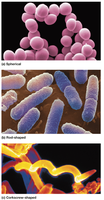
Common Shapes: Spherical (coccus), rod-like (bacillus), and corkscrew-shaped (spirillum).
Classification: Based on DNA sequence data, cell shape, locomotion, pigment, nutrient requirements, colony appearance, and Gram staining.
Major Groups: About 30 major groups in bacteria (e.g., Cyanobacteria) and 5 in archaea (e.g., Crenarchaeota, Euryarchaeota).
Evolutionary Challenges: Frequent mutations and sparse fossil record make tracing prokaryote evolution difficult.
Survival and Reproduction of Prokaryotes
Prokaryotes exhibit remarkable metabolic flexibility, enabling survival in extreme environments. They reproduce rapidly and can form protective structures to withstand adverse conditions.
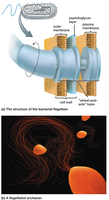
Motility: Many prokaryotes are motile, using flagella for movement. Bacterial flagella have a unique wheel-like structure, while archaeal flagella are thinner and structurally distinct.
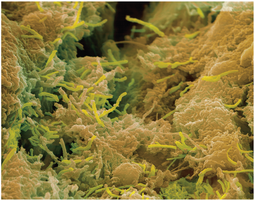
Biofilms: Prokaryotes can form biofilms—communities surrounded by protective slime—through quorum sensing, which alters behavior based on population density.
Endospores: Some bacteria form endospores, allowing survival in harsh conditions. Endospores can remain dormant for millions of years.
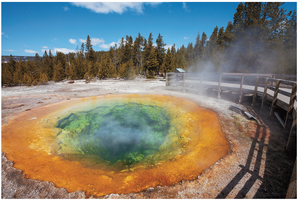
Habitat Specialization: Prokaryotes inhabit nearly every environment, from hot springs to human skin.
Metabolic Diversity: Includes anaerobic, aerobic, and photosynthetic species. Some use inorganic molecules for energy.
Reproduction: Most prokaryotes reproduce by binary fission, producing genetically identical cells. Under ideal conditions, division can occur every 20 minutes.
Genetic Exchange: DNA can be transferred via conjugation, often involving plasmids, leading to new genetic combinations.
Effects of Prokaryotes on Humans and Other Organisms
Prokaryotes are essential for nutrient cycling, animal nutrition, and environmental cleanup, but some are pathogenic and cause diseases.
Animal Nutrition: Bacteria in digestive tracts break down cellulose and produce vitamins.
Nitrogen Fixation: Nitrogen-fixing bacteria in soil and root nodules convert atmospheric nitrogen to forms usable by plants.
Decomposition: Prokaryotes recycle nutrients by decomposing organic matter.
Bioremediation: Certain bacteria break down pollutants, such as oil spills.
Pathogenic Bacteria: Some bacteria cause diseases (e.g., tetanus, botulism, plague, Lyme disease, cholera, gonorrhea, syphilis).
Viruses, Viroids, and Prions
Viruses, viroids, and prions are infectious agents that impact living organisms but are not considered alive. They lack cellular structure and metabolic capabilities.
Viruses: Consist of DNA or RNA surrounded by a protein coat; require host cells for reproduction; highly host-specific.
Viroids: Infectious RNA molecules without a protein coat; cause plant diseases.
Prions: Misfolded proteins that cause degenerative nervous system diseases in mammals.
Viral Structure: May include an envelope derived from host cell membrane.
Viral Replication: Host cell machinery is hijacked to produce new viruses.
Treatment Challenges: Viruses are resistant to antibiotics; antiviral drugs often have limited effectiveness due to rapid viral evolution.
Key Definitions
Prokaryote: A single-celled organism lacking a nucleus and membrane-bound organelles.
Binary Fission: Asexual reproduction in prokaryotes, producing identical offspring.
Biofilm: A community of microorganisms encased in a protective matrix.
Endospore: A dormant, tough, non-reproductive structure formed by some bacteria.
Conjugation: Transfer of genetic material between prokaryotes via direct contact.
Pathogen: An organism or agent that causes disease.
Virus: A nonliving infectious particle composed of genetic material and a protein coat.
Viroid: An infectious RNA molecule affecting plants.
Prion: An infectious protein causing neurodegenerative diseases.
Example Table: Differences Between Archaea and Bacteria
Feature | Bacteria | Archaea |
|---|---|---|
Cell Wall Composition | Peptidoglycan | No peptidoglycan |
Membrane Lipids | Fatty acids | Isoprene chains |
RNA Polymerase | One type | Several types |
Habitat | Wide range | Often extreme environments |
Pathogenicity | Many pathogenic species | No known pathogens |
Key Equations
Binary Fission:
Nitrogen Fixation:
Additional info:
Classification of prokaryotes is an ongoing process due to frequent mutations and limited fossil evidence.
Some prokaryotes can survive in extreme environments, such as hot springs and deep-sea vents, due to specialized adaptations.
