 Back
BackThe Eukaryotic Cell Cycle and Mitosis: Structure, Regulation, and Clinical Relevance
Study Guide - Smart Notes
 Tailored notes based on your materials, expanded with key definitions, examples, and context.
Cellular Reproduction and the Cell Cycle
Purpose and Importance of Cellular Reproduction
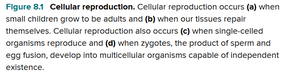
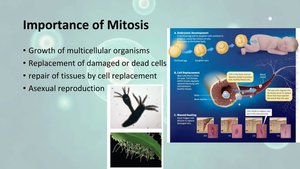
Cellular reproduction is essential for the growth, maintenance, and repair of all living organisms. It ensures the continuity of life by producing new cells from pre-existing ones. Cellular reproduction occurs in both multicellular and unicellular organisms, supporting development, tissue repair, and reproduction.
Growth: Enables organisms to increase in size by producing more cells.
Tissue Repair: Replaces damaged or dead cells to maintain tissue integrity.
Asexual Reproduction: Produces genetically identical offspring in unicellular organisms and some multicellular organisms.
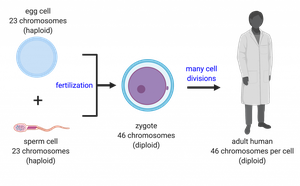
Sexual Reproduction: Generates gametes (sperm and egg) with half the genetic material, allowing genetic diversity.
Chromosomes, Chromatin, and Chromatids
Structure and Organization of Genetic Material
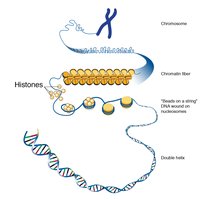
Genetic material in eukaryotic cells is organized into chromosomes, which are composed of DNA and proteins. The structure of DNA changes throughout the cell cycle to facilitate replication and segregation.
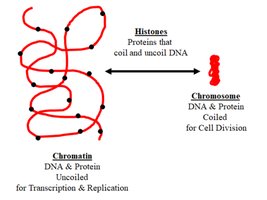
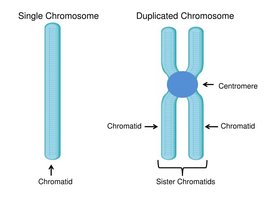
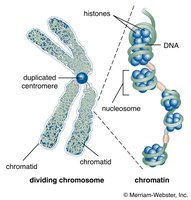
Chromatin: The relaxed, uncoiled form of DNA associated with histone proteins, present during interphase for gene expression and replication.
Chromosome: The highly condensed, coiled form of DNA visible during cell division, ensuring accurate segregation of genetic material.
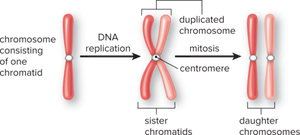
Chromatid: Each of the two identical DNA strands formed after DNA replication; sister chromatids are joined at the centromere until separated during mitosis.
Comparison Table: Chromatin, Chromosome, Chromatid
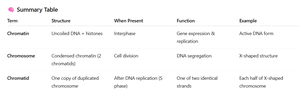
Term | Structure | When Present | Function | Example |
|---|---|---|---|---|
Chromatin | Uncoiled DNA + histones | Interphase | Gene expression & replication | Active DNA form |
Chromosome | Condensed chromatin (2 chromatids) | Cell division | DNA segregation | X-shaped structure |
Chromatid | One copy of duplicated chromosome | After DNA replication (S phase) | One of two identical strands | Each half of X-shaped chromosome |
Phases of the Eukaryotic Cell Cycle
Overview of the Cell Cycle
The cell cycle is an ordered sequence of events that leads to cell division and the production of two genetically identical daughter cells. It consists of interphase (G1, S, G2) and the M phase (mitosis and cytokinesis).
G1 Phase (First Gap): Cell grows, doubles organelles, and prepares for DNA synthesis. Some cells may enter G0 (non-dividing state).
S Phase (Synthesis): DNA replication occurs, forming sister chromatids.
G2 Phase (Second Gap): Cell synthesizes proteins required for mitosis, including microtubules for spindle formation.
M Phase (Mitosis and Cytokinesis): Chromosomes are separated and cytoplasm divides, producing two daughter cells.
Mitosis: Mechanism and Phases
Events of Mitosis
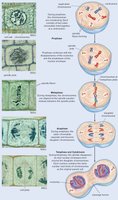
Mitosis is the process by which replicated chromosomes are equally distributed into two daughter nuclei. It consists of five subphases:
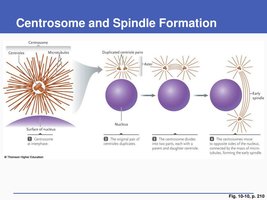
Prophase: Chromosomes condense, spindle apparatus forms from centrosomes.
Prometaphase: Nuclear envelope breaks down, spindle microtubules attach to kinetochores on chromosomes.
Metaphase: Chromosomes align at the metaphase plate, spindle fibers attach from opposite poles.
Anaphase: Cohesins split, sister chromatids are pulled to opposite poles by spindle fibers.
Telophase: New nuclear envelopes form, chromosomes decondense, mitosis is complete.
Cytokinesis
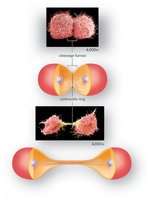
Cytokinesis is the division of the cytoplasm, resulting in two separate daughter cells. The mechanism differs between plant and animal cells:
Animal Cells: A contractile ring of actin and myosin filaments forms a cleavage furrow, pinching the cell in two.
Plant Cells: Vesicles from the Golgi apparatus form a cell plate, which develops into a new cell wall separating the daughter cells.
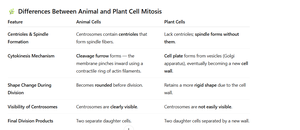
Comparison Table: Animal vs. Plant Cell Mitosis
Feature | Animal Cells | Plant Cells |
|---|---|---|
Centrosomes & Spindle Formation | Contain centrioles that form spindle fibers | Lack centrioles; spindle forms without centrioles |
Cytokinesis Mechanism | Cleavage furrow (contractile ring) | Cell plate (vesicles, new cell wall) |
Shape Change | Becomes rounded | Retains rigid shape |
Centrosome Visibility | Clearly visible | Not easily visible |
Final Products | Two separate daughter cells | Two daughter cells separated by new wall |
Regulation of the Cell Cycle
Cell Cycle Checkpoints
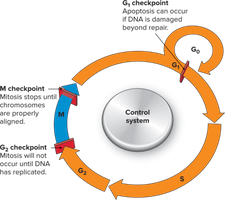
Cell cycle checkpoints are regulatory points that ensure the cell is ready to proceed to the next phase. They prevent the division of damaged or incomplete cells, maintaining genetic stability.
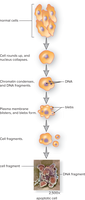
G1 Checkpoint: Checks for cell size, nutrients, growth signals, and DNA integrity. The p53 protein can pause the cycle for DNA repair or trigger apoptosis if damage is irreparable.
G2 Checkpoint: Ensures DNA replication is complete and undamaged before mitosis.
M Checkpoint (Spindle Checkpoint): Ensures all chromosomes are properly attached to spindle fibers before anaphase.
Internal and External Signals
Progression through the cell cycle is controlled by internal and external signals:
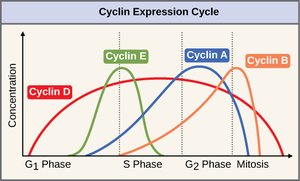
Internal Signals: Cyclins and cyclin-dependent kinases (Cdks) regulate the timing of cell cycle events. Cyclin levels fluctuate, activating Cdks at specific phases.
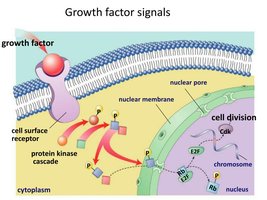
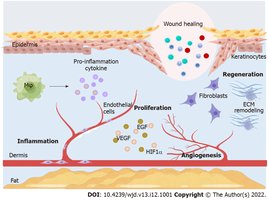
External Signals: Growth factors and hormones stimulate cell division in response to environmental cues (e.g., wound healing, hormonal regulation).
Contact Inhibition and Cell Aging
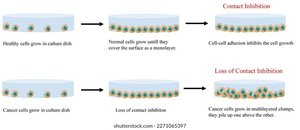
Contact Inhibition: Normal cells stop dividing when they touch neighboring cells, preventing overgrowth. Loss of contact inhibition is a hallmark of cancer cells.
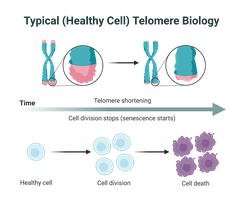
Cell Aging and Telomeres: Telomeres protect chromosome ends but shorten with each division, eventually leading to cell senescence or apoptosis.
When Cell Cycle Control Fails: Cancer
Mechanisms and Properties of Cancer
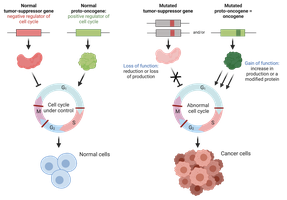
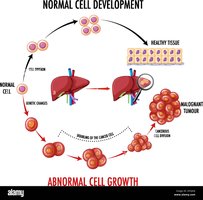
Cancer arises when cell cycle checkpoints fail, leading to uncontrolled cell division, tissue invasion, and metastasis. Cancer cells often have mutations that activate growth-promoting proteins or inactivate tumor suppressor genes.
Malignant Tumors: Invasive, can spread (metastasize) to other tissues.
Benign Tumors: Non-invasive, do not spread.
Genetic Defects: May involve oncogenes (promote division) or loss of tumor suppressors (e.g., p53).
Additional info: The cell cycle is a highly regulated process essential for organismal health. Disruption of regulatory mechanisms can lead to diseases such as cancer, highlighting the importance of understanding cell cycle control in biology and medicine.
