 Back
BackLec 27
Study Guide - Smart Notes
 Tailored notes based on your materials, expanded with key definitions, examples, and context.
Asexual and Sexual Reproduction
Overview of Asexual and Sexual Reproduction
Asexual and sexual reproduction are two fundamental modes by which organisms propagate their genetic material. Each method has distinct evolutionary, genetic, and ecological implications.
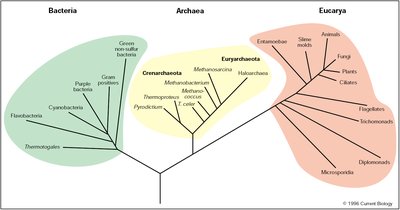
Asexual reproduction: Each individual passes 100% of their genes to each offspring. Common in bacteria, archaea, and many simple eukaryotes.
Sexual reproduction: Each individual passes 50% of their genes to each offspring, involving the fusion of gametes (syngamy).
Energetic costs: Meiosis (sexual) is 10-20 times slower and more energetically demanding than mitosis (asexual).
Mate searching: Sexual reproduction requires energy investment in finding mates, which is not necessary for asexual organisms.
Genetic risks: Recombination in sexual reproduction can lead to lethal mutations or sterility.
Modes of Asexual Reproduction
Binary fission: Bacteria, archaea, and many simple eukaryotes reproduce by copying their genetic material and splitting into two cells.
Viruses: Reproduce by hijacking host cell machinery to make copies of themselves.
Evolutionary Advantages and Disadvantages
Why Have Sex? The Evolution of Sexual Reproduction
Despite its costs, sexual reproduction is widespread due to several long-term evolutionary advantages.
Extinction rates: Higher in asexual organisms, suggesting sexual reproduction provides long-term survival benefits.
Diversification: Sexually reproducing species diversify more rapidly, adapting more efficiently to ecological niches.
Mutation accumulation: Asexual species are limited by the rate of beneficial mutations; deleterious mutations accumulate more readily (Muller’s Ratchet).
Genetic Mechanisms: Recombination and Selection
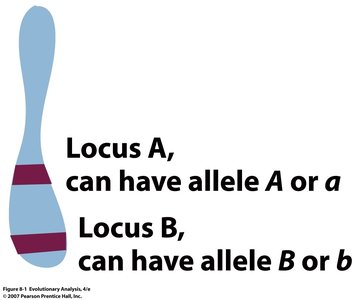
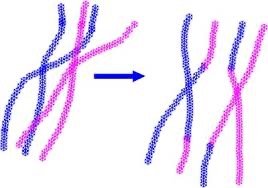
Sexual reproduction introduces genetic variation through recombination, which can bring together advantageous mutations and purge deleterious ones.
Recombination: Allows beneficial mutations from different chromosomes to combine in one individual, increasing adaptability.
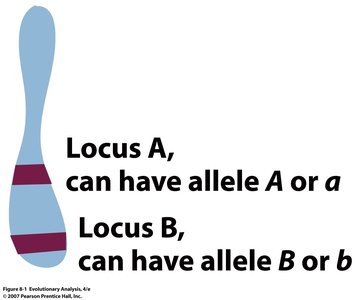
Epistasis: Interaction among multiple genes influences phenotype; recombination can break linkage disequilibrium.
Natural selection: More effective in sexual populations due to increased genetic variation.


Genetic Consequences: Mutation and Speciation
Asexual Reproduction | Sexual Reproduction | |
|---|---|---|
Mutation Pairing | Rare (μ * μ) | Less rare (μ * r) |
Deleterious Mutations | Accumulate | Purged via selection |
Extinction Rate | High | Low |
Speciation Rate | Low | High |
Sex Chromosomes and Dosage Compensation
Sex Chromosome Evolution
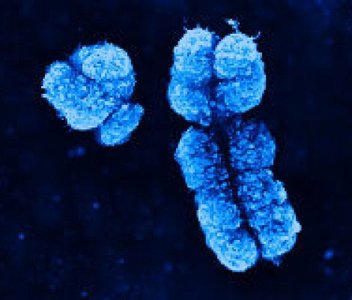
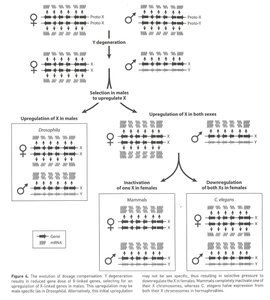
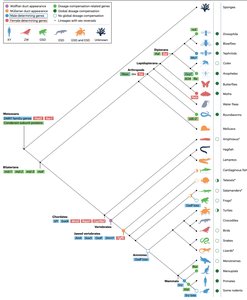
Sex chromosomes determine biological sex and exhibit unique evolutionary dynamics due to their inheritance patterns and lack of recombination in the heterogametic sex.
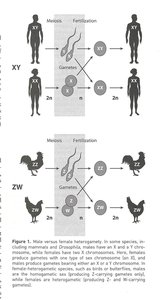
Heterogametic sex: The sex with two different sex chromosomes (e.g., XY in mammals, ZW in birds).
Degeneration: The chromosome found only in the heterogametic sex (Y or W) is haploid and degenerates over time due to lack of recombination.
Dosage compensation: Mechanisms evolve to balance gene expression between sexes due to unbalanced copy numbers.
Genetic Load and the Evolution of Sex
Muller’s Ratchet and Mutational Load
Muller’s Ratchet describes the irreversible accumulation of deleterious mutations in asexual populations, increasing the mutational load and reducing fitness over time.
Mutational load: The total number of deleterious mutations in a population.
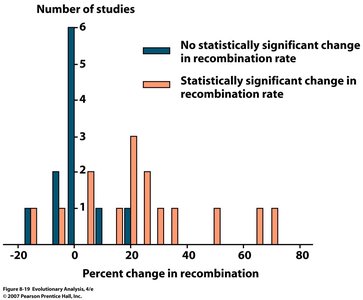
Selection and recombination: Artificial selection experiments show that selection can increase recombination rates, enhancing the purging of deleterious mutations.
Theories for the Maintenance of Sexual Reproduction
Selection Theory and the Red Queen Hypothesis
Several hypotheses explain the persistence of sexual reproduction despite its costs:
Selection theory: Environmental changes create selective pressures favoring recombination.
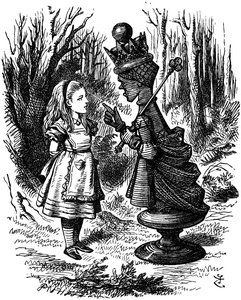
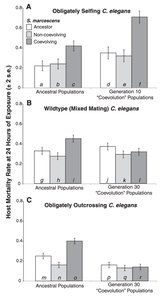
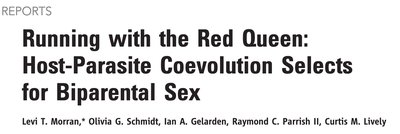
Red Queen Hypothesis: Organisms must continually adapt to keep pace with coevolving parasites, predators, and competitors. Sexual reproduction enables rapid adaptation to changing selective pressures.
Mechanisms and Consequences of Sexual Reproduction
Syngamy and Anisogamy
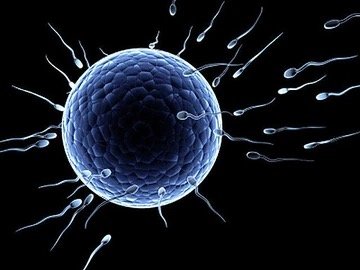
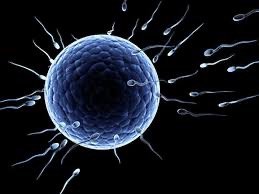
Sexual reproduction involves the fusion of haploid gametes (syngamy) to form diploid offspring. Anisogamy refers to the fusion of gametes of different sizes, typical in plants and animals.
Female gametes: Large, energetically expensive, and produced in limited numbers.
Male gametes: Small, energetically inexpensive, and produced in large numbers.
Sexual selection: Arises from differential investment in gametes, leading to competition for mates.
Energetic Investment and Reproductive Success
The energetic investment in gamete production and offspring care differs between males and females, influencing reproductive strategies and success.
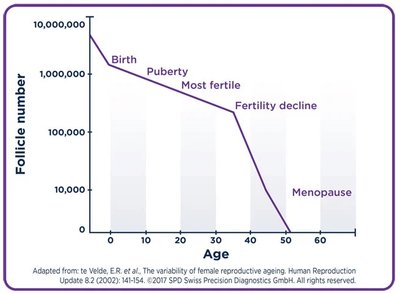
Females: Limited number of eggs, high energetic investment, and greater risk during reproduction.
Males: Large number of sperm, low energetic investment per gamete, and potential for high reproductive output.
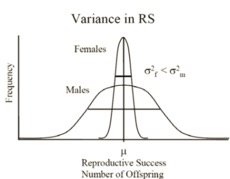
Variance in Reproductive Success
Male and female reproductive success can differ significantly, with males often exhibiting greater variance due to competition for mates.
Social Mating Systems
Social Structures and Reproductive Behavior
Social mating systems encompass the social structures and behaviors related to reproduction within animal groups, influencing patterns of mate choice, competition, and parental care.
