 Back
BackThe Evolution of Life: Prokaryotes, Eukaryotes, Plants, Fungi, and Animals
Study Guide - Smart Notes
 Tailored notes based on your materials, expanded with key definitions, examples, and context.
Major Episodes in the History of Life
Overview of Life's Timeline
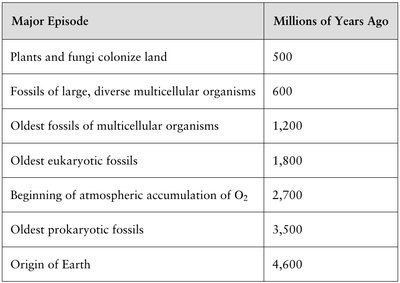
The history of life on Earth is marked by several major evolutionary milestones, each contributing to the diversity and complexity of organisms seen today. Understanding these episodes provides context for the evolution of prokaryotes, eukaryotes, plants, fungi, and animals.
Major Episode | Millions of Years Ago |
|---|---|
Plants and fungi colonize land | 500 |
Fossils of large, diverse multicellular organisms | 600 |
Oldest fossils of multicellular organisms | 1,200 |
Oldest eukaryotic fossils | 1,800 |
Beginning of atmospheric accumulation of O2 | 2,700 |
Oldest prokaryotic fossils | 3,500 |
Origin of Earth | 4,600 |
Prokaryotes: Bacteria and Archaea
Characteristics and Diversity
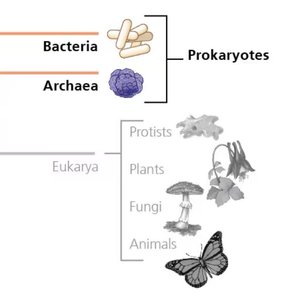
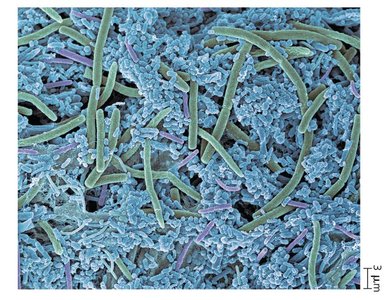
Prokaryotes, which include Bacteria and Archaea, are the most abundant and diverse forms of life on Earth. They lack a nucleus and membrane-bound organelles, and most have cell walls. Prokaryotes exhibit three common shapes: cocci (spherical), bacilli (rod-shaped), and spirals (including spirochetes). Although unicellular, they often form colonies or biofilms.
Microbiota: The community of microorganisms living in and on our bodies, playing essential roles in health and disease.
Biofilms: Organized colonies of prokaryotes attached to surfaces, communicating via chemical signals. Dental plaque is a common example.
Reproduction and Adaptations
Prokaryotes reproduce by binary fission, a process in which one cell divides into two. This rapid reproduction allows for quick accumulation of mutations, driving evolution. Under harsh conditions, some prokaryotes form endospores, which are highly resistant, dormant cells.
Ecological Impact
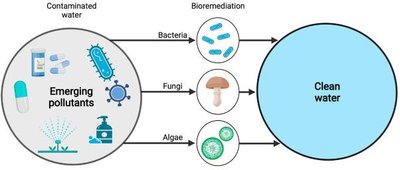
Prokaryotes are crucial for recycling chemical elements, breaking down organic waste, and decomposing dead organisms. They are also used in bioremediation—the use of organisms to remove pollutants from water, air, or soil.
Archaea: Extremophiles
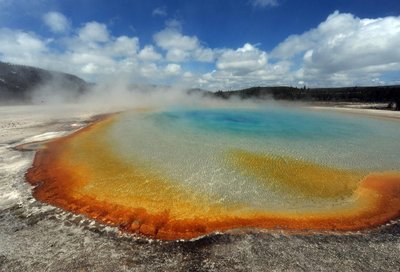
Archaea are known for surviving in extreme environments, such as hot springs, deep-ocean vents, and highly saline lakes. Types include halophiles (salt lovers) and methanogens (anaerobic, methane-producing organisms).
Pathogenic Prokaryotes
Some prokaryotes are pathogens, causing diseases in humans, animals, and plants. They may produce exotoxins (secreted proteins) or endotoxins (components of the outer membrane) that are harmful to hosts.
Eukarya: Protists, Plants, Fungi, and Animals
Origins of Eukaryotes and Protists
Eukaryotes evolved from ancestral prokaryotes through endosymbiosis, where small prokaryotes began living inside larger cells, eventually becoming organelles such as mitochondria. Protists are a diverse group of mostly unicellular eukaryotes, ancestral to plants, fungi, and animals.
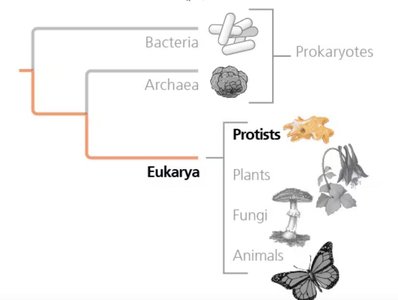
Protist Diversity and Nutrition
Protists exhibit various nutritional strategies:
Autotrophs: Produce food via photosynthesis (e.g., algae, cyanobacteria).
Heterotrophs: Obtain food by ingesting or absorbing organic material; some are parasites.
Protozoans
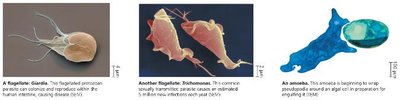
Flagellates: Move using flagella (e.g., Giardia, Trichomonas).
Amoebas: Move and feed using pseudopodia.
Apicomplexans: Parasitic, with specialized structures for host invasion (e.g., Plasmodium causes malaria).
Ciliates: Use cilia for movement and feeding (e.g., Paramecium).
Slime Molds
Plasmodial slime molds: Large, multinucleate masses that feed on decaying matter.
Cellular slime molds: Solitary amoeboid cells that aggregate under stress to form multicellular structures.
Unicellular and Colonial Algae
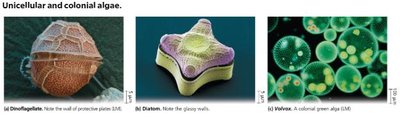
Photosynthetic protists and cyanobacteria are foundational to aquatic food chains. Major groups include dinoflagellates, diatoms, and green algae (unicellular and colonial forms).
Seaweeds
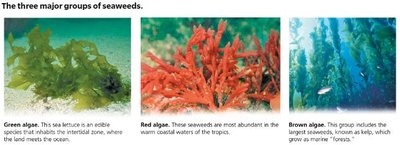
Seaweeds are large, multicellular marine algae classified by pigment type: green, red, and brown algae (kelp). They are not true plants but share similarities due to convergent evolution.
The Evolution of Plants
Terrestrial Adaptations
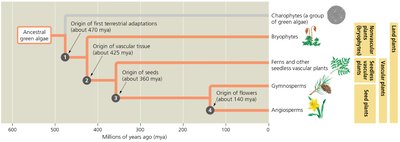
Plants are multicellular eukaryotes that perform photosynthesis and have adaptations for terrestrial life, including roots (for anchorage and nutrient absorption), shoots (stems and leaves for photosynthesis), and vascular tissue (for transport).
Major Steps in Plant Evolution
Bryophytes: Nonvascular, seedless plants (e.g., mosses).
Ferns: Vascular, seedless plants.
Gymnosperms: Seed plants (e.g., conifers).
Angiosperms: Flowering plants, the most diverse group.
Adaptations of Seed Plants
Reduction of the gametophyte generation
Development of pollen (male gametophyte) and seeds (embryo with food supply and protective coat)
Dispersal mechanisms: wind, animals
The Evolution of Fungi
Structure and Function
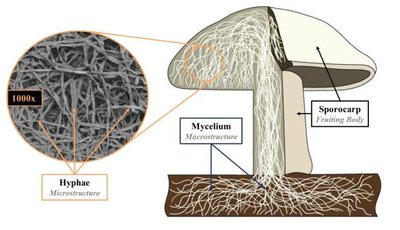
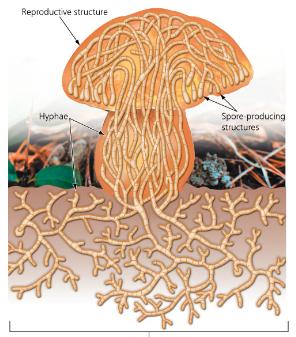
Fungi are multicellular eukaryotes that absorb nutrients from nonliving organic material. Their bodies are composed of threadlike filaments called hyphae, which form a network known as mycelium. Fungal cell walls contain chitin.
Reproduction
Fungi reproduce by releasing haploid spores, which may be produced sexually or asexually. Mushrooms are reproductive structures that arise from underground mycelium. Spores are dispersed by air or animals (e.g., truffles).
Ecological and Economic Importance
Principal decomposers in ecosystems
Parasitic species (about 30%)
Food production (cheese, yeast)
Medicinal value (antibiotics, potential anticancer drugs)
The Evolution of Animals
Basic Features and Development
Animals are eukaryotic, multicellular, heterotrophic organisms that digest food internally. Most have muscle and nerve cells, lack cell walls, and reproduce sexually. Animal development typically involves a blastula and gastrula stage, with some species undergoing metamorphosis.
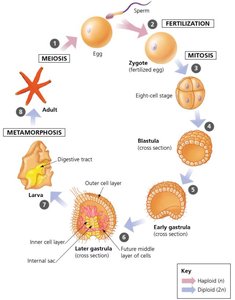
Cambrian Explosion and Animal Diversity
The Cambrian explosion (~540 million years ago) was a period of rapid diversification of animal body plans, as evidenced by the fossil record (e.g., Burgess Shale). Hypotheses for this event include increased oxygen levels and predator-prey interactions.
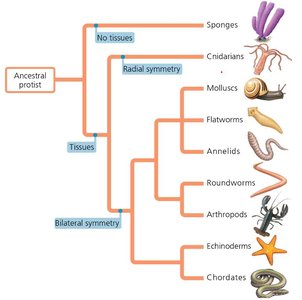
Animal Phylogeny and Major Branching Points
Tissue development
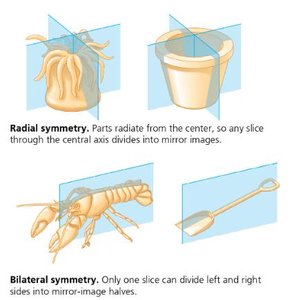
Body symmetry: Radial vs. bilateral
Body cavities
Embryonic development patterns
Invertebrates
Invertebrates comprise over 95% of animal species and lack backbones. Major groups include:
Sponges: No tissues, suspension feeders
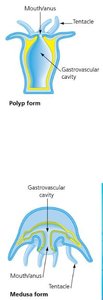
Cnidarians: Radial symmetry, gastrovascular cavity, polyp and medusa forms
Molluscs: Soft-bodied, often with shells; include gastropods, bivalves, cephalopods
Flatworms: Bilateral symmetry, gastrovascular cavity, includes planarians, schistosomes, tapeworms
Annelids: Segmented worms, complete digestive tract (e.g., earthworms, errantia, sedentaria)
Roundworms (Nematodes): Cylindrical, tapered bodies, many are decomposers or parasites
Arthropods: Segmented, jointed appendages, exoskeleton (e.g., insects, crustaceans, arachnids)
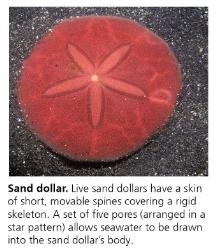
Echinoderms: Spiny surfaces, radial symmetry as adults, water vascular system (e.g., sea stars, sand dollars)
Vertebrate Evolution and Diversity
Chordates are defined by four key features: dorsal hollow nerve cord, notochord, pharyngeal slits, and post-anal tail. Vertebrates are chordates with a backbone. Major groups include jawless fishes, cartilaginous fishes, bony fishes, amphibians, reptiles (including birds), and mammals.
Key Vertebrate Groups
Fishes: Jawless (hagfish, lampreys), cartilaginous (sharks, rays), bony (ray-finned, lobe-finned)
Amphibians: Aquatic larvae, terrestrial adults, require water for reproduction
Reptiles: Amniotic eggs, ectothermic (non-bird reptiles), endothermic (birds)
Mammals: Hair, mammary glands, three groups: monotremes (egg-laying), marsupials (pouched), eutherians (placental)
Primates and Human Evolution
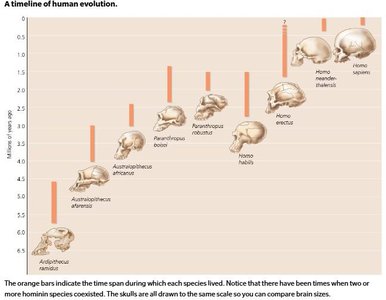
Primates are characterized by limber shoulder joints, grasping hands, forward-facing eyes, and parental care. Major groups include lemurs, tarsiers, monkeys, and apes (including humans). Human evolution is traced through fossil hominins, with Homo sapiens emerging in Africa and spreading globally.
Additional info: This guide covers the evolutionary history and major characteristics of prokaryotes, eukaryotes, plants, fungi, and animals, as well as the ecological and medical significance of these groups. It is suitable for exam preparation in introductory college biology courses.
