 Back
BackThe Evolution of Plants and Fungi: Structure, Life Cycles, and Diversity
Study Guide - Smart Notes
 Tailored notes based on your materials, expanded with key definitions, examples, and context.
The Evolution of Plants and Fungi
Land Plants: Origins and Major Groups
Land plants (embryophytes) evolved from freshwater green algae and developed key adaptations for terrestrial life. These adaptations enabled them to colonize land and diversify into major groups, including nonvascular plants, seedless vascular plants, and seed plants.
Land plants are a subgroup of Viridiplantae, called embryophytes.
Nonvascular plants (bryophytes) lack specialized vascular tissues and are gametophyte-dominant.
Seedless vascular plants (lycophytes, monilophytes) have vascular tissues and are sporophyte-dominant.
Seed plants (gymnosperms and angiosperms) are monophyletic, with seeds as a key innovation.
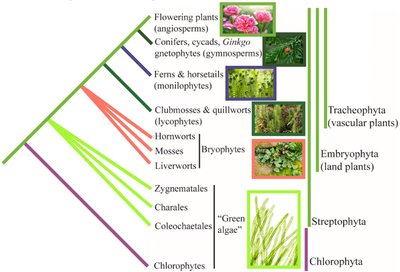
Example: The phylogenetic tree shows the evolutionary relationships among major plant groups, highlighting the transition from green algae to land plants and the emergence of vascular and seed plants.
Adaptations for Terrestrial Life
Plants evolved several structural features to survive on land, including mechanisms to retain water and facilitate gas exchange.
Cuticle: A waxy film covering the epidermis, reducing water loss.
Stomata: Pores that regulate gas exchange and water loss, controlled by guard cells.
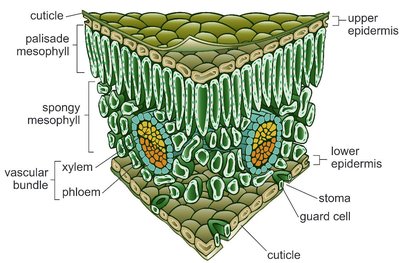
Example: The leaf cross-section illustrates the cuticle, stomata, and internal tissues that support photosynthesis and water regulation.
Vascular Tissues: Xylem and Phloem
Vascular tissues enabled plants to transport water, minerals, and nutrients efficiently, supporting larger body sizes and vertical growth.
Xylem: Transports water and minerals from roots to shoots; contains tracheids with lignified secondary cell walls for rigidity.
Phloem: Transports sugars, amino acids, and other nutrients throughout the plant.
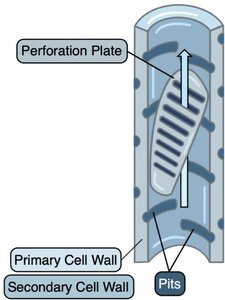
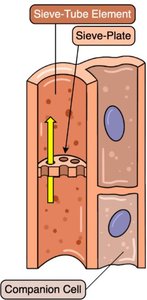
Example: Xylem and phloem structures are specialized for their transport functions, with xylem providing support and phloem enabling nutrient distribution.
Plant Organs: Roots and Leaves
Roots and leaves are specialized organs that support plant survival and growth.
Roots: Absorb water and nutrients from the soil, anchor the plant.
Leaves: Main site of photosynthesis; can be microphylls (single vascular strand) or megaphylls (branched vascular system).
Additional info: Microphylls are characteristic of lycophytes, while megaphylls are found in most other vascular plants.
Alternation of Generations
All land plants exhibit alternation of generations, with multicellular haploid (gametophyte) and diploid (sporophyte) stages.
Gametophyte: Haploid, produces gametes by mitosis.
Sporophyte: Diploid, produces spores by meiosis.
Sporophylls: Modified leaves bearing sporangia (spore-producing structures).
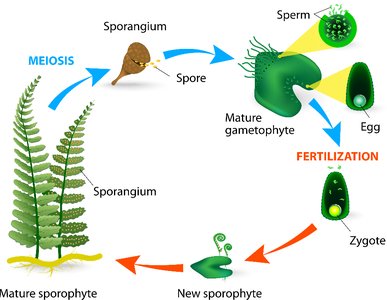
Example: In ferns, the sporophyte is the dominant stage, producing spores that grow into gametophytes.
Homospory vs. Heterospory
Plants may produce one type of spore (homospory) or two distinct types (heterospory).
Homospory: One type of spore forms a bisexual gametophyte.
Heterospory: Microspores (male) and megaspores (female) are produced in separate sporangia.
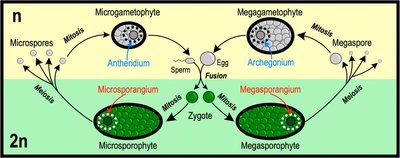
Example: Seed plants are heterosporous, producing pollen (male gametophyte) and ovules (female gametophyte).
Nonvascular Plants (Bryophytes)
Bryophyte Diversity and Life Cycle
Bryophytes include mosses, liverworts, and hornworts. They lack true vascular tissue and are gametophyte-dominant.
Bryophytes: Nonvascular, homosporous, often require water for fertilization.
Gametophyte: Prominent, photosynthetic stage; produces gametes in archegonia (female) and antheridia (male).
Sporophyte: Small, dependent on gametophyte; produces spores in a capsule.
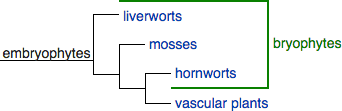
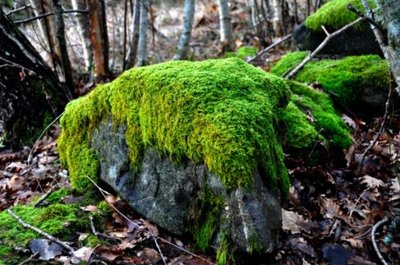
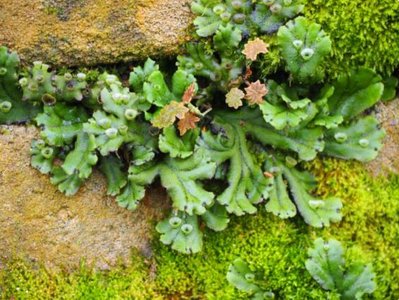
Example: Mosses and liverworts are common bryophytes found in moist environments.
Bryophyte Structures and Reproduction
Bryophytes reproduce via spores and require water for sperm motility. They have rhizoids for anchorage but not true roots.
Gametangia: Structures where gametes are produced (archegonia and antheridia).
Rhizoids: Root-like structures for anchorage.
Protonema: Early stage of gametophyte development from spores.
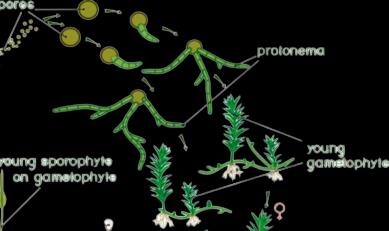
Example: The protonema develops into the mature gametophyte, which produces gametes for fertilization.
Seedless Vascular Plants
Characteristics and Life Cycle
Seedless vascular plants (lycophytes and monilophytes) have vascular tissues and a dominant sporophyte generation. They reproduce via spores and require water for fertilization.
Lycophytes: Club mosses, spike mosses, and quillworts; only vascular plants with microphylls.
Monilophytes: Ferns and horsetails; have megaphylls and produce sori (clusters of sporangia) on leaves.
Sporophyte: Dominant, independent stage; produces spores in sporangia.
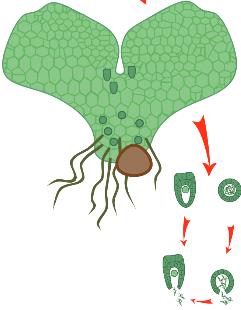
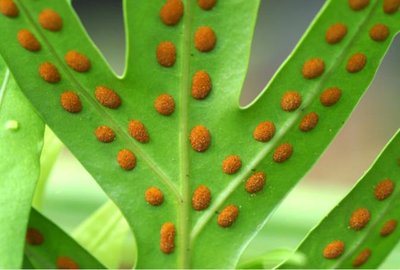
Example: Ferns produce spores in sori, which develop into gametophytes that require water for fertilization.
Seed Plants: Gymnosperms and Angiosperms
Seed Plant Innovations
Seed plants are characterized by the production of seeds, pollen, and, in angiosperms, flowers and fruits. They have a sporophyte-dominant life cycle and are mostly heterosporous.
Ovule: Structure containing the megasporangium, develops into a seed after fertilization.
Pollen grain: Male gametophyte, enables fertilization without water.
Seed: Contains embryo, food supply, and protective coat.
Cotyledon: Embryonic leaf in the seed.
Endosperm: Nutritive tissue in seeds of angiosperms.
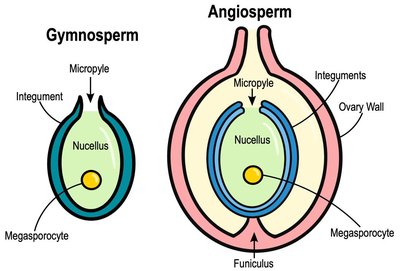
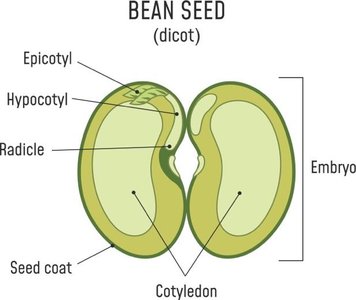
Example: Seeds allow plants to survive harsh conditions and disperse offspring over long distances.
Gymnosperms
Gymnosperms produce "naked seeds" not enclosed in an ovary. Their reproductive structures are typically cones (strobili).
Conifers: Most common gymnosperms; have needle-like leaves and cones.
Monoecious: Male and female cones on the same plant.
Dioecious: Male and female cones on separate plants.
Example: Pine trees are gymnosperms with needle-like leaves and reproductive cones.
Angiosperms
Angiosperms are the most diverse group of seed plants, characterized by flowers and fruits. They are classified by the number of cotyledons (monocots vs. eudicots).
Flower: Reproductive structure containing sepals, petals, stamens, and carpels.
Fruit: Develops from the ovary after fertilization, aids in seed dispersal.
Double fertilization: One sperm fertilizes the egg, another forms endosperm.
Example: Flowers attract pollinators, and fruits protect and disperse seeds.
Fungi: Structure, Ecology, and Reproduction
Fungal Structure and Nutrition
Fungi are heterotrophic eukaryotes that absorb nutrients after external digestion. They play key roles as decomposers, mutualists, and parasites.
Hyphae: Filamentous structures forming the fungal body (mycelium).
Chitin: Main component of fungal cell walls.
Mycorrhizae: Symbiotic associations with plant roots, enhancing nutrient uptake.
Additional info: Ectomycorrhizae surround root cells, while arbuscular mycorrhizae penetrate root cell walls.
Fungal Reproduction
Fungi reproduce via spores, both sexually and asexually. Their life cycles include unique stages such as plasmogamy and karyogamy.
Plasmogamy: Fusion of cytoplasm from two parent mycelia.
Karyogamy: Fusion of nuclei, forming a diploid zygote.
Fruiting body: Spore-producing structure (e.g., mushroom, ascocarp, basidiocarp).
Chytrids: Only fungi with flagellated spores and alternation of generations.
Zygomycetes: Form zygosporangia during sexual reproduction.
Ascomycota: Produce spores in asci within ascocarps.
Basidiomycota: Produce spores in basidia within basidiocarps.
Additional info: Fungi can have thousands of mating types, and many use pheromones to identify compatible partners.
Fungal Group | Key Structure | Spore Type |
|---|---|---|
Chytrids | Zoosporangium | Flagellated zoospores |
Zygomycetes | Zygosporangium | Zygospores |
Ascomycota | Ascus (in ascocarp) | Ascospores |
Basidiomycota | Basidium (in basidiocarp) | Basidiospores |
