 Back
The Fossil Record: Central Texas Geology, Fossils, and Evolutionary Insights
Study Guide - Smart Notes
 Tailored notes based on your materials, expanded with key definitions, examples, and context.
The Fossil Record and Central Texas Geology
Overview of Central Texas Fossils and Geological Formations
Central Texas provides a unique window into Earth's history through its fossil-rich geological formations. These fossils help explain the region's limestone substrate, karst geohydrology, and the evolution of local ecotypes.
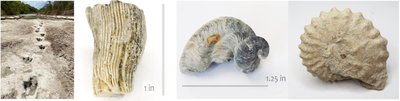
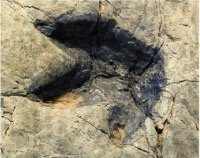
Glen Rose Formation (115 million years ago): Shallow tidal flats with dinosaur tracks, likely made by Acrocanthosaurus and sauropods.
Edwards Formation (105 million years ago): Warm, shallow seas with reefs built by rudists (extinct clams), forming thick limestone.
Del Rio Clay (95 million years ago): Muddy sea floor with characteristic ram's horn oyster (Ilymatogyra arietina).
Austin Chalk (85 million years ago): Open sea with chalk made of coccoliths and ammonite fossils.
Karst Geohydrology and Limestone Substrate
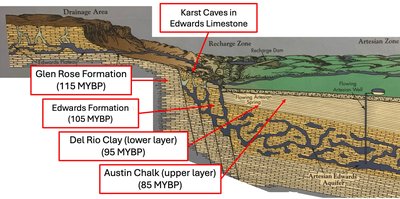
The region's limestone formations are central to its karst geohydrology, which shapes caves, sinkholes, and aquifers.
Karst: Formed by water dissolving limestone along faults, creating underground caves and springs.
Edwards Aquifer: Water is trapped and flows through faults, emerging at springs like San Marcos.
Strengths and Limitations of the Fossil Record
Strengths
Fossils provide direct evidence of extinct species, their ages, and the environments they inhabited.
Direct evidence: Fossils confirm the existence of extinct organisms.
Dating: Fossils in rock layers can be dated using radiometric methods.
Environmental context: Fossils and surrounding rocks reveal ancient habitats.
Limitations (Biases)
The fossil record is extensive but non-random, with several biases:
Habitat bias: Organisms in sediment-rich environments fossilize more often.
Tissue bias: Hard-bodied organisms fossilize more readily than soft-bodied ones.
Temporal bias: Recent fossils are more common than older ones.
Abundance bias: Abundant, widespread species are more likely to be found.
Radiometric Dating and Stratigraphy
Principles of Radiometric Dating
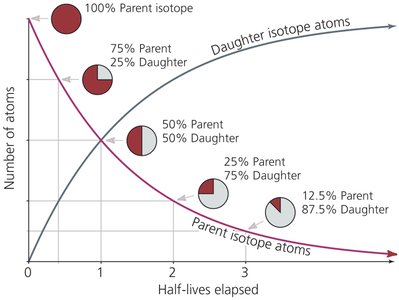
Radiometric dating uses the steady decay of radioactive isotopes to determine the absolute age of rocks and fossils.
Half-life: The time required for half of the parent isotope to decay into the daughter isotope.
Common isotopes: Carbon-14 (up to ~100,000 years), Potassium-argon, Uranium-lead, Rubidium-strontium (for older rocks).
Stratigraphy: Layers stack with oldest on the bottom, youngest on top, providing relative ages.
Types of Information from Fossils
Body, Trace, and Microfossils
Fossils reveal much more than just the appearance of ancient organisms.
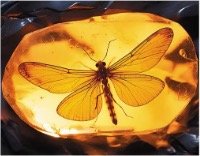
Body fossils: Bones, shells, and organisms in amber show form, size, and distribution.
Trace fossils: Footprints and burrows reveal behavior.
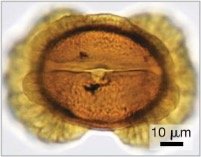
Microfossils: Pollen and plankton indicate past climate and vegetation.
Ancient DNA: Provides genetic relationships (e.g., Neanderthals and humans).

Faunal Succession and Geological Timescale
Faunal Succession
Fossils appear in a predictable, non-random order through geological layers, allowing scientists to correlate rock strata across regions.
Faunal succession: The sequence of fossil appearance is consistent worldwide.
Texas rocks: Record most of the last half billion years, including the K-Pg mass extinction.
Background Extinction vs. Mass Extinction
Definitions and Causes
Extinction is a natural process, but mass extinctions are rare and catastrophic events.
Background extinction: Steady, low-rate loss of species due to local causes.
Mass extinction: Rapid, global loss of many lineages due to events like climate change or asteroid impacts.
The Big Five: Five major mass extinctions, including the end-Permian and K-Pg events.
K-Pg Mass Extinction Evidence
Asteroid impact: Chicxulub crater, iridium spike, shocked quartz, and glass spherules in boundary layers.
Texas evidence: Boundary layers along the Brazos River and fossils in Big Bend.
Phylogenetic Relationships and Fossil Interpretation
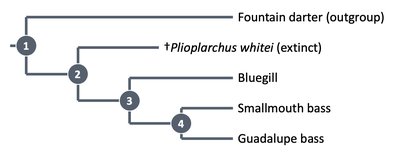
Practice Problem: Fossil Ancestors and Phylogeny
Fossils are interpreted within phylogenetic trees to determine relationships.
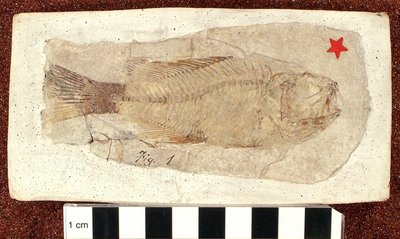
Side branches: Extinct species like Plioplarchus whitei may share a common ancestor with living species but are not direct ancestors.
Phylogenetic trees: Show evolutionary relationships and divergence points.
Adaptive Radiations and Ecological Opportunity
Mechanisms and Examples
Adaptive radiation occurs when a lineage rapidly diversifies to fill available ecological niches, often after mass extinctions or due to key innovations.
Ecological opportunity: Open niches allow rapid diversification.
Key innovation: New traits (e.g., flowers, feathers) enable exploitation of new resources.
Examples: Mammals, birds, and flowering plants radiated after the K-Pg extinction.
The Cambrian Explosion and Animal Body Plans
Triggers and Outcomes
The Cambrian explosion (~540 million years ago) marks the rapid appearance of most animal phyla with hard parts.
Possible triggers: Rising oxygen, predation, and new developmental genes (e.g., Hox genes).
Gene duplication: Allows new functions and body plans to evolve.
How the Past Explains the Present: Ecotypes and Geology
Central Texas Ecotypes
The region's ecotypes are shaped by ancient geological events and parent rock types.
Balcones Canyonlands: Early Cretaceous limestone, thin rocky soils.
Blackland Prairie: Late Cretaceous chalk and clay, deep clay soils.
Post Oak Savanna: Paleogene sands, sandy acidic soils.
Karst Cave: Limestone dissolved along fault cracks.
San Marcos River: Aquifer water rising at the fault, constant springs.
Bald cypress: Wet banks of spring-fed rivers.
Summary Table: Central Texas Fossil Formations
Formation | Age (MYBP) | Environment | Characteristic Fossil |
|---|---|---|---|
Glen Rose | 115 | Tidal flats | Dinosaur tracks |
Edwards | 105 | Shallow sea, reefs | Rudists |
Del Rio Clay | 95 | Muddy sea floor | Ram's horn oyster |
Austin Chalk | 85 | Open sea | Ammonites |
Additional info: These notes expand brief lecture points into full academic explanations, including definitions, examples, and context for General Biology students.
