 Back
The Four Major Macromolecules of Life: Structure and Function
Study Guide - Smart Notes
 Tailored notes based on your materials, expanded with key definitions, examples, and context.
Four Major Macromolecules of Life
Overview
Biological macromolecules are large, complex molecules essential for life. The four major classes—carbohydrates, lipids, proteins, and nucleic acids—each have unique structures and functions that enable the diversity of life processes. Understanding their assembly, breakdown, and roles is foundational to biology.
Polymers and Monomers: The Repeating Units of Life
Definitions and Principles
Polymers: Large molecules made of repeating subunits (monomers) joined by covalent bonds. Carbohydrates, proteins, and nucleic acids are polymers.
Monomers: The single, repeating units that form polymers.
Macromolecules: Another term for large polymers, emphasizing their size and complexity.
Lipids: Do not form true polymers but are large and essential biological molecules.
Enzymes: Protein macromolecules that act as biological catalysts, speeding up chemical reactions without being consumed.
Building and Breaking Down Polymers
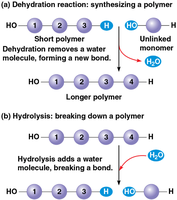
Dehydration Reaction (Synthesis): Enzyme-catalyzed process that joins monomers by removing a water molecule for each bond formed. Requires energy (often ATP).
Hydrolysis (Breakdown): Enzyme-catalyzed process that breaks polymers into monomers by adding a water molecule for each bond broken. Releases energy.
Carbohydrates: Fuel and Building Materials
General Characteristics
Serve as primary energy sources and structural materials in cells.
Found in foods such as grains, fruits, and vegetables.
Classification by Sugar Units
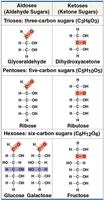
Monosaccharides: Simple sugars, monomers of carbohydrates. General formula: . Examples: glucose, fructose, galactose.
Disaccharides: Two monosaccharides joined by a dehydration reaction. Examples: maltose (glucose + glucose), sucrose (glucose + fructose).
Polysaccharides: Polymers of many monosaccharides linked by glycosidic bonds. Serve as energy storage (starch, glycogen) or structural support (cellulose, chitin).
Storage and Structural Polysaccharides
Starch: Plant storage polysaccharide, composed of glucose monomers with alpha-1,4 glycosidic bonds. Somewhat branched.
Glycogen: Animal storage polysaccharide, highly branched, stored in liver and muscle cells.
Cellulose: Plant structural polysaccharide, unbranched chains of glucose with beta-1,4 glycosidic bonds. Forms strong microfibrils.
Chitin: Structural polysaccharide in arthropod exoskeletons and fungal cell walls, similar to cellulose but with nitrogen-containing groups.
Lipids: Diverse Hydrophobic Molecules
Key Characteristics
Hydrophobic (do not mix with water), do not form true polymers.
Cluster together in water due to hydrophobic interactions.
Types of Lipids
Fats (Triglycerides): Composed of glycerol and three fatty acids joined by ester linkages. Function in energy storage, insulation, and cushioning.
Saturated Fatty Acids: No double bonds, straight chains, solid at room temperature (e.g., butter).
Unsaturated Fatty Acids: One or more double bonds, kinked chains, liquid at room temperature (e.g., olive oil). Includes cis (natural) and trans (artificial, unhealthy) forms.
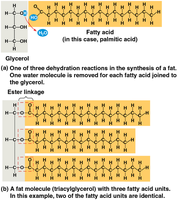
Phospholipids: Glycerol, two fatty acids, and a phosphate group. Amphipathic (hydrophilic head, hydrophobic tails). Form bilayers in cell membranes.
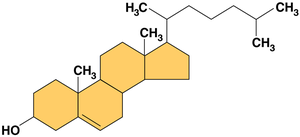
Steroids: Four fused carbon rings. Example: cholesterol, a component of animal cell membranes and precursor to steroid hormones.
Proteins: Diverse Structures for Diverse Functions
Functions of Proteins
Enzymatic, defensive, storage, transport, hormonal, receptor, contractile/motor, and structural roles.
Amino Acids and Peptide Bonds
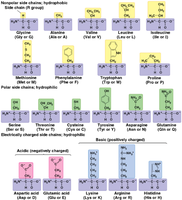
Proteins are polymers of 20 different amino acids, each with a central alpha carbon, amino group, carboxyl group, and unique R group (side chain).
Amino acids are linked by peptide bonds (dehydration reaction between carboxyl and amino groups).
Levels of Protein Structure
Primary: Linear sequence of amino acids, determined by DNA.
Secondary: Coils and folds (alpha-helix, beta-sheet) stabilized by hydrogen bonds.
Tertiary: 3D shape formed by interactions among R groups (hydrogen bonds, ionic bonds, hydrophobic interactions, disulfide bridges).
Quaternary: Association of multiple polypeptide chains (e.g., hemoglobin).
Protein Denaturation
Loss of native structure due to environmental changes (pH, temperature, chemicals), resulting in loss of function. Can be reversible or irreversible.
Example: Cooking an egg denatures egg white proteins.
Determining Protein Structure
X-ray crystallography, NMR spectroscopy, and bioinformatics are key methods for elucidating protein structures.
Nucleic Acids: Hereditary Information
Roles and Types
Store, transmit, and express genetic information.
DNA: Double-stranded helix, stores genetic instructions, directs synthesis of mRNA and proteins.
RNA: Single-stranded, involved in gene expression and protein synthesis.
Nucleotide Structure
Monomer: Nucleotide (nitrogenous base, pentose sugar, phosphate group).
Pyrimidines: Cytosine, Thymine (DNA), Uracil (RNA).
Purines: Adenine, Guanine.
DNA contains deoxyribose; RNA contains ribose.
Polynucleotide Formation and Base Pairing
Nucleotides linked by phosphodiester bonds, forming a sugar-phosphate backbone.
DNA strands are antiparallel; base pairing: A-T, G-C (DNA); A-U, G-C (RNA).
Studying Macromolecules: Genomics and Proteomics
Modern Approaches
Bioinformatics: Computational analysis of biological data, especially gene and protein sequences.
Genomics: Study of entire genomes and gene interactions.
Proteomics: Study of all proteins expressed by a cell, tissue, or organism.
Summary Table: Key Characteristics of the Four Macromolecules
Macromolecule | Monomer | Bond Type | Uses | Large Molecule Examples | Additional Features |
|---|---|---|---|---|---|
Carbohydrates | Monosaccharide | Glycosidic linkage | Energy storage, structure | Starch, glycogen, cellulose, chitin | Classified by sugar units; alpha/beta linkages |
Lipids | None (not true polymers) | Ester linkage (fats), other covalent bonds | Energy storage, membranes, hormones | Triglycerides, phospholipids, steroids | Hydrophobic, amphipathic (phospholipids) |
Proteins | Amino acid | Peptide bond | Catalysis, structure, transport, signaling | Enzymes, hemoglobin, collagen | Four levels of structure; 20 amino acids |
Nucleic Acids | Nucleotide | Phosphodiester bond | Genetic information storage and transfer | DNA, RNA | Base pairing, antiparallel strands (DNA) |
