 Back
BackThe History of Life on Earth: Key Events and Evolutionary Milestones
Study Guide - Smart Notes
 Tailored notes based on your materials, expanded with key definitions, examples, and context.
The History of Life on Earth
Introduction
The history of life on Earth encompasses the origin of life, the development of biological diversity, and the evolutionary processes that have shaped all living organisms. This chapter explores the scientific evidence and theories explaining how life began, diversified, and adapted to changing environments over billions of years.
Refuting Spontaneous Generation
Spontaneous Generation and Its Disproof
For centuries, it was believed that life could arise spontaneously from nonliving matter, a concept known as spontaneous generation. This idea was refuted by experiments demonstrating that life arises only from pre-existing life.
Louis Pasteur's Experiment: Pasteur used swan-necked flasks to show that sterilized broth remained free of microorganisms unless exposed to contaminated air, disproving spontaneous generation.
Biogenesis: The principle that life arises only from pre-existing life forms.
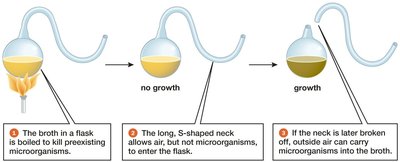
Example: Pasteur's experiment demonstrated that microorganisms in the air, not the broth itself, were responsible for the appearance of life in nutrient solutions.
The Origin of Life: Chemical Evolution
Early Earth Conditions
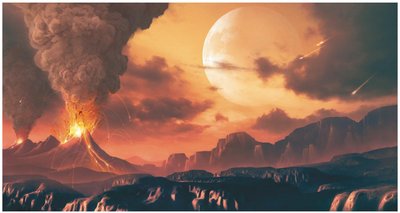
Earth's early environment was drastically different from today, with a reducing atmosphere, intense volcanic activity, and frequent meteorite impacts. These conditions set the stage for the chemical evolution of life.
Reducing Atmosphere: Early Earth's atmosphere likely contained methane (CH4), ammonia (NH3), water vapor (H2O), and hydrogen (H2), but little or no free oxygen.
Energy Sources: Lightning, ultraviolet radiation, and volcanic heat provided energy for chemical reactions.
The Miller-Urey Experiment
Stanley Miller and Harold Urey simulated early Earth conditions in the laboratory, demonstrating that organic molecules could form spontaneously from inorganic precursors.
Experimental Setup: A mixture of water, methane, ammonia, and hydrogen was exposed to electric sparks (simulating lightning).
Results: After several days, amino acids and other organic molecules were detected, supporting the hypothesis of chemical evolution.
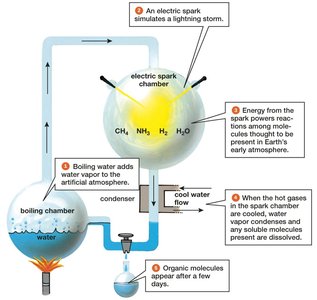
Example: The Miller-Urey experiment produced amino acids, the building blocks of proteins, from simple gases, suggesting a plausible pathway for the origin of life.
Major Events in the History of Life
Geological Time Scale and Biological Milestones
The history of life is divided into eons, eras, periods, and epochs, each marked by significant evolutionary events and the emergence of new life forms.
Era | Period | Epoch | Millions of Years Ago | Major Events |
|---|---|---|---|---|
Cenozoic | Quaternary | Holocene | 0.01–present | Evolution of genus Homo |
Cenozoic | Neogene | Pliocene, Miocene | 5.3–2.6, 23–5.3 | First grasslands; major mammal and bird radiations |
Mesozoic | Cretaceous | 145–66 | Flowering plants diversify; mass extinction of dinosaurs | |
Paleozoic | Devonian | 419–359 | First amphibians and insects; fish diversify | |
Precambrian | 4,600–541 | Origin of Earth; first prokaryotes and eukaryotes |
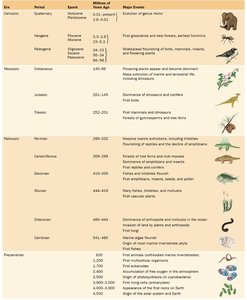
Example: The mass extinction at the end of the Cretaceous period led to the demise of dinosaurs and the rise of mammals.
The Origin of Eukaryotic Cells: Endosymbiosis
Endosymbiotic Theory
The endosymbiotic theory proposes that mitochondria and chloroplasts originated as free-living prokaryotes that were engulfed by ancestral eukaryotic cells, leading to a mutually beneficial relationship.
Mitochondria: Descended from aerobic bacteria, enabling efficient energy production.
Chloroplasts: Descended from photosynthetic bacteria, allowing for photosynthesis in plants and algae.
Evidence: Both organelles have their own DNA, double membranes, and reproduce independently within the cell.
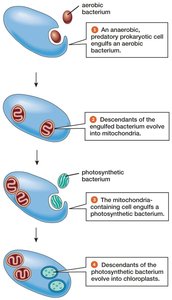
Example: Modern mitochondria and chloroplasts retain genetic and structural similarities to certain bacteria.
Major Evolutionary Radiations and Extinctions
Diversity of Ocean Life in the Paleozoic
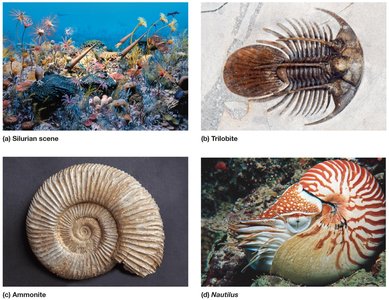
The Paleozoic era saw the rapid diversification of marine life, including the emergence of arthropods, mollusks, and early vertebrates.
Silurian Period: Marked by the appearance of jawed fishes and the colonization of land by plants and animals.
Trilobites and Ammonites: Important index fossils for dating Paleozoic rocks.
Colonization of Land
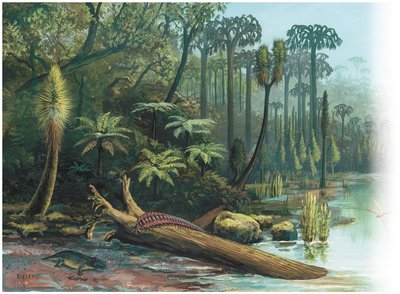
During the Carboniferous period, vast swamp forests dominated the landscape, and the first amphibians and reptiles appeared.
Swamp Forests: Contributed to the formation of extensive coal deposits.
Amphibians: First vertebrates to adapt to life on land.
Transition from Water to Land
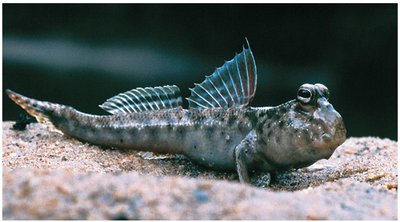
The evolution of limbs and lungs enabled certain fish to move onto land, giving rise to the first tetrapods.
Example: Modern mudskippers demonstrate how fish can use fins to move on land, similar to early tetrapods.
The Age of Dinosaurs and Flowering Plants
The Mesozoic era is known as the age of dinosaurs, with the evolution of flowering plants (angiosperms) and the diversification of insects and mammals.
Cretaceous Forests: Provided new ecological niches for evolving species.
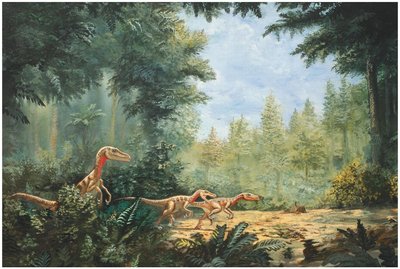
Plate Tectonics and Continental Drift
Movement of Continents
Plate tectonics has played a crucial role in shaping Earth's surface and influencing the distribution and evolution of life.
Pangaea: A supercontinent that existed about 250 million years ago, later breaking apart into present-day continents.
Continental Drift: The movement of continents over geological time, affecting climate, sea levels, and species distribution.
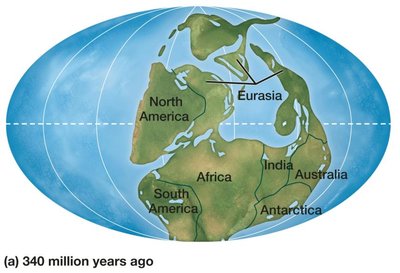
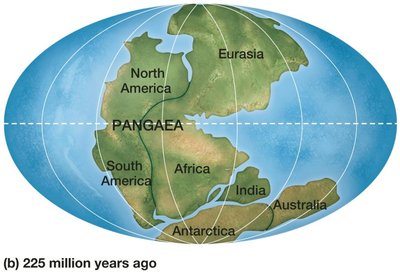
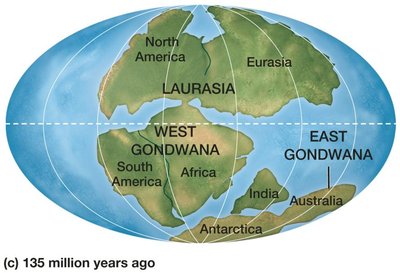
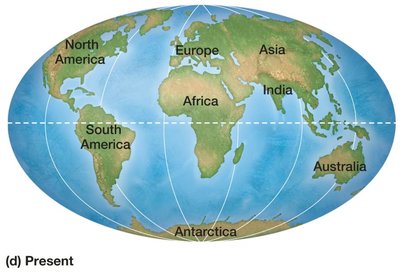
Example: The breakup of Pangaea led to geographic isolation and speciation.
The Evolution of Primates and Hominins
Primate Evolution
Primates are a diverse group of mammals that include lemurs, tarsiers, monkeys, and apes. Their evolution is marked by adaptations for life in trees, such as grasping hands and forward-facing eyes.
Strepsirrhines: Lemurs and tarsiers represent early branches of the primate family tree.
Haplorhines: Monkeys and apes, including humans.
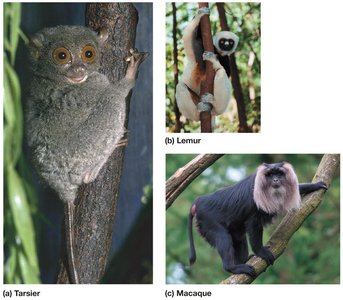
The Earliest Hominins
Hominins are the group that includes modern humans and our extinct relatives. The earliest hominins show a mix of ape-like and human-like features.
Sahelanthropus tchadensis: One of the oldest known hominins, dating to about 7 million years ago.
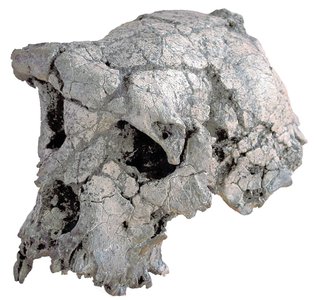
Human Evolutionary Tree
The evolutionary history of humans is depicted as a branching tree, with multiple hominin species coexisting and sometimes interbreeding.
Australopithecus: Early bipedal hominins.
Homo: The genus that includes modern humans and closely related species.
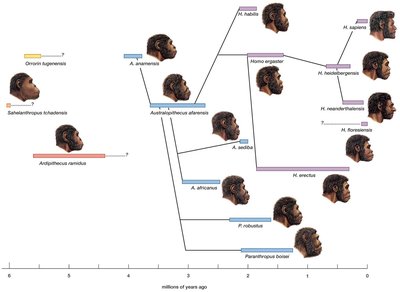
Hominin Tools and Culture
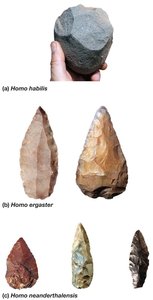
The development of stone tools marks a significant milestone in hominin evolution, reflecting increased cognitive abilities and adaptation to diverse environments.
Oldowan Tools: Simple stone flakes and choppers used by Homo habilis.
Acheulean Tools: More advanced hand axes associated with Homo erectus and later species.
Homo floresiensis: The 'Hobbit'
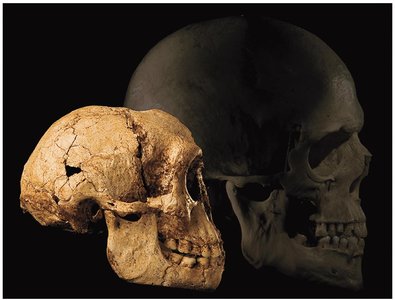
Homo floresiensis, nicknamed the 'Hobbit,' was a small-bodied hominin species that lived on the island of Flores in Indonesia until about 50,000 years ago.
Symbolic Thought and Culture
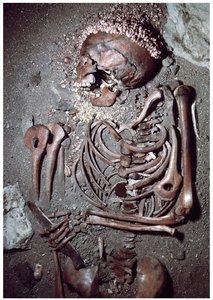
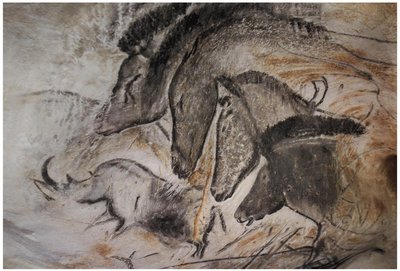
Evidence of burial practices and cave art suggests that early Homo sapiens developed complex symbolic thought and culture.
Paleolithic Burials: Indicate ritual behavior and belief systems.
Cave Art: Demonstrates advanced cognitive abilities and communication.
Summary
The history of life on Earth is a story of continual change, adaptation, and diversification. From the origin of simple molecules to the rise of complex organisms and human culture, evolutionary processes have shaped the living world we see today.
