 Back
BackThe History of Life on Earth: Origin, Evolution, and Major Transitions
Study Guide - Smart Notes
 Tailored notes based on your materials, expanded with key definitions, examples, and context.
History of Life on Earth (Chapter 26)
Introduction
The history of life on Earth encompasses (Bao gồm) the origin of life, the development (Phát triển) of cellular structures (Cấu trúc tế bào), and the diversification of organisms (đa dạng hóa sinh vật) through geological time (Thời gian địa chất). This chapter explores the processes that led to the emergence (Sự xuất hiện) of life, the fossil record (Hồ sơ hóa thạch), and the major evolutionary transitions that shaped the biosphere. ( sinh quyển.)
The biosphere is the global sum of all living organisms and the places where they live!
Origin of Life on Earth (Nguồn gốc của sự sống trên Trái đất)
Formation of Earth and Early Conditions
Earth Formation: The Earth formed approximately 4.55 billion years ago (BYA) from the aggregation (tập hợp) of planetesimals (các hành tinh.)
Early Environment: By 4 BYA, the Earth's surface cooled, allowing liquid water to accumulate (Tích lũy), creating conditions suitable for life.
Emergence (Sự xuất hiện) of Life: Life is believed to have originated (Nguồn gốc) between 4 and 3.5 BYA.
Central Dogma (Giáo điều trung tâm) of Molecular Biology (Sinh học phân tử)
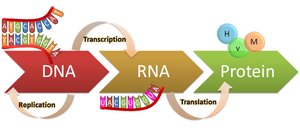
The central dogma (Giáo điều trung tâm) describes the flow of genetic information in all living organisms: DNA is transcribed (phiên mã) into RNA, which is then translated into protein. This process underlies (nền tảng) all cellular functions.
Four-Stage Hypothesis (Giả thuyết bốn giai đoạn) for the Origin of Life
Formation of Organic Molecules (Phân tử hữu cơ:): Simple organic molecules (like amino acids, sugars) and macromolecules (Đại phân tử) formed spontaneously (hình thành tự phát) (meaning they were created naturally from basic chemicals, without life) Over time, these molecules accumulated in the oceans. Some of them joined together to make macromolecules (large molecules, like proteins or nucleic acids). This mix of molecules in the ocean is called the “prebiotic soup” —a rich environment where life could begin.
Formation of Polymers (Sự hình thành polyme): Organic monomers polymerized to form complex molecules such as proteins and nucleic acids.
Formation of Protobionts: Aggregates (Các tập hợp) of molecules (like proteins, lipids, and nucleic acids.) acquired boundaries (usually made of lipid membranes, which separated their inside from the outside environment.), forming cell-like structures capable of maintaining internal environments. (có khả năng duy trì môi trường bên trong.)
Origin of Cellular Characteristics (Nguồn gốc của đặc điểm tế bào): The first macromolecules with information storage, replication, and catalytic functions emerged, likely RNA.
The first cell-like life forms probably used RNA to store information, copy themselves, and speed up reactions—key steps for life to begin!
Stage 1: Formation of Organic Molecules
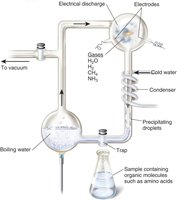
Reducing Atmosphere Hypothesis (Giả thuyết khí quyển giảm): Early Earth's atmosphere was rich in H2O, H2, CH4, and NH3, favoring redox reactions that formed complex organic molecules. The Miller-Urey experiment (1953) simulated these conditions, producing amino acids and other precursors. (Early Earth's atmosphere was called “reducing” because it had lots of molecules like H 2 O (water), H 2 (hydrogen), CH 4 (methane), and NH 3 (ammonia).)
Extraterrestrial Hypothesis (Giả thuyết ngoài Trái đất:): Organic molecules may have been delivered to Earth via meteorites (carbonaceous chondrites). However, some argue that most organics would be destroyed by heat during impact.
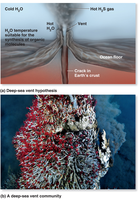
Deep-Sea Vent Hypothesis: Organic molecules could have formed in temperature gradients (differences in temperature) at hydrothermal vents, supported by experiments showing synthesis of ammonia (NH3) under these conditions. (Experiments show that important molecules like ammonia (NH 3 ) can be made under these conditions, supporting the idea that life’s ingredients could form here.)
Stage 2: Formation of Organic Polymers
Polymerization (joining small molecules ( monomers ) together to make long chains ( polymers ), like proteins or nucleic acids.) Challenge: Polymer formation is difficult in aqueous solutions (Water) due to hydrolysis (water tends to break bonds, not help them form.). Clay surfaces may have catalyzed polymerization by concentrating monomers and facilitating bond formation. (In water, making polymers is tough because water breaks bonds. Clay surfaces may have helped early life by bringing monomers together and making it easier for them to link up into polymers!)
Alternative Mechanisms (Cơ chế thay thế): Recent studies show that carbonyl sulfide (COS) can promote polymerization in water, suggesting multiple possible pathways for polymer formation. Carbonyl sulfide can help monomers join into polymers in wate
Stage 3: Formation of Cell-like Structures (Protobionts)
Protobionts are aggregates (TỔNG HỢP) of prebiotically produced molecules surrounded by a boundary, such as a lipid bilayer, allowing for a distinct internal environment.
Characteristics (Đặc điểm) of Protobionts:
A boundary separating internal and external environments
Polymers containing information
Polymers with enzymatic function (Some polymers can act as enzymes , which are catalysts that speed up chemical reactions.)
Capability (Khả năng) for self-replication (Tự sao chép)
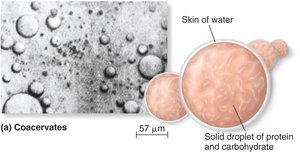
Coacervates: Droplets formed from charged polymers (proteins, carbohydrates, nucleic acids) surrounded by water. They can trap enzymes and perform primitive metabolic functions. (Because they can hold enzymes, coacervates can carry out simple chemical reactions—this is what we mean by primitive metabolic functions.): Coacervates are like tiny bubbles made from biological molecules. They can capture enzymes and help chemical reactions happen, which might have been important for the origin of life!
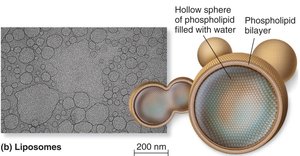
Liposomes: Vesicles with a phospholipid bilayer that can encapsulate molecules. Clay can catalyze their formation, and they can grow, divide, and enclose RNA.
Liposomes are small, bubble-like structures made from a phospholipid bilayer (just like cell membranes).
The bilayer forms a vesicle (a tiny, hollow sphere) that can trap or encapsulate (bao bọc) molecules inside.
Clay particles can help liposomes form by bringing phospholipids together and speeding up the process.
Liposomes can grow by adding more phospholipids, divide into smaller vesicles, and even enclose RNA (thậm chí bao gồm RNA) or other molecules inside them.
Stage 4: Origin of Cellular Characteristics (RNA World Hypothesis)
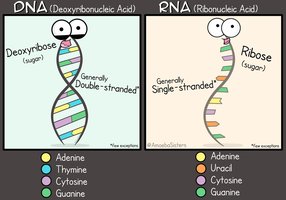
RNA as the First Macromolecule: RNA is favored as the first informational molecule due to its ability to store information, self-replicate, and catalyze reactions (ribozymes).
DNA and Proteins: DNA and proteins cannot perform all three functions simultaneously.
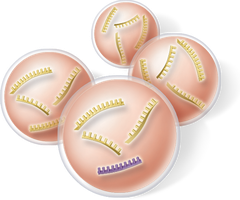
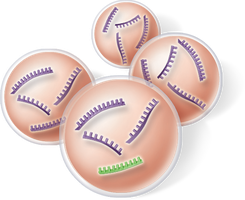
Chemical Selection and the Evolution of RNA
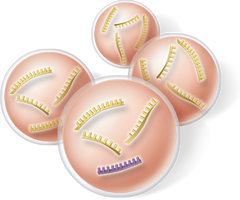
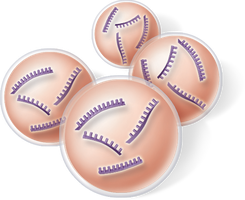
Chemical Selection: Molecules with advantageous properties (các đặc tính thuận lợi) (e.g., self-replication) increase in number over time.
Two-Step Scenario:
Mutation gives RNA the ability to self-replicate.
Further mutation enables (cho phép) RNA to catalyze ribonucleotide synthesis, accelerating its own production.
Transition to DNA/RNA/Protein World
Information Storage: DNA eventually replaced RNA as the primary information storage molecule due to its greater stability.
Metabolism (Trao đổi chất): Proteins, with greater catalytic diversity, took over most enzymatic functions. RNA remains central to protein synthesis (e.g., ribosomes).
The Fossil Record and Geological Time (Hồ sơ hóa thạch và thời gian địa chất)
Fossils and Their Formation
Fossils: Preserved (Bảo quản) remains or traces (dấu vết) of past life, usually found in sedimentary rock. Hard parts are replaced by minerals over time, creating a representation of the original organism.

Dating Fossils (Xác định niên đại hóa thạch)
Radiometric Dating (Xác định niên đại hóa thạch): Fossil age is estimated by measuring the ratio of a radioisotope to its decay product in surrounding rock. Each isotope has a unique half-life, allowing precise dating.
Half-life Equation: Where: = amount remaining, = initial amount, = time elapsed, = half-life
Geological Timescale (Thang thời gian địa chất)
Timeline: Earth's history is divided into four eons (Bốn kiếp): Hadean, Archaean, Proterozoic, and Phanerozoic. Each eon is subdivided (chia nhỏ) into eras( thời đại) and periods. (thời kỳ)
Precambrian: Includes Hadean, Archaean, and Proterozoic eons, covering most of Earth's history before complex life.
Hadean (oldest): Earth forms 🌋 Very hot, no life yet Formation of the first oceans and atmosphere
Archaean : First simple life appears (like bacteria) 🦠 Continents (Các lục địa) start to form Atmosphere has little oxygen
Proterozoic : Oxygen builds up in the atmosphere 🌬️ First complex cells (eukaryotes) appear Simple multicellular life forms develop
Phanerozoic (current eon): Complex life explodes (plants, animals, fungi) 🐟🌳 Major events: dinosaurs, mammals, humans This is the eon we live in now!
Major Transitions (Những chuyển đổi lớn) in the History of Life
Genetic and Environmental Changes
Genetic Changes: Mutations and genetic recombination alter (thay đổi) organismal traits (đặc điểm sinh vật), influencing survival and reproduction.
Environmental Changes: Shifts in temperature, atmospheric composition, landmass movement, and catastrophic events (e.g., volcanic eruptions, meteor impacts) drive evolution and extinction.
Archaean Eon: Prokaryotic Life
Prokaryotes: The earliest life forms were anaerobic prokaryotes. Two domains diverged early: Bacteria and Archaea.
The earliest life forms on Earth were prokaryotes (cells without a nucleus). These early prokaryotes were anaerobic , meaning they did not need oxygen to survive. Prokaryotes eventually split into two main domains : Bacteria Archaea Bacteria and Archaea are both simple, single-celled organisms, but they have important differences in their cell structure and genetics.
Energy Acquisition (Thu nhận năng lượng): Heterotrophs consumed organic molecules; autotrophs (e.g., cyanobacteria) evolved later, producing oxygen and forming stromatolites.
Life started with heterotrophs eating what was available, then autotrophs evolved and changed the planet by making oxygen
Proterozoic Eon: Rise of Eukaryotes (sinh vật nhân chuẩn)and Multicellularity (Đa tế bào)
Endosymbiotic Theory: Eukaryotes originated via endosymbiosis, where one prokaryote engulfed another, leading to organelles like mitochondria and chloroplasts.
Imagine a big cell "eating" a smaller cell , but instead of digesting it, they become roommates ! The small cell helps the big cell by making energy (mitochondria) or food (chloroplasts). Over time, they work so well together that they become one cell with special parts (organelles).
Multicellularity (Tính đa bào): Evolved through cell aggregation or division without separation. Oldest multicellular fossils are ~1.2 BYA. (Imagine cells either joining together or not letting go after dividing—this is how the first multicellular organisms formed)
Phanerozoic Eon: Diversification of Life (Đa dạng hóa cuộc sống)
Paleozoic Era: Marked by the Cambrian explosion (rapid diversification of animal life), colonization of land by plants and animals, and several mass extinctions.
Paleozoic: First animals, plants, and land life.
Mesozoic Era: Age of reptiles and dinosaurs, emergence of birds and mammals, and the rise of flowering plants (angiosperms).
Mesozoic: Dinosaurs rule, first birds and mammals, flowers appear.
Cenozoic Era: Age of mammals, diversification of birds, insects, and flowering plants, and the evolution of hominins, including Homo sapiens.
Cenozoic: Mammals and humans take over!
Summary Table: Major Eons and Key Events
Eon | Timeframe (MYA) | Key Events |
|---|---|---|
Hadean | 4550–4000 | Formation of Earth, no life |
Archaean | 4000–2500 | First prokaryotic cells, anaerobic life, stromatolites |
Proterozoic | 2500–541 | Oxygenation, first eukaryotes, multicellularity |
Phanerozoic | 541–present | Cambrian explosion, land colonization, mammals, humans |
Conclusion
The history of life on Earth is a story of chemical, biological, and environmental evolution. From the formation of simple molecules to the rise of complex multicellular organisms, each stage set the foundation for the diversity of life observed today.
