 Back
The Immune System: Defense Mechanisms and the Lymphatic System
Study Guide - Smart Notes
 Tailored notes based on your materials, expanded with key definitions, examples, and context.
The Immune System and Mechanisms of Defense
What Threats Must Our Bodies Defend Against?
The human body is constantly exposed to a variety of microscopic threats, including bacteria, viruses, and cancer cells. Some of these microorganisms are harmless or even beneficial, but pathogens are those that cause disease. The immune system is responsible for defending the body against these threats.
Bacteria: Unicellular prokaryotes, some of which are pathogenic.
Viruses: Nonliving infectious particles that require host cells to reproduce.
Fungi and Parasites: Eukaryotic organisms that can cause disease.
Cancer cells: Abnormal cells that divide uncontrollably.
Overview of the Body’s Defense Mechanisms
The body employs multiple layers of defense to protect against pathogens:
Barriers to entry: Physical and chemical barriers such as skin, stomach acid, and tears.
Nonspecific (innate) defenses: Mechanisms like phagocytosis and inflammation that target a broad range of invaders.
Specific (adaptive) defenses: Immune responses that target specific pathogens using antibodies and T cells.
Pathogens and Disease
Types of Pathogens
Bacteria: Single-celled prokaryotes; some are beneficial, others cause diseases such as pneumonia and tuberculosis. Treated with antibiotics.
Fungi: Unicellular or multicellular eukaryotes; can cause infections.
Parasites: Eukaryotic organisms that live on or in a host.
Viruses: Nonliving infectious agents composed of DNA or RNA within a protein coat; cause diseases like AIDS, influenza, and COVID-19.
Prions: Infectious proteins that cause neurodegenerative diseases.
Transmissibility, Mode of Transmission, and Virulence
The risk posed by a pathogen depends on:
Transmissibility: How easily it spreads between hosts.
Mode of transmission: Routes include respiratory, fecal–oral, body fluids, and direct contact.
Virulence: The degree of damage caused by the pathogen.
Epidemic: A large outbreak in a specific region. Pandemic: An epidemic that spreads globally (e.g., COVID-19).
The Lymphatic System: Structure and Function
Functions of the Lymphatic System
The lymphatic system is essential for immune defense and fluid balance:
Maintains blood volume in the cardiovascular system.
Transports fats and fat-soluble materials from the digestive system.
Filters foreign material to defend against infection.
Structure of the Lymphatic System
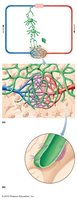
The lymphatic system is a network of vessels similar to veins, beginning as blind-ended lymphatic capillaries and eventually draining into the cardiovascular system via the right lymphatic duct and thoracic duct.
Lymph Nodes
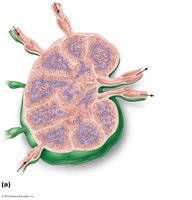
Lymph nodes are small, bean-shaped structures located along lymphatic vessels. They filter lymph, removing microorganisms, debris, and abnormal cells. Each node contains connective tissue, macrophages, and lymphocytes, acting as a filter as lymph passes through.
The Spleen
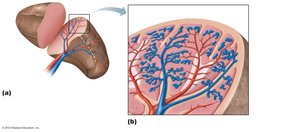
The spleen is the largest lymphatic organ, located in the upper left abdominal cavity. It has two main regions:
Red pulp: Removes old and damaged red blood cells; serves as temporary blood storage.
White pulp: Contains lymphocytes that search for pathogens.
The spleen can be removed with minor medical impact, but diseases like infectious mononucleosis and leukemia can cause its enlargement.
Thymus Gland
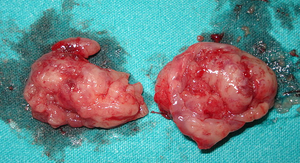
The thymus gland is located behind the sternum and above the heart. It is the site of T cell maturation and secretes hormones (thymosin and thymopoietin) that control T cell development. The thymus is most active during childhood and atrophies with age.
Tonsils and Adenoids
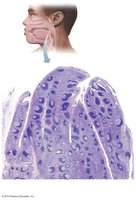
Tonsils are masses of lymphatic tissue near the entrance to the throat, filtering food and air. Adenoids are lymphatic tissue near the back of the nasal passages, filtering air. Both can become infected, leading to conditions such as tonsillitis.
Lines of Defense in Immunity
Innate (Nonspecific) Defense System
The innate immune system provides immediate, general protection against pathogens. It includes:
Surface barriers: Skin and mucous membranes.
Internal defenses: Phagocytes, natural killer cells, inflammation, antimicrobial proteins, and fever.
First Line of Defense: Physical and Chemical Barriers
Skin: Acts as a physical barrier.
Tears and saliva: Contain lysozyme, an antibacterial enzyme.
Ear wax and mucus: Trap microorganisms.
Coughing, sneezing, vomiting, urination, and defecation: Expel pathogens.
Stomach acid and vaginal acidity: Inhibit microbial growth.
Resident bacteria: Outcompete pathogens for resources.
Human Microbiota
The human microbiota consists of all microorganisms living in or on the body. Many are beneficial, providing competitive exclusion of pathogens, producing vitamins, and altering the environment to inhibit harmful microbes. Some can become opportunistic pathogens if host defenses are weakened.
Maintaining the Normal Microbiota
Probiotics: Supplements containing beneficial microorganisms.
Prebiotics: Substances that promote the growth of beneficial microbes in the gut.
Nonspecific Defenses: Second Line of Defense
When pathogens breach the first line of defense, the body employs nonspecific mechanisms such as:
Complement proteins: Mark pathogens for destruction, enhance inflammation, and lyse invaders.
Phagocytic cells: Neutrophils and macrophages engulf and digest foreign cells.
Inflammation: Redness, warmth, swelling, and pain; disposes of debris and initiates repair.
Natural killer cells: Destroy virus-infected and tumor cells.
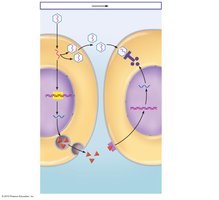
Interferons: Proteins secreted by virus-infected cells to protect neighboring cells.
Fever: Elevated body temperature inhibits pathogens and enhances immune responses.
Specific Defense Mechanisms: The Adaptive Immune Response
Characteristics of the Immune Response
Targets specific pathogens and foreign substances.
Has memory for faster, stronger responses upon re-exposure.
Distinguishes between self and nonself, as well as healthy and abnormal cells.
Antigens and MHC Proteins
Antigen: Any substance that triggers an immune response, usually a protein or polysaccharide on the surface of pathogens.
MHC (Major Histocompatibility Complex) proteins: Self-antigens on human cells that enable the immune system to recognize self from nonself.
Lymphocytes: B Cells and T Cells
B lymphocytes (B cells): Responsible for antibody-mediated (humoral) immunity. Produce antibodies that neutralize specific antigens.
T lymphocytes (T cells): Responsible for cell-mediated immunity. Directly attack infected or abnormal cells and coordinate the immune response.
B Cells: Antibody-Mediated Immunity
B cells are activated by recognizing their specific antigen, with help from helper T cells (via cytokines).
Activated B cells differentiate into memory cells (for future responses) and plasma cells (which secrete antibodies).
Antibodies bind to antigens, neutralize pathogens, promote phagocytosis, and activate complement.
Classes of Antibodies (Immunoglobulins)
IgG: Most prevalent; crosses placenta; activates complement.
IgM: First produced in response; activates complement.
IgA: Found in secretions (e.g., breast milk).
IgD: Function unclear; may serve as B cell receptor.
IgE: Involved in allergic responses.
T Cells: Cell-Mediated Immunity
T cells mature in the thymus and are activated when presented with antigen by antigen-presenting cells (APCs) such as macrophages and B cells.
Types of T cells:
Helper T cells (CD4): Secrete cytokines to stimulate other immune cells; targets of HIV.
Cytotoxic T cells (CD8): Destroy infected, cancerous, or foreign cells.
Memory T cells: Provide long-term immunity.
Immune Memory and Immunity
Primary immune response: First exposure; slower and less robust.
Secondary immune response: Subsequent exposures; faster and stronger due to memory cells.
Active and Passive Immunity
Active immunity: Developed through infection or vaccination; produces memory cells.
Passive immunity: Transfer of antibodies (e.g., maternal antibodies, antibody injections); provides immediate, short-term protection without memory.
Antibiotics and Antivirals
Antibiotics: Kill or inhibit bacteria by targeting unique bacterial features (e.g., cell wall synthesis). Not effective against viruses.
Antivirals: Fewer options; control but rarely cure viral infections.
