 Back
BackThe Immune System: Innate and Adaptive Defenses
Study Guide - Smart Notes
 Tailored notes based on your materials, expanded with key definitions, examples, and context.
CH. 43: THE IMMUNE SYSTEM
Overview of the Immune System
The immune system protects organisms from pathogens through a complex network of cells, tissues, and molecules. It is divided into two major branches: innate immunity and adaptive immunity. Innate immunity provides immediate, non-specific defense, while adaptive immunity offers targeted, long-lasting protection and memory.
Innate Immunity
Physical Barriers
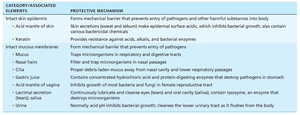
Physical barriers are the first line of defense, preventing the entry of pathogens into the body. These include the skin, mucous membranes, and associated secretions.
CATEGORY/ASSOCIATED ELEMENTS | PROTECTIVE MECHANISM |
|---|---|
Intact skin epidermis | Forms mechanical barrier that prevents entry of pathogens and other harmful substances into body |
Keratin | Provides resistance against acids, alkalis, and bacterial enzymes |
Intact mucous membranes | Forms mechanical barrier that prevents entry of pathogens |
Mucus | Traps microorganisms in respiratory and digestive tracts |
Nasal hairs | Filter and trap microorganisms in nasal passages |
Cilia | Propel debris-laden mucus away from nasal cavity and lower respiratory passages |
Gastric juice | Contains concentrated hydrochloric acid and protein-digesting enzymes that destroy pathogens in stomach |
Acid mantle of vagina | Inhibits growth of bacteria and fungi in female reproductive tract |
Lacrimal secretion (tears); saliva | Continuously lubricate and cleanse eyes (tears) and oral cavity (saliva); contain lysozyme, an enzyme that destroys microorganisms |
Urine | Normally acid pH inhibits bacterial growth; cleanses the lower urinary tract as it flushes from the body |
Chemical and Cellular Defenses
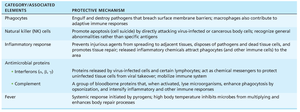
Innate immunity also includes chemical and cellular mechanisms that target pathogens that breach physical barriers.
CATEGORY/ASSOCIATED ELEMENTS | PROTECTIVE MECHANISM |
|---|---|
Phagocytes | Engulf and destroy pathogens that breach surface membrane barriers; macrophages also contribute to adaptive immune responses |
Natural killer (NK) cells | Promote apoptosis (cell death) by directly attacking virus-infected or cancerous body cells; recognize general abnormalities rather than specific antigens |
Inflammatory response | Prevents injurious agents from spreading to adjacent tissues, disposes of pathogens and dead tissue cells, and promotes tissue repair; releases inflammatory chemicals that attract phagocytes and other immune cells to the area |
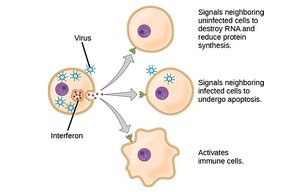
Antimicrobial proteins: Interferons (IFNs) | Proteins released by virus-infected cells and certain lymphocytes act as chemical messengers to protect uninfected tissue cells from viral takeover; mobilize immune system |
Antimicrobial proteins: Complement | A group of bloodborne proteins that, when activated, lyse microorganisms, enhance phagocytosis by opsonization, and intensify inflammation; also help adaptive immune responses |
Fever | Systemic response initiated by pyrogens; high body temperature inhibits microbes from multiplying and enhances body repair processes |
Local Inflammation
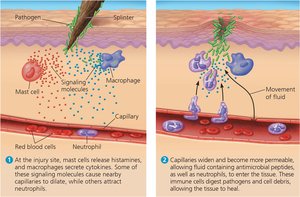
Inflammation is a localized response to infection or injury, characterized by redness, heat, swelling, and pain. It involves the release of signaling molecules, increased blood flow, and recruitment of immune cells to the affected area.
Mast cells release histamines and cytokines, increasing capillary permeability.
Neutrophils and macrophages migrate to the site to engulf pathogens and debris.
Systemic Inflammation
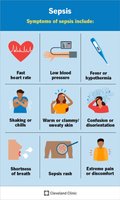
Systemic inflammation occurs when the inflammatory response spreads throughout the body, often due to severe infection or tissue damage. It can result in fever, increased production of neutrophils, and, in severe cases, septic shock—a life-threatening condition.
Fever may enhance phagocytosis and accelerate tissue repair.
Septic shock is characterized by dangerously low blood pressure and organ dysfunction.
Antimicrobial Proteins
Antimicrobial proteins are produced in response to pathogen recognition and help eliminate infections.
Interferons are proteins that signal neighboring cells to inhibit viral replication and activate immune cells.
Complement system consists of about 30 proteins that, when activated, lead to the lysis of infected cells and enhance phagocytosis.
Adaptive Immunity
Overview and Branches
Adaptive immunity provides specific, targeted defense against pathogens and generates immunological memory. It is activated after the innate response and is unique to vertebrates. Adaptive immunity is divided into two interconnected branches:
Humoral immunity (mediated by B cells and antibodies)
Cell-mediated immunity (mediated by T cells)
Antigens and Antibodies
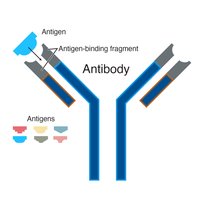
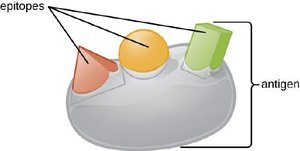
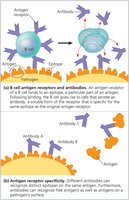
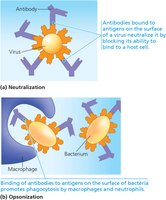
Antigens are foreign substances that elicit an immune response. Antibodies (immunoglobulins) are proteins produced by B cells that specifically bind to antigens, neutralizing or marking them for destruction.
Each antibody has a unique antigen-binding site that recognizes a specific epitope on the antigen.
IgG is the most common antibody in blood.
Lymphocytes: B Cells
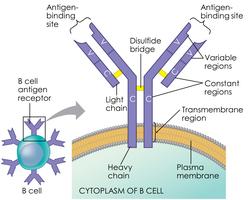
B cells originate and mature in the bone marrow. They recognize antigens directly using Y-shaped antigen receptors, each with two binding sites. Upon activation, B cells differentiate into plasma cells (which secrete antibodies) and memory B cells.
Lymphocytes: T Cells
T cells originate in the bone marrow and mature in the thymus. They recognize antigen fragments presented by host cells using H-shaped antigen receptors with a single binding site. T cells differentiate into helper T cells, cytotoxic T cells, and memory T cells.
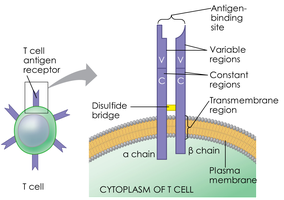
Antigen Recognition
B cells can bind directly to antigens, while T cells require antigen presentation by host cells via major histocompatibility complex (MHC) molecules. This ensures that T cells only respond to infected or abnormal cells.
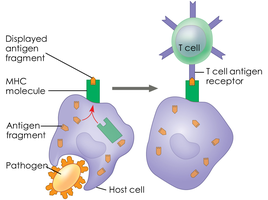
Proliferation of Cells (Clonal Selection)
Upon activation, B and T cells undergo clonal selection, producing many identical cells (clones). These differentiate into effector cells (which act immediately) and memory cells (which provide long-term immunity).
B cells: plasma cells (effector), memory B cells
T cells: helper T cells (CD4, effector), cytotoxic T cells (CD8, effector), memory T cells
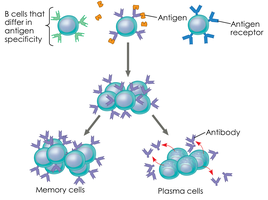
Immunological Memory
Immunological memory allows the immune system to respond more rapidly and effectively to previously encountered antigens. The primary immune response occurs upon first exposure, while the secondary immune response is faster and stronger due to memory cells.
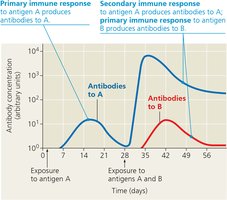
Fighting Infection
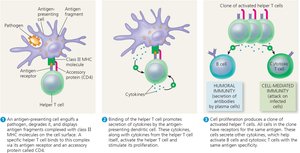
Helper T Cells
Helper T cells (CD4+) activate both humoral and cell-mediated immunity by recognizing antigens presented by antigen-presenting cells (APCs) via MHC II molecules. They secrete cytokines that stimulate B cells and cytotoxic T cells.
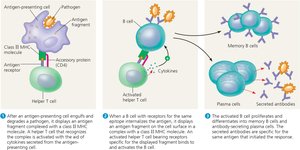
B Cells and Antibodies
B cells are central to the humoral immune response. They can be activated directly by antigens or with the help of helper T cells. Activated B cells differentiate into plasma cells that secrete antibodies, which neutralize pathogens or mark them for destruction.
Complement System Activation
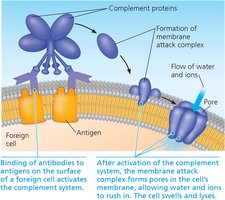
The complement system is activated by antibodies bound to pathogens, leading to the formation of membrane attack complexes that lyse foreign cells.
Cytotoxic T Cells
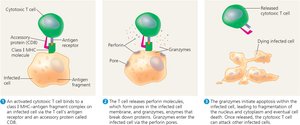
Cytotoxic T cells (CD8+) are responsible for the cell-mediated immune response. They recognize infected cells via MHC I molecules and induce apoptosis using toxic proteins such as perforin and granzymes.
Immunization and Antibodies in Medicine
Immunization involves the artificial introduction of antigens to stimulate adaptive immunity and memory cell formation. Vaccines may contain inactivated toxins, killed or weakened pathogens, or microbial proteins. Passive immunity is the transfer of antibodies from one individual to another, such as from mother to child. Monoclonal antibodies are lab-made proteins used in medicine to target specific pathogens, such as the COVID-19 virus.
Disruptions to the Immune System
Allergies
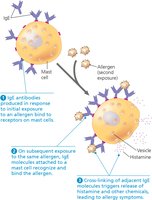
Allergies are exaggerated immune responses to harmless antigens (allergens), often involving IgE antibodies and mast cell activation. Severe reactions can lead to anaphylactic shock.
Autoimmune Diseases
Autoimmune diseases result from the loss of self-tolerance, causing the immune system to attack the body's own tissues. Examples include lupus, type 1 diabetes, multiple sclerosis, and rheumatoid arthritis.
Immunodeficiency
Immunodeficiency occurs when the immune response is defective or absent. It can be inborn (genetic) or acquired (e.g., HIV infection).
