 Back
BackThe Immune System: Innate and Adaptive Defenses, Disorders, and Vaccination
Study Guide - Smart Notes
 Tailored notes based on your materials, expanded with key definitions, examples, and context.
Introduction to Immunity and Disease
Viruses and Cancer
Some viruses, such as the human papillomavirus (HPV), are known to cause cancers, including cervical and anal cancers. Vaccines against HPV are available, but the duration of their effectiveness is still under investigation.
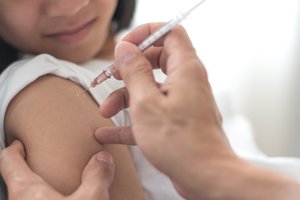
Overview of the Immune System
Big Ideas in Immunity
Innate Immunity: The first line of defense, present in all animals, acting immediately and non-specifically against pathogens.
Adaptive Immunity: A specific, acquired response found only in vertebrates, activated after exposure to particular pathogens.
Immune System Disorders: Conditions where the immune system malfunctions, leading to disease.
Innate Immunity
Innate Immunity in Animals
All animals possess innate immunity, which provides immediate, non-specific defense against pathogens (disease-causing agents). Invertebrates rely solely on innate immunity, while vertebrates have both innate and adaptive defenses.
Barriers: Skin, mucous membranes, and secretions act as physical and chemical barriers.
Cellular Defenses: Phagocytic cells (neutrophils, macrophages), natural killer cells, and defensive proteins (e.g., interferons, complement system).

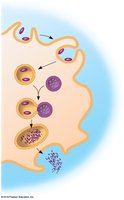
Phagocytosis
Phagocytes recognize pathogens by detecting molecules common to many microbes but absent from the host. They engulf and digest pathogens using lysosomes.
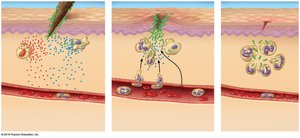
The Inflammatory Response
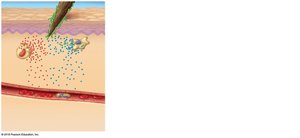
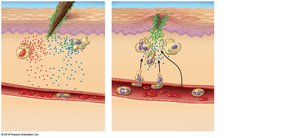
Tissue damage triggers the inflammatory response, which disinfects tissues and limits infection. Key steps include:
Release of signaling molecules from mast cells and macrophages, causing capillaries to dilate.
Capillaries become leaky, allowing neutrophils to migrate to the infection site.
Neutrophils digest bacteria and cell debris, leading to tissue healing.
Adaptive Immunity
Characteristics of Adaptive Immunity
Adaptive immunity is specific to particular pathogens and has memory, allowing for a stronger response upon re-exposure. It is mediated by lymphocytes (B cells and T cells).
Antigen: Any molecule that elicits an adaptive immune response.
Antibody: A protein produced by B cells that binds specifically to an antigen.
The Lymphatic System
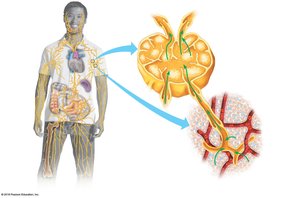
The lymphatic system is crucial for both innate and adaptive immunity. It consists of lymphatic vessels, lymph nodes, and lymph (fluid). Lymph organs are packed with white blood cells that fight infections.
Main functions: Return tissue fluid to the circulatory system and fight infection.
Lymphocytes: B Cells and T Cells
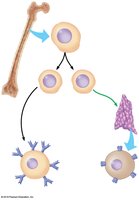
Lymphocytes originate from stem cells in the bone marrow. B cells mature in the bone marrow, while T cells mature in the thymus. They provide a dual defense:
Humoral immune response (B cells): Defense against pathogens in body fluids by producing antibodies.
Cell-mediated immune response (T cells): Defense against infected cells.
Antigen Recognition
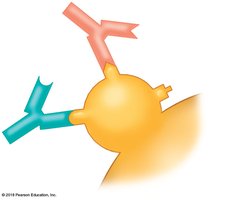
B cells recognize antigens directly, while T cells require antigens to be presented by other cells. The specific part of an antigen recognized is called the epitope, and the region on the antibody or receptor that binds the epitope is the antigen-binding site.
Clonal Selection
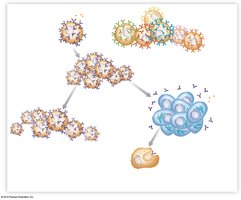
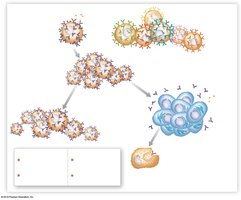
When an antigen enters the body, only lymphocytes with receptors specific to that antigen are activated. These cells divide to form clones of effector cells (which fight the infection) and memory cells (which provide long-term immunity).
Primary and Secondary Immune Responses
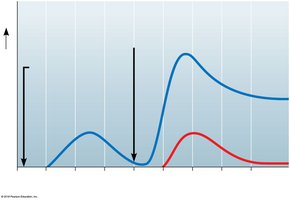
The first exposure to an antigen triggers the primary immune response. Subsequent exposures activate memory cells, resulting in a faster and stronger secondary immune response.
Herd Immunity
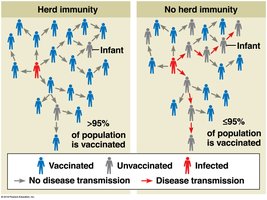
When a high percentage of a population is vaccinated, the spread of disease is limited, protecting even those who are unvaccinated. This is known as herd immunity.
Antibody Structure and Function
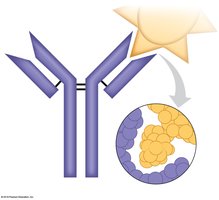
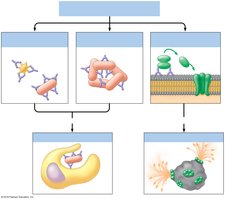
Antibodies have specific antigen-binding sites that allow them to bind to antigens and mark pathogens for destruction by other immune mechanisms. They do not kill pathogens directly.
Measuring Vaccine Effectiveness
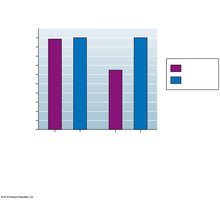
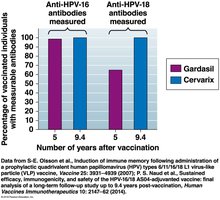
Scientists monitor antibody levels to assess the long-term effectiveness of vaccines, such as those for HPV. Data show that antibody levels remain high for years after vaccination, but ongoing monitoring is necessary.
Helper T Cells
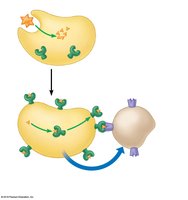
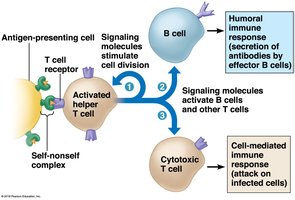
Helper T cells are activated by antigen-presenting cells and stimulate both the humoral and cell-mediated immune responses by releasing signaling molecules that activate B cells and cytotoxic T cells.
Cytotoxic T Cells
Cytotoxic T cells destroy infected body cells by binding to them and releasing perforin and enzymes that induce cell death, depriving pathogens of a place to multiply.
Immune System Disorders
HIV and AIDS
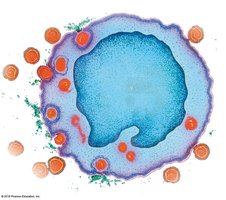
HIV infects and destroys helper T cells, leading to AIDS (acquired immunodeficiency syndrome). This impairs the immune system, making patients susceptible to infections and cancers. HIV mutates rapidly, complicating treatment.
Self-Recognition and Autoimmunity
Lymphocytes distinguish self from nonself using major histocompatibility complex (MHC) molecules. Autoimmune disorders occur when the immune system attacks self molecules. Immunodeficiency disorders result from a lack of immune components.
Allergies
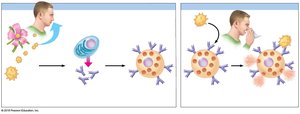
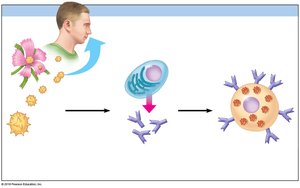
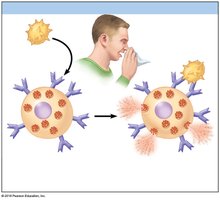
Allergies are exaggerated immune responses to harmless environmental antigens (allergens). Symptoms result from the release of histamine. Antihistamines can provide temporary relief.
Summary Table: Innate vs. Adaptive Immunity
Feature | Innate Immunity | Adaptive Immunity |
|---|---|---|
Specificity | Non-specific | Specific to antigens |
Response Time | Immediate | Slower (days) |
Memory | None | Has memory |
Main Components | Barriers, phagocytes, NK cells, complement | B cells, T cells, antibodies |
Presence | All animals | Only vertebrates |
Key Concepts for Review
Risks and prevention of HPV infections
Nature of innate and adaptive defenses
Steps of the inflammatory response
Structure and function of the lymphatic system
Development and function of B and T lymphocytes
Nature of antigens and antibodies
Clonal selection and immune memory
Primary vs. secondary immune responses
Herd immunity and vaccination
Immune system disorders: autoimmunity, immunodeficiency, allergies
