 Back
The Membrane: Structure, Function, and Transport Mechanisms
Study Guide - Smart Notes
 Tailored notes based on your materials, expanded with key definitions, examples, and context.
6. The Membrane
Biological Membranes: Structure and Composition
Biological membranes are essential structures that define the boundaries of cells and organelles, controlling the movement of substances in and out. The primary component of these membranes is the phospholipid bilayer, which is amphipathic—having both hydrophilic (water-attracting) and hydrophobic (water-repelling) regions. Embedded within this bilayer are various molecules such as proteins and cholesterol, contributing to membrane function and fluidity. This arrangement is described by the Fluid Mosaic Model, which states that membranes are dynamic and composed of a mosaic of proteins floating in or on the fluid lipid bilayer.
Phospholipids: Form the basic structural framework of the membrane.
Proteins: Serve various functions including transport, signaling, and structural support.
Cholesterol: Modulates membrane fluidity and stability.
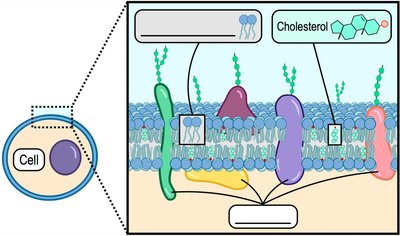
Example: The major components of membranes are phospholipids, proteins, and cholesterol.
Types of Membrane Proteins
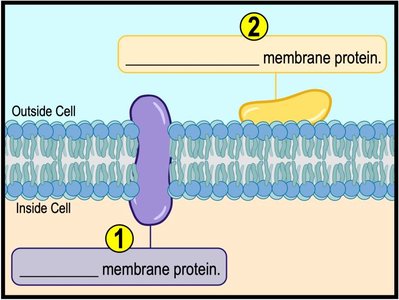
Membrane proteins are classified based on their association with the lipid bilayer:
Integral (Transmembrane) Proteins: Span the entire membrane and are involved in transport and signaling.
Peripheral Proteins: Loosely attached to the membrane's surface, often involved in signaling or maintaining cell shape.
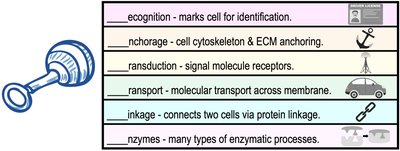
Functions of Membrane Proteins
Recognition: Mark cells for identification (e.g., immune response).
Anchorage: Attach the cytoskeleton to the extracellular matrix (ECM).
Transduction: Act as receptors for signal molecules.
Transport: Facilitate movement of substances across the membrane.
Linkage: Connect adjacent cells via protein linkages.
Enzymatic Activity: Catalyze specific reactions at the membrane surface.
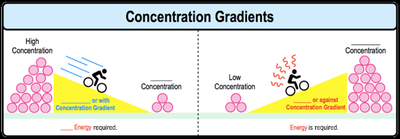
Concentration Gradients and Diffusion
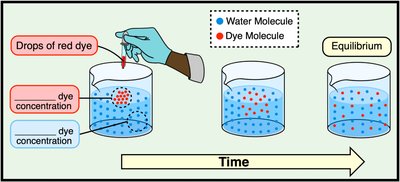
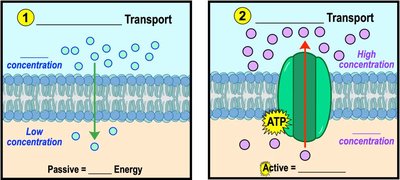
A concentration gradient exists when there is a difference in the concentration of a substance across a space. Molecules naturally move from areas of high concentration to low concentration (down the gradient), a process called diffusion. Movement against the gradient (from low to high concentration) requires energy input.
Diffusion Example: When dye is added to water, it spreads from high to low concentration until equilibrium is reached.
Membrane Transport Mechanisms
Selectively Permeable Membranes
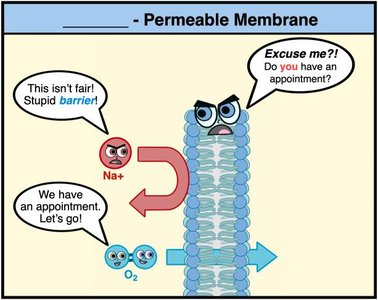
Biological membranes are selectively permeable, meaning they allow some molecules to cross more easily than others. This property is crucial for maintaining cellular homeostasis.
Molecules That Freely Cross Membranes
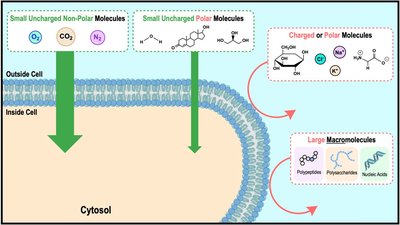
Small, uncharged, nonpolar molecules (e.g., O2, CO2) can diffuse freely.
Large, charged, or polar molecules (e.g., ions, glucose) require protein assistance.

Overview of Membrane Transport
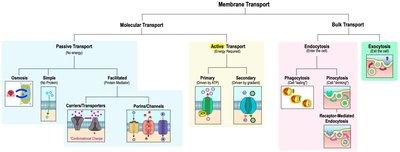
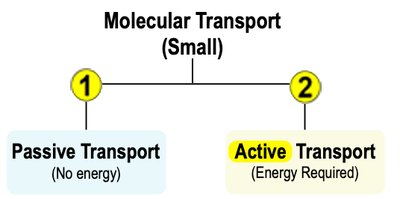
Transport across membranes can be divided into passive (no energy required) and active (energy required) processes. Bulk transport mechanisms include endocytosis and exocytosis for large molecules.
Passive vs. Active Transport
There are two main types of molecular transport:
Passive Transport: Moves substances down their concentration gradient without energy input.
Active Transport: Moves substances against their concentration gradient, requiring energy (usually ATP).
Classes of Membrane Transport Proteins
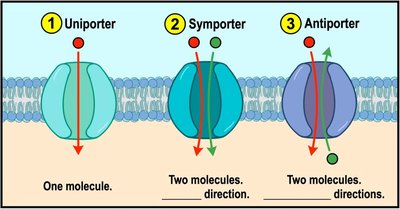
Uniporters: Transport one molecule at a time in one direction.
Symporters: Cotransport two or more molecules in the same direction.
Antiporters: Cotransport two or more molecules in opposite directions.
Osmosis and Tonicity
Osmosis
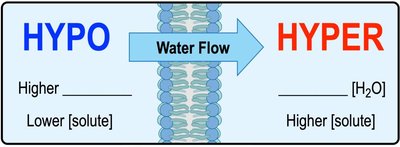
Osmosis is the passive diffusion of water across a semi-permeable membrane. The direction of water movement depends on the relative concentration of solutes (tonicity) on either side of the membrane.
Hypotonic Solution: Lower solute concentration outside the cell; water enters the cell.
Isotonic Solution: Equal solute concentrations; no net water movement.
Hypertonic Solution: Higher solute concentration outside the cell; water exits the cell.
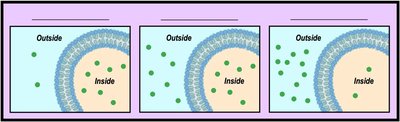
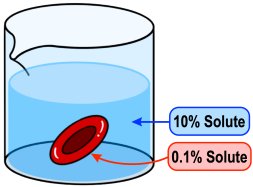
Water moves from hypotonic to hypertonic solutions if solutes cannot cross the membrane, aiming to equalize solute concentrations.
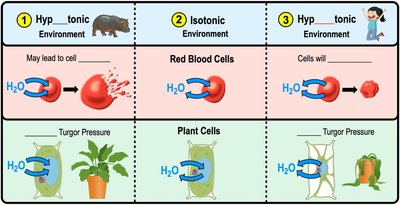
Effects of Tonicity on Cells
In hypotonic environments, animal cells may swell and burst (lyse), while plant cells become turgid (preferred state).
In isotonic environments, animal cells are stable, and plant cells are flaccid.
In hypertonic environments, cells lose water and shrink (crenate or plasmolyze).
Simple and Facilitated Diffusion
Simple Diffusion
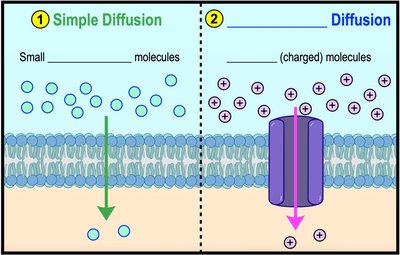
Simple diffusion is the direct movement of small, uncharged molecules across the membrane without the need for proteins or energy.
Facilitated Diffusion
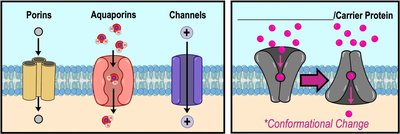
Facilitated diffusion is the passive movement of charged or polar molecules across the membrane via specific transport proteins (channels or carriers). No energy is required, but a protein mediator is essential.
Active Transport
Primary Active Transport
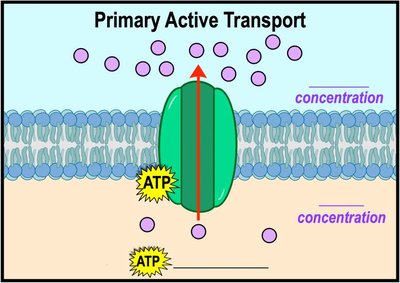
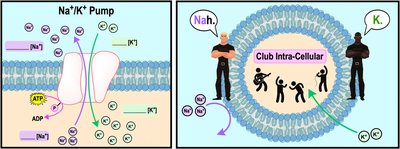
Primary active transport uses energy directly from ATP hydrolysis to move molecules against their concentration gradient. A classic example is the sodium-potassium pump (Na+/K+ ATPase), which exports three sodium ions and imports two potassium ions per ATP molecule hydrolyzed.
Secondary Active Transport
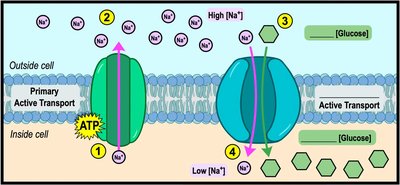
Secondary active transport does not use ATP directly. Instead, it relies on the concentration gradient established by primary active transport. For example, the sodium-glucose cotransporter uses the sodium gradient to drive glucose uptake against its gradient.
Bulk Transport: Endocytosis and Exocytosis
Endocytosis
Endocytosis is the process by which cells engulf large molecules or particles by wrapping the plasma membrane around them and forming a vesicle. Types include:
Phagocytosis: "Cell eating"—engulfment of large particles.
Pinocytosis: "Cell drinking"—engulfment of extracellular fluid.
Receptor-mediated endocytosis: Specific uptake of molecules via receptor proteins.
Exocytosis
Exocytosis is the process by which cells expel large molecules by vesicle fusion with the plasma membrane, releasing contents to the extracellular space. This is essential for secretion of hormones, neurotransmitters, and waste products.
