 Back
Lecture 16
Study Guide - Smart Notes
 Tailored notes based on your materials, expanded with key definitions, examples, and context.
Chapter 16: The Molecular Basis of Inheritance
Introduction
This chapter explores the structure of DNA, the mechanisms of DNA replication, and the molecular machinery involved in ensuring the faithful transmission of genetic information. Understanding these processes is fundamental to genetics, cell biology, and biotechnology.
DNA Structure
Watson-Crick Model of DNA
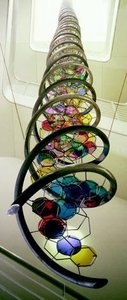
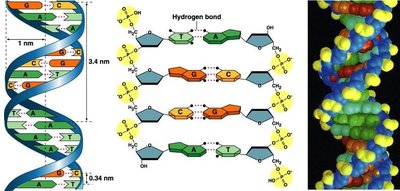
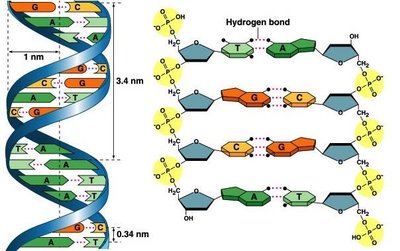
The Watson-Crick model describes DNA as a double helix composed of two antiparallel polynucleotide strands. The strands are held together by hydrogen bonds between complementary nitrogenous bases.
Double Helix: Two strands twisted around each other, forming a right-handed helix.
Antiparallel Orientation: One strand runs 5' to 3', the other 3' to 5'.
Base Pairing Rules: Adenine (A) pairs with Thymine (T), and Guanine (G) pairs with Cytosine (C).
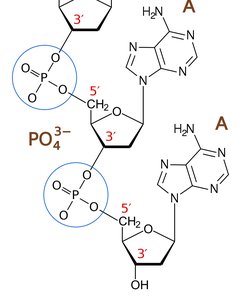
Sugar-Phosphate Backbone: Alternating deoxyribose sugars and phosphate groups form the 'rails' of the helix, while the nitrogenous bases form the 'rungs.'
Base Pairs and Units of Length
A base pair (bp) consists of two nucleotides from opposite strands that are hydrogen-bonded together. Base pairs are used as units of length in DNA (e.g., kilobase pairs, kb).
Complementarity: Knowing one base allows prediction of its pair.
Hereditary Information: The sequence of base pairs encodes genetic information.
DNA Replication
Overview of DNA Replication
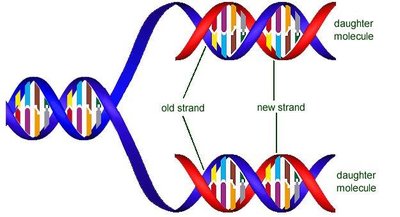
DNA replication is the process of copying DNA during the S phase of interphase. It is semi-conservative, meaning each new DNA molecule consists of one old and one new strand.
Initiation: Hydrogen bonds between strands are broken.
Template Mechanism: Each single strand serves as a template for a new complementary strand.
Semi-Conservative Replication: Each daughter DNA molecule contains one parental and one newly synthesized strand.
Composition of a Nucleotide
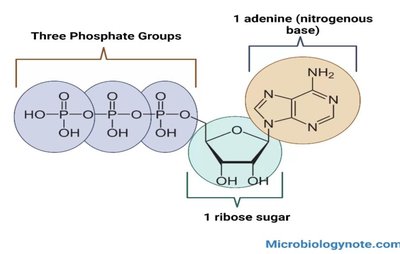
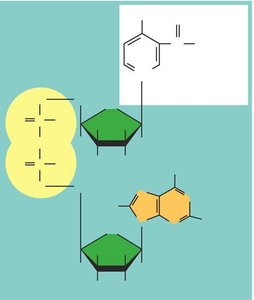
Nucleotides are the building blocks of DNA and RNA. Each nucleotide consists of:
Sugar: Deoxyribose in DNA.
Nitrogenous Base: Adenine (A), Thymine (T), Guanine (G), or Cytosine (C).
Phosphate Group: One or more phosphate groups.
Energy for Replication
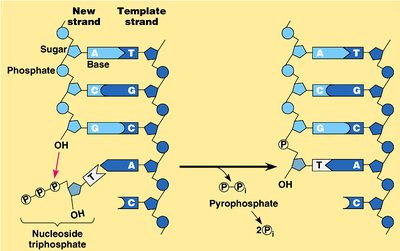
The energy required for DNA synthesis comes from the hydrolysis of two phosphate groups from nucleoside triphosphates (dNTPs). This reaction forms phosphodiester bonds between nucleotides.
Phosphodiester Bonds: Link the 3' carbon of one sugar to the 5' phosphate of the next.
Dehydration Synthesis: Each new nucleotide is added via a condensation reaction.
Origin of Replication
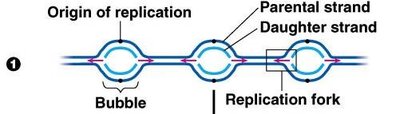
Replication begins at specific sites called origins of replication. Eukaryotic chromosomes have multiple origins, allowing rapid and efficient copying of long DNA molecules.
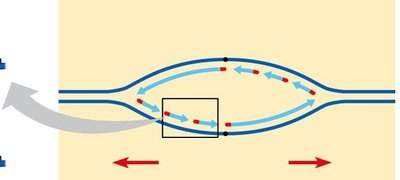
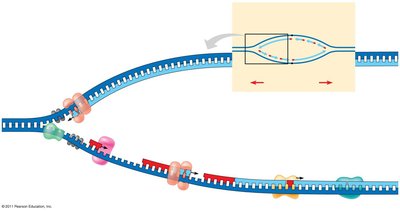
Replication Bubble: Each origin forms a bubble with two replication forks.
Replication Forks: Sites where DNA unwinds and new strands are synthesized.
Replication Enzymes and Proteins
Several enzymes and proteins coordinate the process of DNA replication:
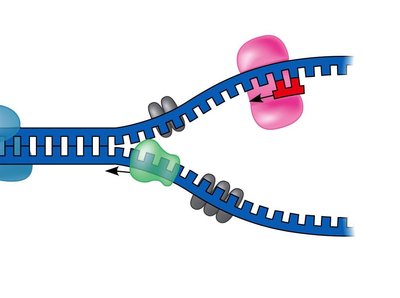
Helicase: Unwinds and separates the double helix.
Primase: Synthesizes short RNA primers to provide a starting point for DNA polymerase.
DNA Polymerase III: Adds nucleotides to the 3' end of the new strand; proofreads for errors.
Topoisomerase: Relieves supercoiling ahead of the replication fork by breaking and rejoining DNA strands.
Single-Strand Binding Proteins: Stabilize unwound DNA strands.
Strand Elongation: Leading and Lagging Strands
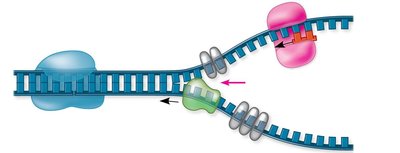
DNA polymerase can only synthesize DNA in the 5' to 3' direction, resulting in two modes of synthesis:
Leading Strand: Synthesized continuously toward the replication fork.
Lagging Strand: Synthesized discontinuously away from the fork in short segments called Okazaki fragments.
Joining New DNA Fragments
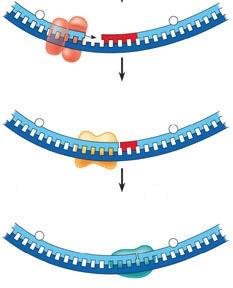
On the lagging strand, DNA polymerase I replaces RNA primers with DNA, and DNA ligase joins Okazaki fragments to form a continuous strand.
DNA Polymerase I: Removes RNA primers and fills in with DNA.
DNA Ligase: Seals nicks in the sugar-phosphate backbone.
Overview of Lagging Strand Elongation
The synthesis of the lagging strand involves repeated priming, extension, primer removal, and ligation.
Primase synthesizes RNA primers.
DNA polymerase III extends Okazaki fragments.
DNA polymerase I replaces RNA with DNA.
DNA ligase joins fragments.
End Replication Problem and Telomeres
End Replication Problem
In eukaryotes, the linear nature of chromosomes means that the ends cannot be fully replicated by DNA polymerase, leading to progressive shortening with each cell division.
Primers Required: DNA polymerase cannot initiate synthesis without a primer.
Unreplicated Ends: The 5' ends of daughter strands cannot be completed, resulting in shorter chromosomes.

Telomeres and Telomerase
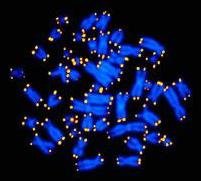
Telomeres are repetitive, non-coding sequences at the ends of chromosomes that protect genes from erosion. In certain cells, the enzyme telomerase extends telomeres, counteracting shortening and allowing continued cell division.
Function: Prevents loss of important genetic information.
Telomerase: Active in stem cells and germ cells, not in most somatic cells.
Aging: Telomere shortening is associated with cellular aging.
Other Functions of Nucleotides
Energy Carriers, Coenzymes, and Messengers
Nucleotides serve additional roles in the cell beyond being DNA and RNA monomers:
Energy Carriers: ATP (adenosine triphosphate) is the primary energy currency of the cell.
Coenzymes: NAD+ (nicotinamide adenine dinucleotide) assists in redox reactions.
Chemical Messengers: cAMP (cyclic adenosine monophosphate) acts as a second messenger in signal transduction.
Laboratory Techniques in Molecular Biology
Key Techniques
Modern molecular biology relies on several essential laboratory techniques:
Micropipetting: Accurate measurement and transfer of small liquid volumes.
Sterile (Aseptic) Technique: Prevents contamination of samples and cultures.
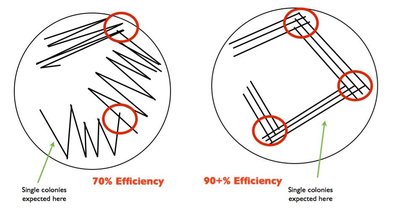
Clonal Colony Production: Plating bacteria to obtain genetically identical colonies.
Summary Table: Key Enzymes in DNA Replication
Enzyme/Protein | Function |
|---|---|
Helicase | Unwinds DNA double helix |
Primase | Synthesizes RNA primers |
DNA Polymerase III | Extends DNA strand from primer |
DNA Polymerase I | Replaces RNA primers with DNA |
DNA Ligase | Joins Okazaki fragments |
Topoisomerase | Relieves supercoiling |
Single-Strand Binding Proteins | Stabilize unwound DNA |
Additional info: This guide expands on the original notes with definitions, examples, and a summary table for clarity and completeness.
