 Back
The Molecular Basis of Inheritance: DNA Structure and Replication
Study Guide - Smart Notes
 Tailored notes based on your materials, expanded with key definitions, examples, and context.
DNA: The Genetic Material
Discovery and Significance
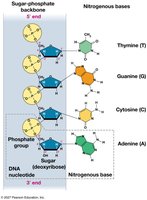
DNA is the molecule responsible for storing and transmitting genetic information in all living organisms. Its identification as the genetic material was supported by evidence of molecular diversity among species and the ability to transmit hereditary traits. - Key Point 1: DNA is a polymer composed of nucleotides, each containing a nitrogenous base (adenine, thymine, guanine, or cytosine), a sugar (deoxyribose), and a phosphate group. - Key Point 2: Erwin Chargaff discovered that DNA composition varies between species and that the amount of adenine equals thymine, and guanine equals cytosine (Chargaff's rules). - Example: The molecular diversity of DNA makes it a credible candidate for genetic material. 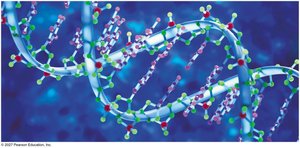
DNA Structure
Double Helix Model
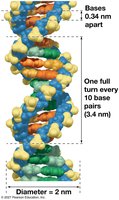
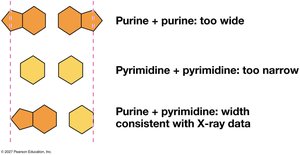
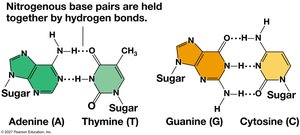
The structure of DNA was elucidated through X-ray crystallography, notably by Rosalind Franklin, which revealed its helical nature. Watson and Crick built models to explain DNA's structure and its role in inheritance. - Key Point 1: DNA consists of two antiparallel strands forming a double helix, with sugar-phosphate backbones on the outside and nitrogenous bases paired in the interior. - Key Point 2: Base pairing is specific: adenine pairs with thymine, and guanine pairs with cytosine, held together by hydrogen bonds. - Example: The double helix model explains Chargaff's rules and the uniform width of DNA. 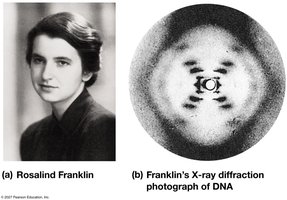
DNA Replication
Transmission of Genetic Information
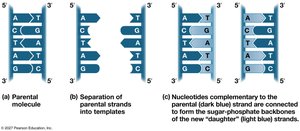
DNA replication is essential for the faithful transmission of genetic information from parent to offspring and from parent cell to daughter cells. - Key Point 1: Replication occurs prior to cell division (mitosis and meiosis), ensuring genetic continuity. - Key Point 2: The semiconservative model predicts that each new DNA molecule contains one old strand and one newly synthesized strand. - Example: Accurate DNA replication is crucial for resemblance between offspring and parents. 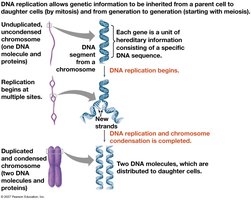
Origins of Replication
Replication begins at specific sites called origins of replication, where the DNA strands are separated to form replication bubbles. - Key Point 1: Eukaryotic chromosomes have multiple origins, while prokaryotes typically have a single origin. - Key Point 2: Replication proceeds bidirectionally from each origin until the entire molecule is copied. 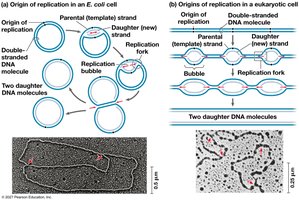
Replication Fork and Enzymes
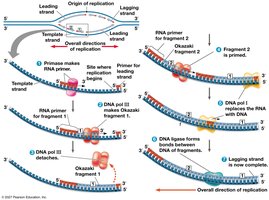
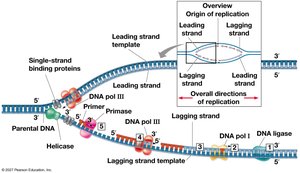
At the end of each replication bubble is a replication fork, where several enzymes coordinate the unwinding and synthesis of DNA. - Key Point 1: Helicase unwinds the DNA helix; single-strand binding proteins stabilize the unwound strands; topoisomerase relieves strain ahead of the fork. - Key Point 2: Primase synthesizes a short RNA primer required for DNA polymerase to begin synthesis. 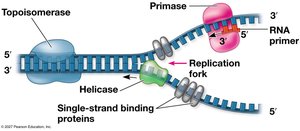
DNA Polymerase and Elongation
DNA polymerases catalyze the synthesis of new DNA by adding nucleotides to the 3' end of the primer. - Key Point 1: Each nucleotide added is a nucleoside triphosphate, and the reaction releases pyrophosphate. - Key Point 2: DNA polymerases can only elongate in the 5' → 3' direction. 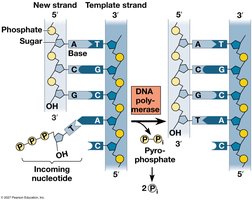
Leading and Lagging Strands
The antiparallel nature of DNA results in continuous synthesis of the leading strand and discontinuous synthesis of the lagging strand (Okazaki fragments). - Key Point 1: The leading strand is synthesized continuously toward the replication fork. - Key Point 2: The lagging strand is synthesized in fragments, which are joined by DNA ligase. 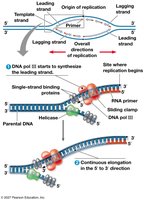
Replication Proteins and Their Functions
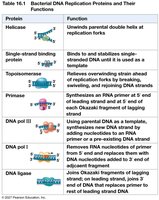
Multiple proteins coordinate the replication process, each with a specific function.
Protein | Function |
|---|---|
Helicase | Unwinds parental double helix at replication forks |
Single-strand binding protein | Binds to and stabilizes single-stranded DNA |
Topoisomerase | Relieves overwinding strain ahead of replication forks |
Primase | Synthesizes RNA primer at 5' end of leading strand and at each Okazaki fragment |
DNA pol III | Using parental DNA as template, synthesizes new DNA strand by adding nucleotides to RNA primer or pre-existing DNA strand |
DNA pol I | Removes RNA primer and replaces it with DNA |
DNA ligase | Joins Okazaki fragments of lagging strand and joins 3' end of DNA that replaces primer to rest of leading strand DNA |
Replication Complex: Trombone Model
The replication complex coordinates the synthesis of both strands, with the lagging strand looping out to allow simultaneous synthesis. 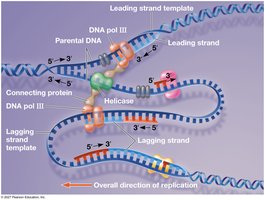
DNA Repair and Proofreading
Proofreading and Mismatch Repair
DNA polymerases proofread newly synthesized DNA, correcting errors. Additional repair enzymes fix mismatches and damage caused by environmental factors. - Key Point 1: Proofreading reduces the error rate, but some mutations persist and contribute to genetic variation. - Key Point 2: Nucleotide excision repair removes damaged DNA segments and replaces them with correct nucleotides. 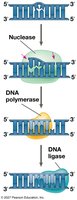
Telomeres and Chromosome Structure
Telomere Function
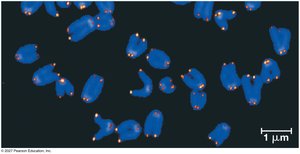
Linear chromosomes face the problem of incomplete replication at their ends, leading to gradual shortening. Telomeres are repetitive sequences that protect essential genes from erosion. - Key Point 1: Telomerase extends telomeres in germ cells, preventing loss of genetic information. - Key Point 2: Telomere shortening is associated with aging and may limit cell division, protecting against cancer. 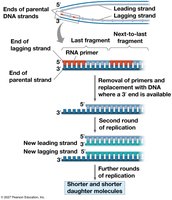
Chromosome Organization
Bacterial vs. Eukaryotic Chromosomes
Bacterial chromosomes are circular and supercoiled, while eukaryotic chromosomes are linear and associated with large amounts of protein. - Key Point 1: In bacteria, DNA is found in the nucleoid region. - Key Point 2: Eukaryotic DNA is packaged with histones into chromatin, which undergoes various levels of condensation.
Chromatin Structure and Packing
Chromatin consists of DNA wrapped around histone proteins, forming nucleosomes. Packing levels range from loosely packed euchromatin to highly condensed heterochromatin. - Key Point 1: Chromatin packing changes during the cell cycle, condensing into metaphase chromosomes for mitosis. - Key Point 2: Histone modifications regulate chromatin structure and gene expression. 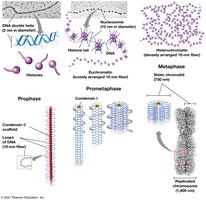
Chromosome Territories and Painting
During interphase, chromosomes occupy distinct regions in the nucleus, preventing entanglement and facilitating gene regulation. 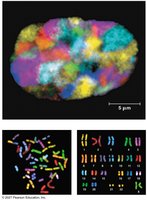
Summary
The molecular basis of inheritance is rooted in the structure and replication of DNA. Accurate replication, repair, and chromatin organization ensure the faithful transmission of genetic information and contribute to genetic diversity and evolution. Additional info: DNA replication and repair mechanisms are fundamental to understanding cell division, heredity, and the molecular basis of genetic diseases.
