 Back
BackThe Molecules of Cells: Structure and Function of Biological Macromolecules
Study Guide - Smart Notes
 Tailored notes based on your materials, expanded with key definitions, examples, and context.
The Molecules of Cells
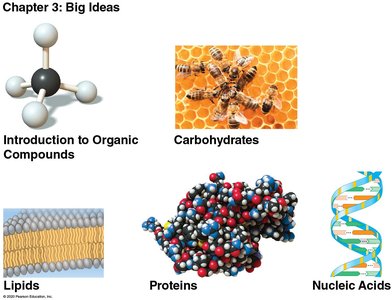
Introduction to Organic Compounds
Organic molecules are the foundation of all living organisms. Their diversity and complexity arise from the unique bonding properties of carbon atoms, which serve as the backbone for a vast array of biological molecules.
Carbon has 6 protons and 6 electrons, with 4 electrons in its valence shell, allowing it to form up to four covalent bonds.
This bonding versatility enables the construction of large, complex, and diverse organic molecules.
Isomers are compounds with the same molecular formula but different structures, leading to different properties.
Hydrocarbons are organic molecules consisting only of carbon and hydrogen.
Functional Groups
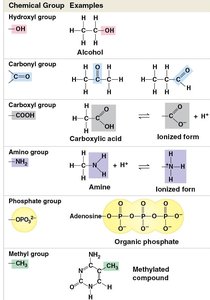
The chemical behavior of organic molecules is largely determined by functional groups attached to their carbon skeletons. These groups confer specific properties and reactivity to the molecules.
Functional groups include hydroxyl, carbonyl, carboxyl, amino, phosphate, and methyl groups.
They are key to the function and classification of organic molecules.
Chemical Group | Example |
|---|---|
Hydroxyl (-OH) | Alcohol |
Carbonyl (C=O) | Aldehyde, Ketone |
Carboxyl (-COOH) | Carboxylic acid |
Amino (-NH2) | Amine |
Phosphate (-OPO32-) | Organic phosphate |
Methyl (-CH3) | Methylated compound |
Macromolecules: Polymers and Monomers
Formation and Breakdown of Polymers
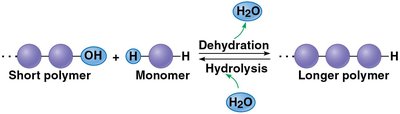
Cells construct large biological molecules, or macromolecules, by linking smaller units called monomers into polymers. The processes of dehydration synthesis and hydrolysis are central to the assembly and disassembly of these molecules.
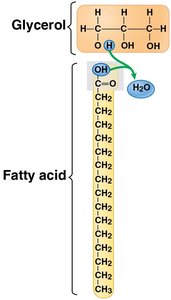
Dehydration reactions join monomers by removing a molecule of water, forming a covalent bond.
Hydrolysis reactions break polymers into monomers by adding water, a process catalyzed by enzymes.
Carbohydrates
Monosaccharides
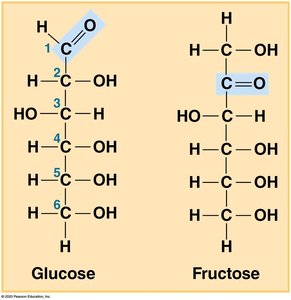
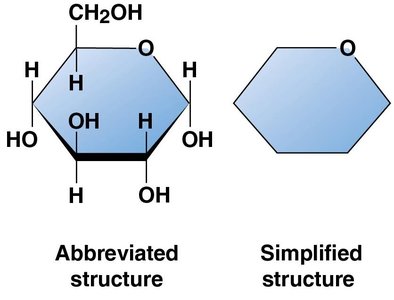
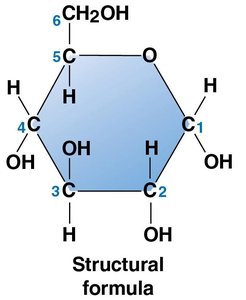
Monosaccharides are the simplest carbohydrates, commonly known as simple sugars. They serve as the primary energy source for cells and as building blocks for more complex carbohydrates.
General formula: (CH2O)n
Contain hydroxyl and carbonyl functional groups.
Glucose (C6H12O6) is a hexose sugar and the main energy source for most cells.
Ribose is a pentose sugar found in RNA and DNA.
Disaccharides
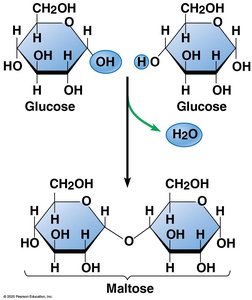
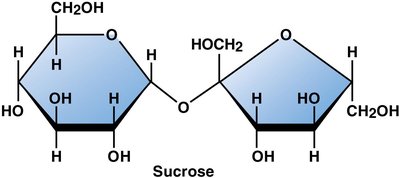
Disaccharides are formed when two monosaccharides are joined by a dehydration reaction, resulting in a covalent bond known as a glycosidic linkage.
Common examples include maltose (glucose + glucose), sucrose (glucose + fructose), and lactose (glucose + galactose).
Polysaccharides
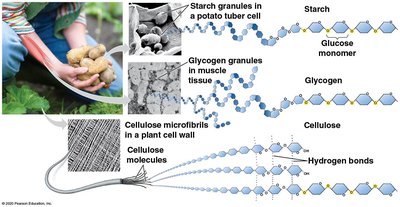
Polysaccharides are large polymers of monosaccharides and serve as energy storage or structural components in cells.
Starch: Storage form of glucose in plants.
Glycogen: Storage form of glucose in animals.
Cellulose: Structural component of plant cell walls.
Chitin: Structural component in fungal cell walls and exoskeletons of arthropods.
Lipids
Fats (Triglycerides)
Lipids are a diverse group of hydrophobic molecules, primarily composed of carbon and hydrogen. Fats, or triglycerides, are important for long-term energy storage.
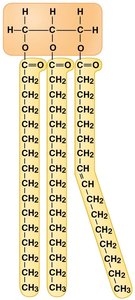
Composed of one glycerol molecule and three fatty acids.
Saturated fatty acids have no double bonds and are typically solid at room temperature (animal fats).
Unsaturated fatty acids have one or more double bonds and are usually liquid at room temperature (plant oils).
Phospholipids and Steroids
Other important lipids include phospholipids and steroids, which play key roles in cell structure and signaling.
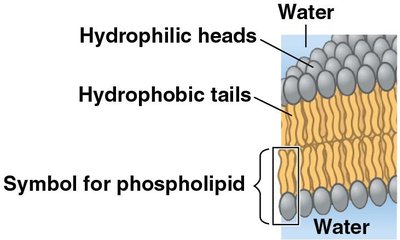
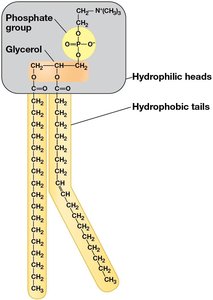
Phospholipids are major components of cell membranes, forming a bilayer with hydrophilic heads and hydrophobic tails.
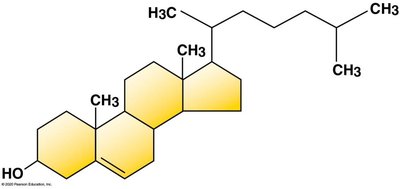
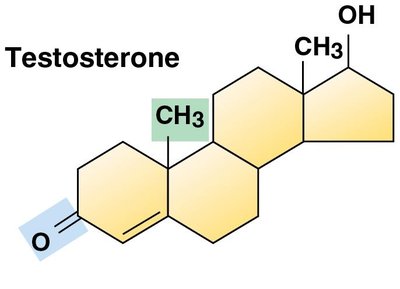
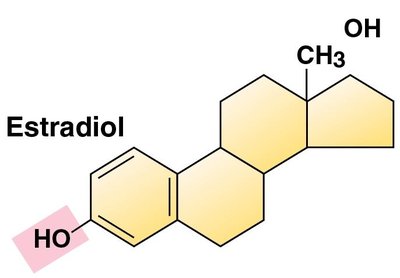
Steroids have a structure of four fused rings; examples include cholesterol and hormones such as testosterone and estradiol.
Proteins
Structure and Function
Proteins are polymers of amino acids and are responsible for nearly every dynamic function in living organisms. Their structure determines their function.
Functions include catalysis (enzymes), transport, defense (antibodies), signaling (hormones), movement (contractile proteins), structure (collagen), and storage.
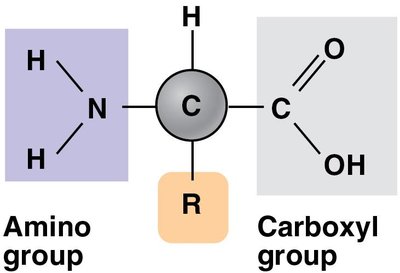
Composed of 20 different amino acids, each with a unique R group.
Denaturation is the loss of protein structure and function due to environmental changes.
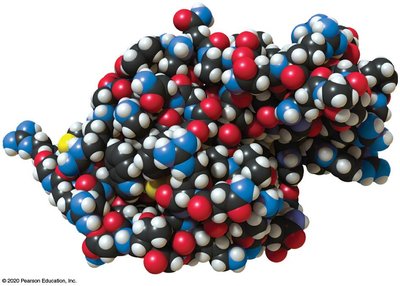
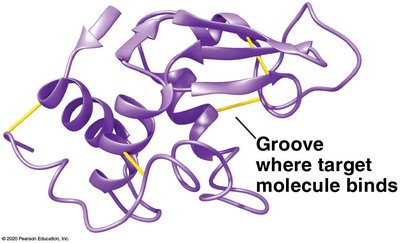
Amino Acid Structure and Diversity
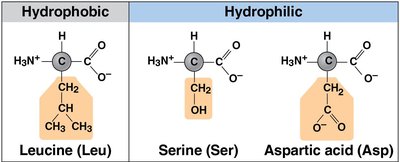
Each amino acid contains a central carbon atom bonded to an amino group, a carboxyl group, a hydrogen atom, and a variable R group. The properties of the R group determine the characteristics of each amino acid.
Amino acids are classified as hydrophobic or hydrophilic based on their R groups.
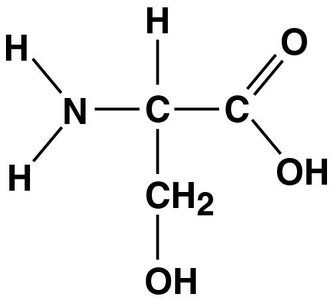
Type | Example |
|---|---|
Hydrophobic | Leucine (Leu) |
Hydrophilic | Serine (Ser), Aspartic acid (Asp) |
Peptide Bonds and Protein Structure
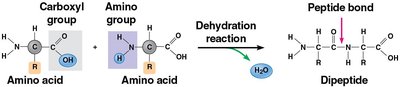
Amino acids are linked by peptide bonds formed through dehydration reactions, creating polypeptide chains. Proteins have four levels of structure:
Primary structure: Sequence of amino acids.
Secondary structure: Coiling or folding stabilized by hydrogen bonds (e.g., alpha helix, beta sheet).
Tertiary structure: Overall 3D shape due to interactions among R groups.
Quaternary structure: Association of multiple polypeptide chains.
Nucleic Acids
Structure and Function
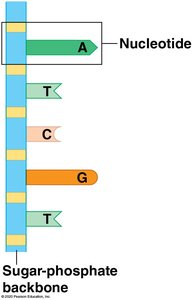
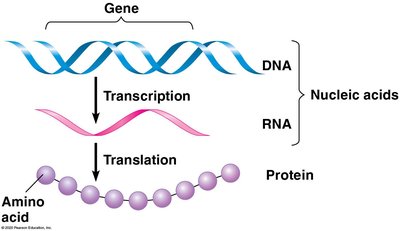
Nucleic acids, including DNA and RNA, are polymers of nucleotides that store and transmit genetic information. They serve as blueprints for protein synthesis and are essential for inheritance.
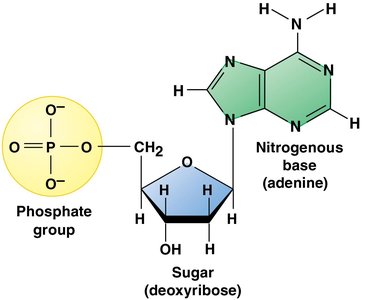
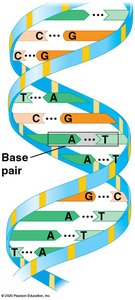
Nucleotides consist of a phosphate group, a five-carbon sugar (deoxyribose or ribose), and a nitrogenous base (adenine, thymine, cytosine, guanine, or uracil).
DNA is a double helix; RNA is usually single-stranded.
DNA and RNA direct the synthesis of proteins through the processes of transcription and translation.
Additional info: The structure and function of biological macromolecules are central to understanding cellular processes and the molecular basis of life. Mastery of these concepts is foundational for further study in biochemistry, genetics, and cell biology.
