 Back
The Molecules of Cells: Structure and Function of Biological Macromolecules
Study Guide - Smart Notes
 Tailored notes based on your materials, expanded with key definitions, examples, and context.
Chapter 3: The Molecules of Cells
Introduction
Biological molecules are essential for the structure and function of living organisms. For example, the enzyme lactase is required to digest lactose in dairy products. Individuals lacking this enzyme are lactose intolerant, illustrating the importance of enzymes and other biological molecules in daily life.

Introduction to Organic Compounds
3.1 Life’s Molecular Diversity Is Based on the Properties of Carbon
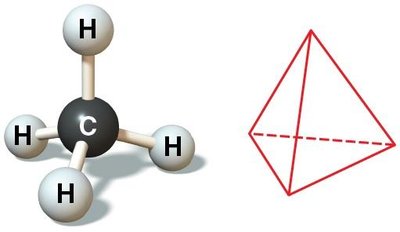
Carbon is the foundation of biological molecules due to its ability to form four covalent bonds, allowing for a diversity of stable, complex structures. The versatility of carbon enables the formation of large and varied organic compounds.
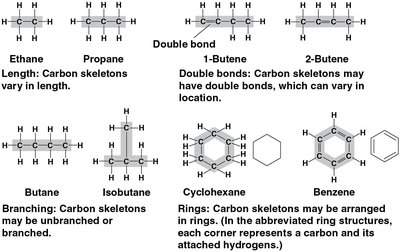
Carbon chains form the backbone of most organic molecules.
Isomers are compounds with the same molecular formula but different structures, leading to different properties.
Hydrocarbons are composed only of carbon and hydrogen.
Isomerism
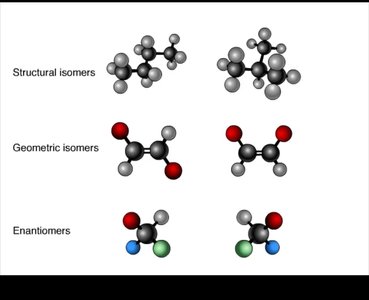
Structural isomers: Differ in the covalent arrangements of their atoms.
Geometric isomers: Differ in spatial arrangements due to inflexible double bonds.
Enantiomers: Mirror images of each other, important in pharmaceuticals.
Example: Methamphetamine exists as two enantiomers: one is a potent illegal drug, the other is a legal nasal decongestant. Their different effects are due to their distinct three-dimensional shapes.
3.2 A Few Chemical Groups are Key to the Functioning of Biological Molecules
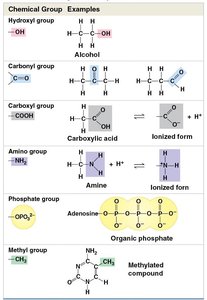
The properties of organic compounds depend on the size and shape of their carbon skeletons and the chemical groups attached. Functional groups are specific groups of atoms that confer particular chemical properties to molecules. Many functional groups are hydrophilic, increasing the solubility of organic compounds in water.
Chemical Group | Examples |
|---|---|
Hydroxyl (–OH) | Alcohols |
Carbonyl (–C=O) | Aldehydes, Ketones |
Carboxyl (–COOH) | Carboxylic acids |
Amino (–NH2) | Amines |
Phosphate (–OPO32–) | Organic phosphates |
Methyl (–CH3) | Methylated compounds |
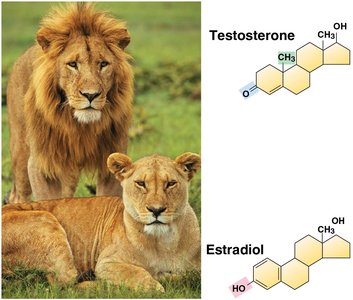
Example: The sex hormones testosterone and estradiol differ only in the functional groups attached to their carbon skeletons, yet have vastly different effects in the body.
Macromolecules: Polymers and Monomers
3.3 Cells Make Large Molecules from a Limited Set of Small Molecules
Most biological macromolecules are polymers, long chains made from repeating units called monomers. Cells build polymers through dehydration reactions (removal of water) and break them down by hydrolysis (addition of water). These reactions are catalyzed by enzymes.
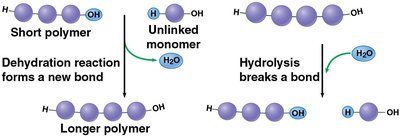
Dehydration reaction: Joins monomers by removing a water molecule.
Hydrolysis: Breaks polymers into monomers by adding water.
Carbohydrates
3.4 Monosaccharides are the Simplest Carbohydrates
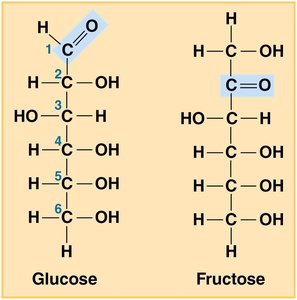
Carbohydrates include sugars and polymers of sugars. The simplest carbohydrates are monosaccharides, which generally have the formula and contain hydroxyl and carbonyl groups.
Monosaccharides: Single sugar units (e.g., glucose, fructose).
Disaccharides: Two monosaccharides joined by a dehydration reaction (e.g., sucrose, lactose).
Polysaccharides: Long chains of monosaccharides (e.g., starch, glycogen, cellulose).
3.5 Two Monosaccharides Are Linked to Form a Disaccharide
Disaccharides are formed when two monosaccharides are joined by a dehydration reaction, producing a glycosidic bond and releasing water.
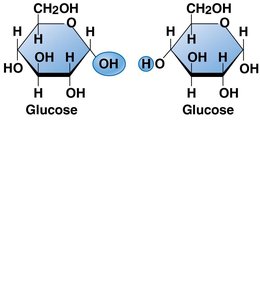
Example: Lactose (milk sugar) is a disaccharide formed from glucose and galactose.
3.6 Connection: Are We Eating Too Much Sugar?
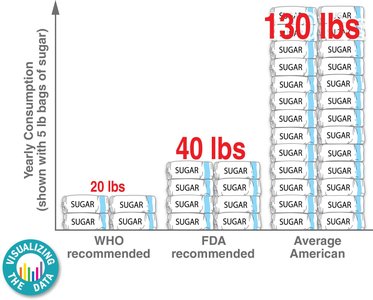
Excessive sugar intake is linked to health risks. The FDA recommends limiting added sugars to less than 10% of daily calories. Sugars are often called "empty calories" because they provide energy but few essential nutrients.
3.7 Polysaccharides Are Long Chains of Sugar Units
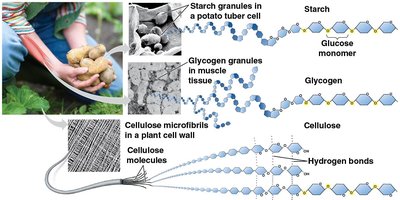
Polysaccharides serve as storage or structural molecules:
Starch: Storage form of glucose in plants.
Glycogen: Storage form of glucose in animals.
Cellulose: Structural component of plant cell walls.
Chitin: Structural component in fungal cell walls and exoskeletons of arthropods.
Lipids
3.8 Fats Are Lipids That Are Mostly Energy-Storage Molecules
Lipids are hydrophobic molecules, mainly composed of carbon and hydrogen. The most common lipids are fats (triglycerides), which consist of glycerol and three fatty acids.
Saturated fatty acids: No double bonds; solid at room temperature; found in animal fats.
Unsaturated fatty acids: One or more double bonds; liquid at room temperature; found in plant oils.
Trans fats: Produced by hydrogenating unsaturated fats; associated with health risks.
3.10 Phospholipids and Steroids Are Important Lipids with a Variety of Functions
Phospholipids are major components of cell membranes, consisting of two fatty acids, a phosphate group, and glycerol. Steroids have a structure of four fused rings; examples include cholesterol and sex hormones.
Proteins
3.12 Proteins Have a Wide Range of Functions and Structures
Proteins are polymers of amino acids and perform many functions, including catalysis (enzymes), transport, defense, signaling, movement, structure, and storage. The function of a protein depends on its specific shape, which can be lost by denaturation.
3.13 Proteins Are Made from Amino Acids Linked by Peptide Bonds
Amino acids have a central carbon atom bonded to an amino group, a carboxyl group, a hydrogen atom, and an R group. Peptide bonds link amino acids into polypeptides through dehydration reactions.
3.14 A Protein’s Functional Shape Results from Four Levels of Structure
Primary structure: Sequence of amino acids.
Secondary structure: Coiling or folding (e.g., alpha helix, beta sheet) stabilized by hydrogen bonds.
Tertiary structure: Overall 3D shape due to interactions among R groups.
Quaternary structure: Association of multiple polypeptide chains.
Example: A mutation that alters the primary structure can disrupt higher levels of structure and destroy protein function.
Nucleic Acids
3.15 The Nucleic Acids DNA and RNA Are Information-Rich Polymers of Nucleotides
Nucleic acids (DNA and RNA) are polymers of nucleotides, each composed of a sugar, a phosphate group, and a nitrogenous base. DNA is double-stranded (double helix), while RNA is single-stranded. DNA stores genetic information and directs protein synthesis through RNA intermediates.
Complementary base pairing (A-T, G-C in DNA) is essential for DNA replication and function.
Evolution Connection: Lactose Tolerance
Lactose tolerance in adults is a recent evolutionary adaptation in some human populations. It results from mutations that keep the lactase gene active, allowing continued digestion of lactose. This trait involves the interaction of nucleic acids (DNA), proteins (lactase enzyme), and carbohydrates (lactose).
Summary Table: Major Classes of Biological Molecules
Class | Monomer | Polymer | Function |
|---|---|---|---|
Carbohydrates | Monosaccharide | Polysaccharide | Energy storage, structure |
Lipids | Fatty acids, glycerol | Fats, phospholipids, steroids | Energy storage, membranes, hormones |
Proteins | Amino acid | Polypeptide | Catalysis, structure, transport, etc. |
Nucleic Acids | Nucleotide | DNA, RNA | Genetic information, protein synthesis |
