 Back
BackL2 Biodiversity
Study Guide - Smart Notes
 Tailored notes based on your materials, expanded with key definitions, examples, and context.
The Nature of Classification
Definition and Importance of Classification
Classification is the process of grouping organisms or objects into categories based on shared characteristics. In biology, classification helps organize the diversity of life, making it easier to study, identify, and communicate about different species.
Everyday Classification: Examples include sorting books by genre, foods by type, or animals by habitat.
Biological Classification: Involves systematic grouping based on physical and evolutionary relationships.
Ways to Classify Organisms
Biologists use several approaches to classify organisms, each emphasizing different criteria:
Phylogenetic Classification: Based on evolutionary history and relationships among species.
Morphological Classification: Based on observable physical traits such as color, size, and shape.
Biological Classification: Based on the ability to interbreed and produce fertile offspring.
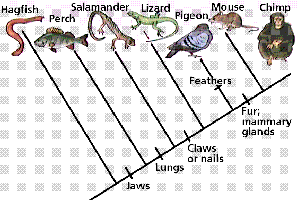


Need for Identification
Identification is the first step before classification. It is necessary because individuals of the same species can vary by sex, age, or geographic location. Accurate identification ensures correct classification and understanding of biodiversity.
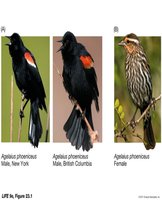
Taxonomy
Definition and Role
Taxonomy is the science of identifying, naming, and classifying organisms. Taxonomists are biologists who specialize in this field. Taxonomy provides a universal language for scientists and helps organize biological information.
Why Classify?
Convenience: Makes it easier to locate and study organisms.
Information Source: Organizes knowledge about Earth's species.
Communication Tool: Standardized names reduce confusion across languages and regions.
Historical Context: Carl Linnaeus
Carl Linnaeus is known as the "father of taxonomy." He introduced a consistent system for naming and grouping species, using shared anatomical and morphological features. His system forms the basis of modern taxonomy.

Binomial Nomenclature
Structure and Rules
Each species is given a unique two-part scientific name (binomial nomenclature):
Genus: The first part, always capitalized.
Specific epithet: The second part, lowercase.
If typed, the name is italicized (e.g., Castor canadensis); if handwritten, both parts are underlined separately.
Short form: The genus can be abbreviated (e.g., C. canadensis).
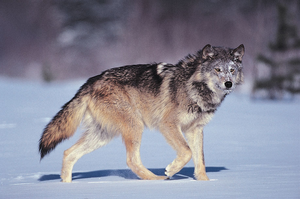
Example: Canis lupus (gray wolf), Canis familiaris (domestic dog).
Genus and Species Concepts
Genus: A group of closely related species (e.g., dogs, wolves, and coyotes in the genus Canis).
Species: A group of organisms that can interbreed and produce fertile offspring.
Example: Ursus americanus (black bear), Ursus maritimus (polar bear), Phascolarctos cinereus (koala).


Species Boundaries
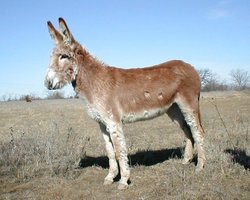
Species are defined by their ability to produce fertile offspring. For example, a horse and a donkey can mate to produce a mule, but mules are sterile, indicating that horses and donkeys are separate species.

Advantages of Binomial Nomenclature
Universal communication tool
Unique name for every organism
Shows relationships among related organisms
Taxonomic Hierarchy
The Seven (or Eight) Level System
Organisms are classified into a hierarchy of taxa, from the broadest to the most specific:
Domain (broadest)
Kingdom
Phylum
Class
Order
Family
Genus
Species (most specific)
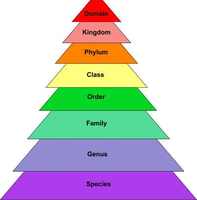
Mnemonic: "King Philip Came Over For Good Soup"
The more similar two organisms are, the more taxa they share.
Definition of Taxon
A taxon is any group or rank in a biological classification system (e.g., kingdom, phylum, class).
Traditional Taxonomic Ranks
Each rank groups organisms with similar features. For example, all mammals (class Mammalia) are warm-blooded and feed milk to their young.
Dichotomous Keys
Purpose and Structure
A dichotomous key is a tool used to identify organisms by making a series of choices between two alternatives. Each choice leads to another pair of statements or to the identification of the organism.
Each step offers two choices ("di" means two).
Each organism should have a unique endpoint in the key.
Keys can be written or diagrammatic (flow chart/tree).
Constructing a Dichotomous Key
Use constant, observable characteristics (not those that change with season or environment).
Use specific, quantitative descriptions rather than vague terms.
Ensure each choice leads to a unique identification.
Example of Dichotomous Key Application
Practice constructing a dichotomous key by sorting a set of objects or animals based on observable features.
Summary Table: Taxonomic Ranks
Rank | Description | Example |
|---|---|---|
Domain | Largest, most inclusive group | Eukarya |
Kingdom | Major groups within domains | Animalia |
Phylum | Groups of related classes | Chordata |
Class | Groups of related orders | Mammalia |
Order | Groups of related families | Carnivora |
Family | Groups of related genera | Canidae |
Genus | Groups of related species | Canis |
Species | Basic unit, capable of interbreeding | Canis lupus |
Key Terms and Definitions
Classification: Grouping organisms based on shared characteristics.
Taxonomy: Science of naming and classifying organisms.
Binomial Nomenclature: Two-part scientific naming system for species.
Genus: Taxonomic group of closely related species.
Species: Group of organisms that can interbreed and produce fertile offspring.
Dichotomous Key: Identification tool using paired choices.
Taxon: Any group in a classification system.
Additional info: The content above expands on the original notes with academic context, definitions, and examples to ensure completeness and clarity for college-level biology students.
