 Back
BackThe Nervous System: Structure, Function, and Signaling
Study Guide - Smart Notes
 Tailored notes based on your materials, expanded with key definitions, examples, and context.
45. Nervous System
Concept: Neurons
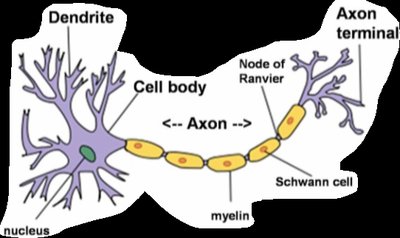
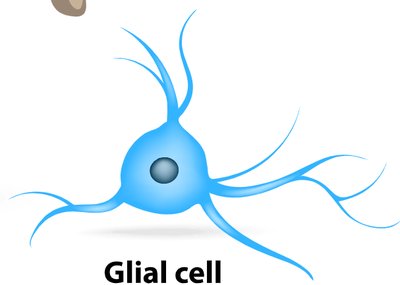
The nervous system is a complex network of cells that transmit signals throughout the body, enabling rapid communication and coordination of bodily functions. The primary cell type in this system is the neuron, which is specialized for the transmission of electrical and chemical signals. Supporting cells, known as glia, provide structural and metabolic support to neurons.
Neuron: The functional unit of the nervous system, capable of generating and transmitting electrical impulses.
Glia: Non-neuronal cells that support, protect, and nourish neurons. Their roles include myelination, maintaining homeostasis, and forming the blood-brain barrier.
Divisions of the Nervous System
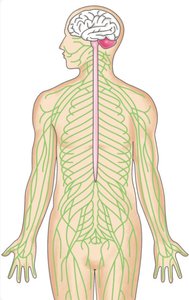
The nervous system is divided into two main parts: the central nervous system (CNS) and the peripheral nervous system (PNS).
Central Nervous System (CNS): Consists of the brain and spinal cord. It integrates sensory information and coordinates responses.
Peripheral Nervous System (PNS): Composed of nerves and ganglia outside the CNS. It transmits signals to and from the CNS.
Neuron Structure and Signal Transmission
Neurons have specialized structures for receiving, integrating, and transmitting signals:
Dendrites: Branched projections that receive signals from other neurons.
Cell Body (Soma): Contains the nucleus and is the site of most protein synthesis.
Axon: Long projection that transmits electrical signals away from the cell body.
Axon Hillock: Region where the axon joins the cell body; site of action potential initiation.
Axon Terminal: End of the axon where neurotransmitters are released.
Myelin Sheath: Insulating layer that speeds up signal transmission.
Node of Ranvier: Gaps in the myelin sheath where ion exchange occurs.
Synapses and Neurotransmission
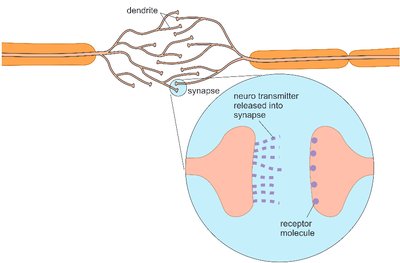
A synapse is the junction between two neurons, where signals are transmitted from the presynaptic neuron to the postsynaptic neuron. This transmission can be chemical (via neurotransmitters) or electrical (via gap junctions).
Neurotransmitters: Chemical messengers released from synaptic vesicles into the synaptic cleft, binding to receptors on the postsynaptic cell.
Synaptic Cleft: The small gap between the presynaptic and postsynaptic membranes.
Types of Neurons
Sensory Neurons: Transmit sensory information to the CNS.
Motor Neurons: Carry signals from the CNS to effector organs (muscles and glands).
Interneurons: Connect sensory and motor neurons; most abundant in the brain.
Electrical Properties of Neurons
Neurons use electrical signals to communicate. Key concepts include:
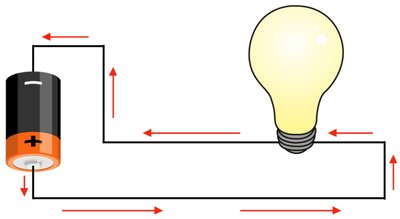
Electric Current: Flow of electric charge.
Electric Potential (Voltage): Difference in electric potential energy per unit charge between two points.
Membrane Potential: Difference in electric potential across the cell membrane, typically measured in millivolts (mV).
Resting Potential: The baseline membrane potential of a neuron, usually around -70 mV.
Depolarization: Membrane potential becomes more positive.
Hyperpolarization: Membrane potential becomes more negative.
Ion Channels and Pumps
Ion channels and pumps are essential for establishing and maintaining the membrane potential:
Ion Channels: Proteins that allow specific ions to pass through the membrane.
Leak Channels: Allow passive movement of ions, especially K+, contributing to the resting potential.
Gated Ion Channels: Open or close in response to stimuli (ligand-gated or voltage-gated).
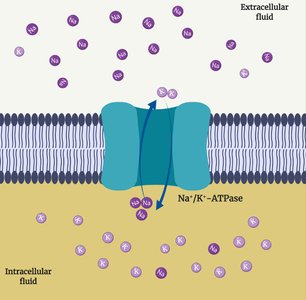
Na+/K+-ATPase (Sodium-Potassium Pump): Actively transports 3 Na+ out and 2 K+ into the cell, maintaining concentration gradients and resting potential.
Action Potentials
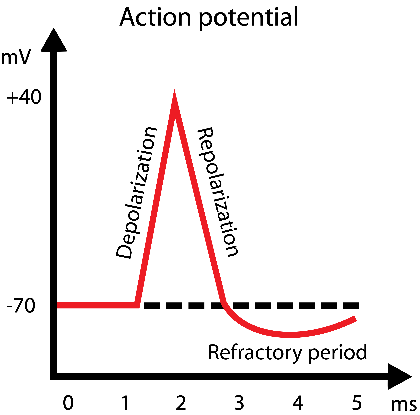
An action potential is a rapid, transient change in membrane potential that propagates along the axon. It is an all-or-none event, meaning it either occurs fully or not at all.
Phases of Action Potential:
Resting State: Voltage-gated Na+ and K+ channels are closed.
Rising Phase: Depolarization opens voltage-gated Na+ channels; Na+ influx.
Falling Phase: Na+ channels inactivate, K+ channels open; K+ efflux.
Undershoot: K+ channels remain open, causing hyperpolarization.
Refractory Period: Time during which another action potential cannot be initiated.
Signal Propagation and Myelination
The speed of action potential propagation depends on axon diameter and myelination:
Myelin Sheath: Insulates axons, increasing conduction speed.
Node of Ranvier: Gaps in myelin where action potentials are regenerated.
Saltatory Conduction: Action potentials jump from node to node, speeding up transmission.
Oligodendrocytes: Myelinate axons in the CNS.
Schwann Cells: Myelinate axons in the PNS.
Synaptic Transmission and Receptors
Neurotransmitters bind to receptors on the postsynaptic cell, causing changes in membrane potential:
Ionotropic Receptors: Ligand-gated ion channels that open in response to neurotransmitter binding.
Metabotropic Receptors: G protein-coupled receptors that activate second messenger pathways.
Excitatory Postsynaptic Potential (EPSP): Depolarizes the postsynaptic membrane, increasing the likelihood of an action potential.
Inhibitory Postsynaptic Potential (IPSP): Hyperpolarizes the postsynaptic membrane, decreasing the likelihood of an action potential.
Summation: EPSPs and IPSPs can sum temporally or spatially to influence action potential generation.
Neurotransmitters and Their Functions
Acetylcholine: Involved in muscle contraction and parasympathetic nervous system signaling.
Glutamate: Major excitatory neurotransmitter in the CNS.
GABA (γ-aminobutyric acid): Major inhibitory neurotransmitter in the CNS.
Monoamines: Include serotonin (mood), dopamine (reward), and norepinephrine (sympathetic responses).
Neuropeptides: Include endorphins (pain suppression, euphoria).
Nitric Oxide (NO): Gaseous neurotransmitter with unique signaling properties.
Central and Peripheral Nervous System Organization
Gray Matter: Contains neuron cell bodies.
White Matter: Contains myelinated axons.
Tracts: Bundles of axons in the CNS.
Ganglia: Clusters of neuron cell bodies in the PNS.
Blood-Brain Barrier: Protects the CNS from harmful substances in the blood.
Functional Divisions of the PNS
Somatic Nervous System: Controls voluntary movements via skeletal muscles.
Autonomic Nervous System: Regulates involuntary functions (e.g., heart rate, digestion).
Sympathetic Division: "Fight-or-flight" responses; uses norepinephrine.
Parasympathetic Division: "Rest-and-digest" responses; uses acetylcholine.
Enteric Division: Controls digestive tract functions.
Reflex Arcs
A reflex arc is a simple neural pathway that mediates an automatic response to a stimulus, often bypassing the brain for rapid action.
Sensory Neuron: Detects stimulus and sends signal to the spinal cord.
Interneuron: May relay signal within the spinal cord.
Motor Neuron: Sends command to muscle for response.
Brain Structure and Function
Forebrain: Includes the cerebrum, olfactory bulb, and hypothalamus.
Midbrain: Part of the brainstem involved in sensory and motor functions.
Hindbrain: Includes the medulla oblongata, pons, and cerebellum.
Cerebrum: Responsible for higher cognitive functions; divided into lobes (frontal, parietal, temporal, occipital).
Cerebral Cortex: Outer layer of the cerebrum; involved in sensory perception, motor commands, and association.
Limbic System: Involved in emotion, memory, and behavior (includes hippocampus and amygdala).
Diencephalon: Contains thalamus (relay center) and hypothalamus (homeostasis, links to endocrine system).
Cerebellum: Coordinates movement and balance.
Brain Stem: Controls basic life functions (heart rate, breathing).
Neuroplasticity and Memory
Neuroplasticity: The ability of the nervous system to change and adapt, forming new connections.
Synaptic Plasticity: Synapses can strengthen or weaken over time, underlying learning and memory.
Neurogenesis: Formation of new neurons, primarily during development.
Memory Types:
Sensory Memory: Brief retention of sensory information.
Short-Term Memory: Temporary storage of information for immediate use.
Long-Term Memory: Durable storage of information for extended periods.
Long-Term Potentiation (LTP): Persistent strengthening of synapses based on recent activity, thought to be a cellular mechanism for learning and memory.
Summary Table: Key Components of the Nervous System
Component | Structure | Function |
|---|---|---|
Neuron | Cell body, dendrites, axon, axon terminal | Transmit electrical and chemical signals |
Glia | Astrocytes, oligodendrocytes, Schwann cells | Support, insulate, and protect neurons |
Myelin Sheath | Lipid-rich covering | Insulates axons, speeds up signal transmission |
Synapse | Presynaptic terminal, synaptic cleft, postsynaptic membrane | Site of neurotransmitter release and signal transmission |
CNS | Brain, spinal cord | Integrates and processes information |
PNS | Nerves, ganglia | Transmits signals to and from CNS |
